Why Is My Car Leaking Oil? Causes, Signs & Solutions
You walk out to your car in the morning. There’s a dark stain on the driveway. Your stomach sinks a little. Sound familiar?
An oil leak is one of those problems that screams for attention. Ignore it, and you’re on a fast track to engine damage. I’ve spent 15+ years in auto repair, and I can tell you this: oil leaks that get caught early are cheap to fix. Oil leaks that get ignored? Those can cost you a whole engine rebuild.
In this guide, I’ll walk you through every cause, every symptom, and every fix. Just the real stuff you need to know.
Why Does Engine Oil Even Matter?
.Oil is your engine’s lifeblood. Full stop. It lubricates metal parts that move at thousands of RPMs. It reduces heat, prevents corrosion, and carries away debris. Without enough oil, your engine’s metal parts grind together. That’s not wear, that’s destruction.
A small, slow leak might not kill your engine overnight. But a bigger one can drain your oil fast. And running an engine on low oil is like running a marathon dehydrated. Something will break. It’s only a matter of when. Wondering how long you can safely push it?
Read our blog: How long can you go without an oil change? It explains exactly what’s at stake.
Signs Your Car Is Leaking Oil
Before we cover causes, let’s talk about how to spot a leak. Not all leaks are obvious puddles. Here’s what to look for:
1. Dark Spots or Puddles Under Your Car
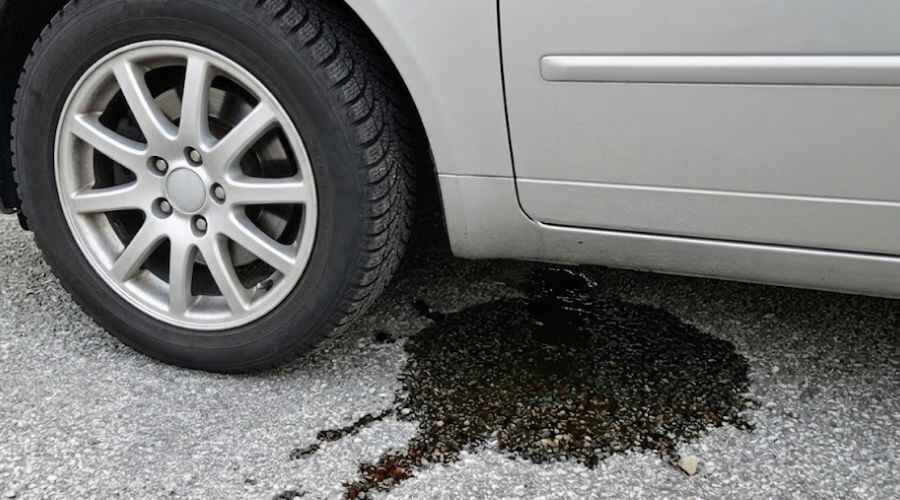
This is the most visible sign. Fresh engine oil is amber or brown. Old, dirty oil is dark brown or black. If you see oily residue under the engine area, that’s a leak. One drip occasionally might be minor. A regular puddle? Get it checked right away.
2. Burning Oil Smell
If oil drips onto hot engine parts or the exhaust, it burns. That produces a sharp, acrid smell inside or outside the car. It’s hard to miss and impossible to ignore. This kind of leak can also be a fire hazard. Take it seriously.
3. Blue or Gray Smoke from the Exhaust
Bluish smoke from the tailpipe is a classic sign. It usually means oil is burning inside the engine. This can happen when oil leaks past valve seals or piston rings. It’s different from white steam on a cold morning. Blue smoke typically gets worse as the engine warms up.
4. Oil Warning Light or Low Oil Level
Your dashboard oil light is not to be ignored ever. If it comes on, stop driving and check your oil level immediately. Low oil on the dipstick, combined with no visible external leak, often means oil is burning or leaking internally.
5. Visible Oil on the Engine or Undercarriage
Pop the hood and look around the engine block. Greasy, oily residue on gaskets, hoses, or the block itself is a strong sign of a leak somewhere in the system. Wind and driving can smear the oil away from the source, so the actual leak point may not be exactly where the oil sits.
8 Common Causes of Car Oil Leaks
Now let’s get to the root of the problem. Here are the top culprits:
1. Worn or Damaged Oil Gaskets
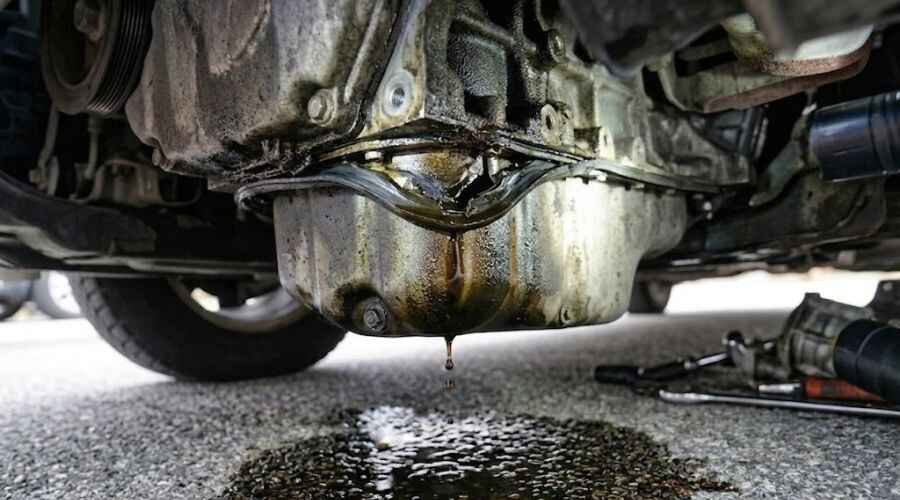
Gaskets seal the connections between engine parts. The valve cover gasket and oil pan gasket are the most common leak spots. Over time, heat and pressure cause gaskets to harden, crack, and shrink. When the seal fails, oil seeps through. This is the most frequent cause I see in the shop.
Symptoms: Oil residue around the valve cover or oil pan. Burning smell from oil dripping on the exhaust manifold. Fix: Replace the gasket, which is usually a straightforward, affordable repair.
2. Faulty or Overtightened Oil Drain Plug
Every oil change involves removing the drain plug. Over time, the plug’s threads or washer can wear out. An overtightened plug can strip the threads in the oil pan. A loose plug drips steadily onto your driveway. Always use a new crush washer during every oil change. This is a simple fix that’s completely avoidable with proper maintenance.
3. Damaged or Improperly Installed Oil Filter
The oil filter can leak if it’s cross-threaded, loose, or the wrong size. A cracked or double-gasketed filter will drip consistently. If you recently had an oil change and now see a leak, the filter should be the first thing you check.
4. Cracked Engine Block or Cylinder Head
This is the serious one. Extreme overheating can crack the engine block or cylinder head. Oil and coolant can then seep through those cracks. This is more common in high-mileage vehicles or engines that have overheated. A cracked block is a major repair often requiring engine replacement. This is exactly why keeping coolant levels topped up matters so much.
5. Worn Valve Seals or Piston Rings
These seals keep oil from entering the combustion chamber. When they wear out, oil burns alongside the fuel. You won’t see a puddle under the car with this one. Instead, you’ll see blue smoke from the exhaust and rising oil consumption. High-mileage engines are most prone to this kind of internal leak.
6. Degraded Rear Main Seal
The rear main seal is located at the back of the crankshaft. It keeps oil from leaking where the crankshaft exits the engine block. When this seal fails, it’s usually a slow but steady leak. You’ll often see oil on the bottom of the bellhousing or transmission. Replacing it requires removing the transmission a more involved repair. But catching it early avoids a much bigger mess later.
7. Overfilled Engine Oil
More oil is not always better. An overfilled crankcase builds up too much pressure. That pressure pushes oil past seals and gaskets that are otherwise fine. Always fill to the manufacturer’s recommended level, not above. This is a surprisingly common and completely preventable cause.
8. Old Age and High Mileage
Seals and gaskets are made of rubber and synthetic materials. They harden, shrink, and crack with age, especially with heat cycles. If your car has 100,000+ miles, seals will eventually need attention. Regular inspections become even more important on older vehicles. Proactive maintenance is always cheaper than emergency repairs.
How Serious Is an Oil Leak? Know Your Urgency Level
Not every leak requires you to pull over immediately. Here’s a quick guide:
�� STOP DRIVING NOW Oil light ON + engine running hot = immediate engine damage risk. Pull over safely and call for assistance. �� SCHEDULE ASAP (within 1–3 days) Visible puddle on the driveway. Burning smell while driving. Blue smoke from exhaust. Check oil level daily until repaired. �� MONITOR AND BOOK SOON (within 1–2 weeks) Minor seepage around the valve cover. Slight oil residue on the engine. No smoke, no warning lights. Book a diagnostic appointment. |
How to Fix a Car Oil Leak?
Fixing an oil leak depends entirely on the source. Here’s what the repair process typically looks like:
Step 1: Get a Proper Diagnosis
Don’t guess. A technician will put your car on a lift. They’ll clean the area around the engine and look for the source. Some shops use UV dye it makes even tiny leaks glow. Knowing exactly where the leak comes from determines the cost and fix. According to the Car Care Council, regular under-hood inspections catch oil leaks early. That saves car owners significant money on repairs.
Step 2: Address the Root Cause
Don’t just top up the oil and drive away. That’s like putting a bucket under a leak instead of fixing the pipe. The right fix depends on the cause:
Valve cover gasket: Replace gasket, typically $100–$350
Oil drain plug: Replace plug/washer, typically under $30
Oil filter: Replace the filter for under $20, usually during an oil change
Rear main seal: Replace seal $400–$800+ (labor intensive)
Cracked block or head: Major engine work $1,000–$4,000+
Minor leaks caught early are almost always under $300. Major leaks ignored for too long can become catastrophic. The math on early diagnosis is always in your favor.
Step 3: Follow Up With an Oil Change
After a leak repair, always do a fresh oil change. Old, contaminated oil can damage the new seals and gaskets. Fresh oil also gives you a clean baseline to monitor for new leaks. Use the oil type and weight your manufacturer recommends always.
How to Prevent Oil Leaks in the First Place
Prevention is always better than repair. Here’s what actually works:
- Change your oil on schedule.
- Check your oil level monthly with the dipstick.
- Never overfill, always stick to the manufacturer’s recommended amount.
- Use the correct oil viscosity for your engine and climate.
- Inspect for minor seepage during every oil change service.
- Address small leaks before they become large ones.
How to Fix a Car Oil Leak?
I’ve said it a thousand times in the shop: the cheapest repair is always the one you catch early. Oil leaks are no different. A $150 gasket today beats a $3,000 engine rebuild any day.
If you’ve spotted any of the signs in this guide, don’t wait and hope it goes away. It won’t. Oil leaks don’t heal themselves.
At Wise Car Care in Houston, our certified technicians diagnose oil leaks fast. We use professional-grade equipment to find the exact source. Then we fix it right the first time, no guesswork. Call us at +1 (713) 466-9300 or stop by at 6259 N Eldridge Parkway, Houston, TX.
Book our oil change service in Houston and fix this issue as soon as possible.
Frequently Asked Questions
Can I drive with a small oil leak?
Yes, for a short time. But monitor your oil level daily. If the level drops noticeably between checks, stop driving and get it inspected immediately.
How much does it cost to fix an oil leak?
It ranges widely depending on the cause. A simple gasket replacement costs $100–$350. A rear main seal runs $400–$800. Internal engine damage can reach $1,000 or more. Always get a diagnosis first, never guess on oil leak repairs.
Will oil stop leak additives work?
Temporary additives can slow a minor seal leak briefly. But they are not a fix, they’re a delay. Some can even damage seals further over time. A professional repair is always the right long-term solution.
Can an oil leak cause a fire?
Yes, this is a real risk. Oil dripping onto hot exhaust components can ignite. A burning smell from under the hood should never be ignored. Get it inspected immediately if you smell burning oil.
How do I know if oil is burning vs leaking externally?
External leak: visible puddle or residue under the car or on the engine. Burning internally: blue exhaust smoke, no visible external drip, but oil level drops between oil changes. Both scenarios need professional attention, just different repairs.