

Common BMW Problems Every Driver Should Know
You bought a BMW for the performance, luxury, and driving experience. Now you’re wondering why your check engine light came on again. I’ve worked on BMWs for over fifteen years here in Houston. And I can tell you that these incredible machines have predictable issues.
The good news? Most BMW problems are preventable with proper maintenance and care. Let me share what I’ve learned from countless repairs over the years. Understanding these common issues helps you catch problems early and save money. Your BMW deserves expert care from technicians who know these vehicles inside out.
Why BMWs Experience Unique Problems
BMW is engineered for performance, precision, and luxury driving experiences unlike others. But this advanced engineering comes with specific maintenance needs and considerations. The complexity of BMW systems means more components can potentially fail eventually. High-performance engines run hotter and work harder than standard economy car engines.
According to Consumer Reports, German luxury vehicles require more frequent maintenance than average. This doesn’t mean BMWs are unreliable—just that they need proper care. Houston’s extreme heat adds extra stress to BMW cooling and electrical systems. Our stop-and-go traffic on I-10 and 290 also accelerates wear significantly.
At Wise Car Care, we specialize in European vehicles, including all BMW models. Our ASE-certified technicians understand what these sophisticated machines need for peak performance.
1. Oil Leaks from Valve Covers and Gaskets
Oil leaks are the most common BMW problem we see daily here. Valve cover gaskets, oil pan gaskets, and oil filter housings deteriorate over time. You might notice oil spots under your car or a burning oil smell. These leaks start small but grow worse without proper repair attention.
Why it happens: BMW engines run hot, which degrades rubber gaskets faster. High-performance operation accelerates this wear significantly compared to regular cars.
Prevention: Change oil regularly using high-quality synthetic oil as BMW recommends. Inspect for leaks during every oil change service at our facility.
Cost to fix: Valve cover gasket replacement typically costs $400-$800, depending on the model. Catching leaks early prevents more expensive engine damage from oil starvation.
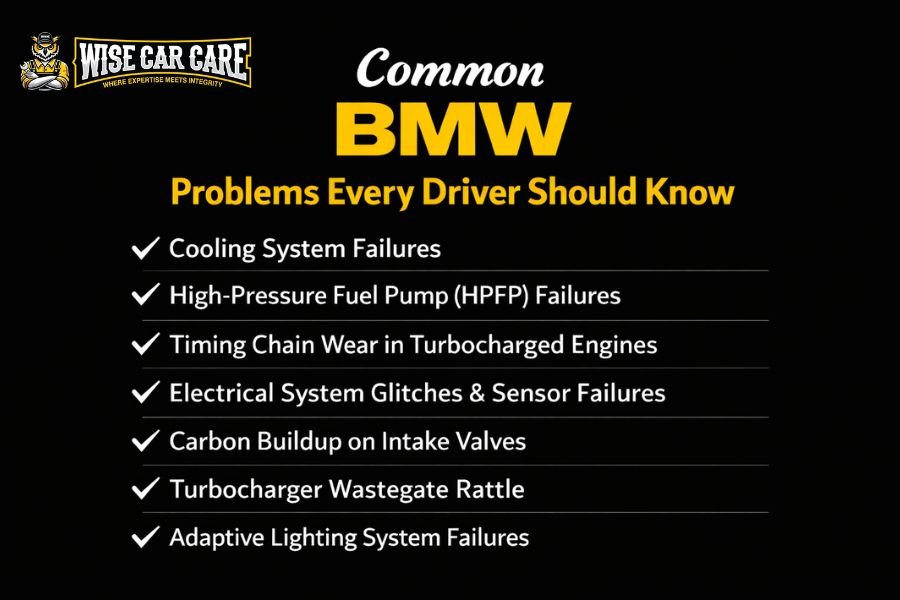
2. Cooling System Failures
BMW cooling systems use electric water pumps and plastic thermostat housings that fail. Radiators can also develop leaks, especially in Houston’s brutal summer heat.
Warning signs include the temperature gauge rising, coolant warning lights, or visible leaks. Overheating can cause serious engine damage very quickly if not addressed immediately.
Why it happens: Plastic components become brittle from constant heat cycling and pressure. Houston’s 95+ degree summers accelerate the deterioration of cooling system parts noticeably.
Prevention: Replace coolant every 30,000 miles or 3 years as BMW specifies. Inspect hoses, water pump, and thermostat during regular maintenance service appointments.
Cost to fix: Water pump replacement runs $800-$1,200, including labor and parts. A new radiator costs $600-$1,000, depending on your specific BMW model.
3. High-Pressure Fuel Pump (HPFP) Failures
Turbocharged BMWs with direct injection rely on high-pressure fuel pumps for performance. When the HPFP fails, you’ll experience rough running, hesitation, or stalling issues.
Long cranking before starting is often the first symptom owners notice regularly. Check engine lights may also illuminate with fuel pressure codes stored.
Why it happens: Direct injection systems operate at extremely high pressures that stress components. Poor-quality fuel can accelerate wear on precision HPFP internal components.
Prevention: Use top-tier gasoline from reputable stations for proper fuel system protection. Change the fuel filter on schedule and address fuel system issues immediately.
Cost to fix: HPFP replacement typically costs $1,200-$2,000, including parts and labor. Early diagnosis prevents catalytic converter damage from running too rich constantly.
4. Timing Chain Wear in Turbocharged Engines
N20 and N26 4-cylinder turbo engines sometimes develop premature timing chain wear. A rattling noise during cold starts indicates a stretched timing chain problem.
If ignored, a failed timing chain can destroy your engine internally completely. This is one problem you absolutely cannot afford to delay addressing.
Why it happens: Early BMW timing chain designs had inadequate guides and tensioners. The problem was corrected in later production years for newer models.
Prevention: Listen for unusual rattling during startup every time you drive daily. Have suspicious noises diagnosed immediately by BMW specialists like our team.
Cost to fix: Timing chain replacement costs $2,500-$4,000, depending on engine damage. Catching it early prevents a complete engine replacement costing $8,000-$15,000 or more.
5. Electrical System Glitches and Sensor Failures
Modern BMWs pack incredible technology into every system throughout the vehicle. This means more sensors, modules, and wiring that can potentially malfunction.
You might experience parking sensor warnings, iDrive freezes, or phantom warning lights. Battery drain when parked is another common electrical issue we diagnose.
Why it happens: Complex electrical systems have more potential failure points than simpler cars. Heat and humidity in Houston accelerate the corrosion of electrical connections significantly.
Prevention: Keep battery terminals clean and connections tight for reliable electrical performance. Address warning lights promptly before small issues cascade into bigger problems.
Cost to fix: Diagnostic fees start at $120-$150 for proper troubleshooting. Individual sensor or module replacement ranges from $200-$800 depending on complexity.
6. Carbon Buildup on Intake Valves
Direct injection engines don’t spray fuel over intake valves like port injection. This allows carbon deposits to accumulate on valve surfaces over time.
Symptoms include misfires, hesitation during acceleration, and reduced fuel economy. Your BMW loses the crisp throttle response it had when new.
Why it happens: All direct injection engines develop carbon buildup eventually from normal operation. Short trips around Houston don’t allow engines to fully heat and burn deposits.
Prevention: Take highway drives regularly to help burn off accumulating carbon deposits. Use quality fuel with detergent additives for some cleaning benefit.
Cost to fix: Walnut blasting service costs $400-$800 and restores performance completely. This maintenance should be done every 40,000-60,000 miles for best results.
7. Turbocharger Wastegate Rattle
Many turbocharged BMWs develop a distinctive rattling sound at idle or acceleration. This comes from the play in the wastegate actuator inside the turbocharger.
The noise might seem minor initially, but it indicates internal turbo wear. Eventually, performance and boost pressure are affected by this deterioration.
Why it happens: Wastegate actuators use small metal rods that wear over time. High heat cycles from performance driving accelerate this wear process.
Prevention: Let your engine warm up before hard acceleration every single time. Avoid immediate shutdown after spirited driving—let turbos cool down first.
Cost to fix: Turbocharger replacement costs $2,000-$3,500, including labor and parts typically. Early diagnosis might allow less expensive actuator-only repair in some cases.
8. Adaptive Lighting System Failures
BMW’s with adaptive headlights that swivel and auto-level can develop errors. Taillight assemblies on some models also experience moisture intrusion and corrosion.
Dashboard warnings about headlight malfunctions are the typical first symptom noticed. Flickering lights or complete failure follow if not addressed promptly.
Why it happens: Adaptive lighting uses complex motors, sensors, and modules that fail. Moisture from Houston’s humidity can infiltrate taillight assemblies and cause corrosion.
Prevention: Check that all lights function properly during regular walkaround vehicle inspections. Address moisture in light assemblies immediately before corrosion damages modules.
Cost to fix: Adaptive headlight module replacement runs $800-$1,500 per side, typically. Taillight assemblies cost $300-$600, depending on your specific BMW model year.
How Houston's Climate Affects Your BMW
Our city’s weather creates unique challenges for BMW cooling and electrical systems. Understanding these helps you prevent problems before they start developing unexpectedly.
Extreme Heat Stress
Summer temperatures exceed 95 degrees regularly, with heat indexes over 105 often. This puts tremendous stress on cooling systems, batteries, and rubber components. Coolant degrades faster in extreme heat and needs more frequent replacement here. Hoses and gaskets also deteriorate more quickly than in moderate climate areas.
High Humidity Impact
Houston’s coastal humidity promotes corrosion of electrical connections and metal components. Battery terminals corrode faster, and electrical issues become more common here. Moisture can also enter sealed components like light assemblies more easily. Regular inspections catch these problems before they cause expensive failures.
Stop-and-Go Traffic Wear
Our notorious traffic congestion creates severe service conditions for all vehicles. Constant acceleration, braking, and idling generate excessive heat and component wear. If you commute on Houston highways daily, follow severe service maintenance schedules. This means more frequent oil changes, transmission service, and brake inspections.
Prevention: The Best Medicine for BMW Longevity
The key to BMW reliability is consistent preventive maintenance from specialists. Following manufacturer service intervals prevents the most common problems from ever developing.
Stick to BMW Maintenance Schedules
Your owner’s manual lists specific service intervals for every component and system. Following these recommendations religiously prevents the majority of common failures we see. Don’t skip services or extend intervals to save money short-term initially. The cost of preventive maintenance is tiny compared to major repairs.
Use Quality Parts and Fluids
BMW requires specific oils, coolants, and parts engineered for their systems. Using cheaper alternatives saves money initially but costs more in repairs later. We use OEM or premium aftermarket parts that meet BMW specifications exactly. This ensures your vehicle performs and lasts as the engineers intended.
Choose BMW Specialists for Service
General mechanics often lack the specialized knowledge, tools, and diagnostic equipment BMWs need. BMW-specific training and experience make a huge difference in repair quality. Our technicians receive ongoing European car maintenance tips and training regularly for all systems. We invest in BMW-specific diagnostic tools and technical information for accurate repairs.
Trust Wise Car Care for Expert BMW Service
Located at 6259 N Eldridge Parkway, we’re Houston’s trusted European auto specialists. We’ve built our reputation on quality BMW repairs and honest service. Every BMW repair includes our 36-month/36,000-mile warranty for your peace of mind. We stand behind our work with genuine parts and expert craftsmanship.
Our European auto repair services cover all BMW models from classics to the latest. Whether you drive a 3 Series, X5, or M model, we know your vehicle inside out completely.