

What Does It Mean When the Engine Light Blinks While Driving
The check engine light (also called the malfunction indicator lamp or MIL). That little check engine light comes on for many drivers. Some people just try to ignore this light, which is not a good idea. A flashing light is a big deal for your car. This often means your engine is misfiring or has other bad issues. If the light stays solid, you can probably drive to a repair shop. However, a blinking light means your engine needs help right this minute. If you keep driving, you might end up with very expensive repairs.
Understanding the Check Engine Light System
Your car’s OBD-II system watches the engine, emissions, and transmission all the time. When a sensor finds a problem, the ECU turns on the check engine light. This system is required by the EPA and CARB to protect the planet. It also helps your car stay strong and run the right way. A steady check engine light means a code is stored. You can usually keep driving for a short time. A blinking light is much more serious and needs fast care. It means an active engine misfire, where fuel does not burn properly. This can happen in one cylinder or several at once.
Potential Causes Behind the Flashing Engine Light
If you wonder what it means when the engine light blinks, you’re not alone. A blinking light usually means a strong engine misfire is happening. Different issues can cause it, and each needs proper testing. These are the top causes found in many repair shops.
1. Ignition System Failure
The ignition system generates the spark needed to ignite the air-fuel mixture. When it fails, the cylinder misfires instantly.
Common ignition components that fail:
- Ignition coils
- Spark plugs
- Spark plug wires
- Coil-on-plug boots
When an ignition coil weakens under load, especially during acceleration, the ECM detects inconsistent firing and responds by flashing the engine light.
Symptoms you may notice:
- Jerking or hesitation while accelerating
- Rough idling
- Reduced engine power
- Fuel odour from unburned gasoline
Ignition-related misfires are one of the quickest problems to diagnose with an OBD-II scan tool, often triggering codes like P0300 (random misfire) or P0302–P0306 (cylinder-specific misfire).
2. Fuel Delivery Problems
If the engine isn’t receiving the proper amount of fuel, combustion becomes unstable.
Common causes include:
- Clogged fuel injectors
- Weak fuel pump
- Dirty fuel filter
- Faulty fuel pressure regulator
A lean fuel mixture can cause detonation and misfires, especially under high load, triggering a blinking engine light.
3. Engine Sensor Malfunctions
Modern car engines use many sensors to measure fuel and air needs. If a sensor sends wrong data, the engine cycle becomes unstable. This can cause rough running and even a strong engine misfire.
Critical sensors include:
- Clogged fuel injectors
- Weak fuel pump
- Dirty fuel filter
- Faulty fuel pressure regulator
A faulty crankshaft sensor is a top culprit because it disrupts engine timing, leading to instant misfires.
4. Vacuum Leaks and Air Intake Issues
Unmetered air can enter the engine through:
- Damaged vacuum hoses
- Leaking intake manifold gasket
- Broken PCV valve
- Throttle body leaks
This leads to a lean mixture, rough running, and misfire codes. Vacuum leaks often worsen under heavy throttle, which is why the engine light may begin blinking during acceleration.
5. Catalytic Converter Overheating
A flashing engine light warns that unburned fuel is entering the catalytic converter. Continuous misfires can cause:
- Melting of the catalytic substrate
- Exhaust restrictions
- Loss of engine power
- Increased emissions
If ignored, the catalytic converter can fail completely and create backpressure that leads to engine stalling.
6. Low Engine Compression
Mechanical issues can also trigger misfires:
- Worn piston rings
- Burned valves
- Blown head gasket
- Timing chain stretch
Low compression in one or more cylinders disrupts combustion enough to activate the misfire detection system. This issue requires more advanced diagnostics, such as a compression test or cylinder leak-down test.
What to Do When the Engine Light Blinks While Driving
Knowing what to do in the moment can prevent thousands in repair costs and keep you safe.
Reduce Speed Immediately: A blinking light means your engine is misfiring right now. Slow down to lower engine load and bring temperatures down.
Avoid Hard Acceleration or High RPM: High RPM increases cylinder pressure, making misfires worse. Drive gently until you can pull over safely.
Stop the Vehicle if the Blinking Continues: If the light keeps blinking, you should stop soon. Pull over safely when you can. Turn the engine off right away. Let the car cool for a short time. Call roadside help or a trusted mechanic for support. Driving longer can cause serious catalytic converter damage.
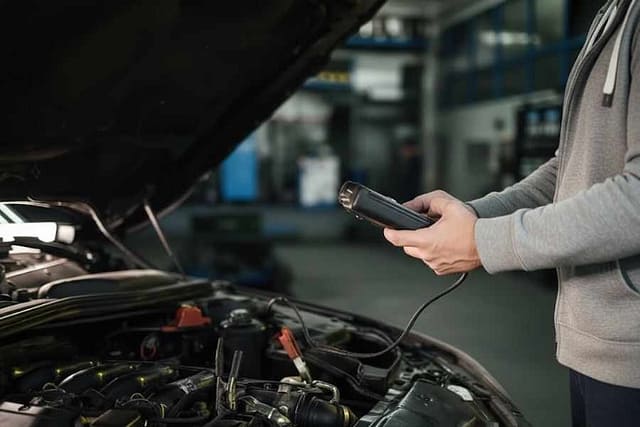
Scan for Diagnostic Trouble Codes (DTCs): An OBD-II scanner can quickly show misfire codes on your car. P0300 means a random misfire is happening. P0301 to P0312 show which cylinder is misfiring. P0171 or P0174 point to a lean condition. P0351 to P0354 often mean an ignition coil failure. P0420 signals a catalyst efficiency problem. These codes help guide the next repair steps.
Schedule a Professional Engine Diagnostic: During engine diagnostic services, a certified tech checks all the important parts. Ignition coils and spark plugs are inspected to make sure they fire correctly. Fuel pressure is tested to confirm that the engine gets the right amount of fuel. The air intake pathway is checked for any leaks or blockages. Sensor readings are reviewed to spot anything out of place. Vacuum lines get tested for hidden leaks. The catalytic converter temperature is also examined for signs of trouble. Advanced tools like scan logs, an oscilloscope, and a smoke machine help pinpoint the issue fast.
How a Good Mechanic Figures Out What's Wrong
When you bring your car in with that blinking light, a real tech is going to do this. They plug in a diagnostic scanner and pull the fault codes. These codes are like breadcrumbs that tell you what went wrong. Then they actually look at the car physically. They check your spark plugs. They look at your ignition coils. They inspect fuel injectors. They peek at your fuel filter. Sometimes they do pressure tests and compression tests to see if your engine is mechanically sound.
Can You Keep Driving With a Blinking Engine Light?
It is truly not safe to drive when your engine light is blinking. If you keep going, you might melt a car part called the catalytic converter. Your engine could also get too hot or just stop running suddenly. You might lose power or cause permanent engine damage. The blinking light is a serious warning, not a suggestion to keep driving. Please pull over safely, turn your engine off and call for help right away.
How to Prevent Engine Misfires in the Future
Preventive maintenance is a great way to stop engine misfires in future. You should change your spark plugs on time, usually around 60000 miles. New spark plugs help your engine start and run correctly. We need to check the ignition coils often, too. Heat and shaking can make these parts wear out quickly. Clean fuel parts and a good air filter keep the fuel mix balanced. Even tiny air leaks can cause big engine issues. Fixing leaks quickly really makes a difference. Following your car’s service schedule prevents most problems.
Bottom Line
When your engine light blinks while you are driving, that is a really big alarm. It means your engine is misfiring very badly and could hurt a major part. Knowing why this happens and what to do can save you lots of money. You should quickly go to an auto repair shop for expert help. Understanding the problem saves you from high repair bills and unsafe driving. Learning about parts like ignition coils and fuel injectors is smart. Also, knowing about oxygen sensors and the catalytic converter helps you. This knowledge makes you a smarter car owner and gives you more confidence.
Saturday: 8:00 AM - 4:00 PM
Sunday: Closed