

What is the Difference Between a Strut and a Shock?
Most drivers ignore their shocks and struts until something feels off. But hit a pothole hard, and you’ll suddenly appreciate what they do. They’re working constantly to keep your ride smooth and comfortable always. Well, no road is perfectly flat, even when it seems smooth. Your shocks and struts handle all those tiny imperfections constantly. They prevent your car from bouncing uncontrollably after every small bump you hit. People often use “shocks” and “struts” to mean the same thing. In reality, they’re completely different suspension components with distinct purposes. Understanding the differences helps you maintain your vehicle better long-term. Each component plays a critical role in vehicle control and safety. Knowing when they need service can prevent costly damage later. We’ll explain exactly what shocks and struts do for your car.
Key Differences Between Struts and Shocks
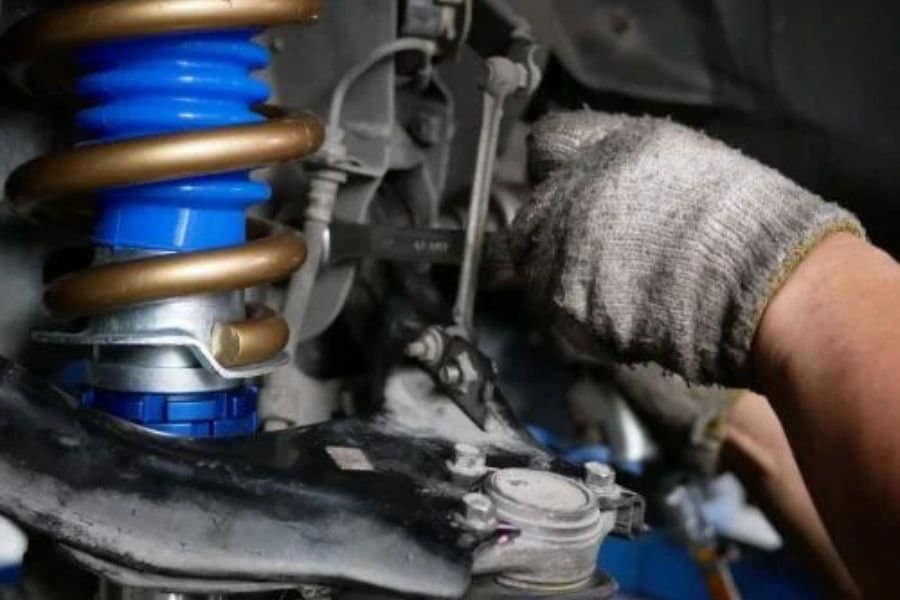
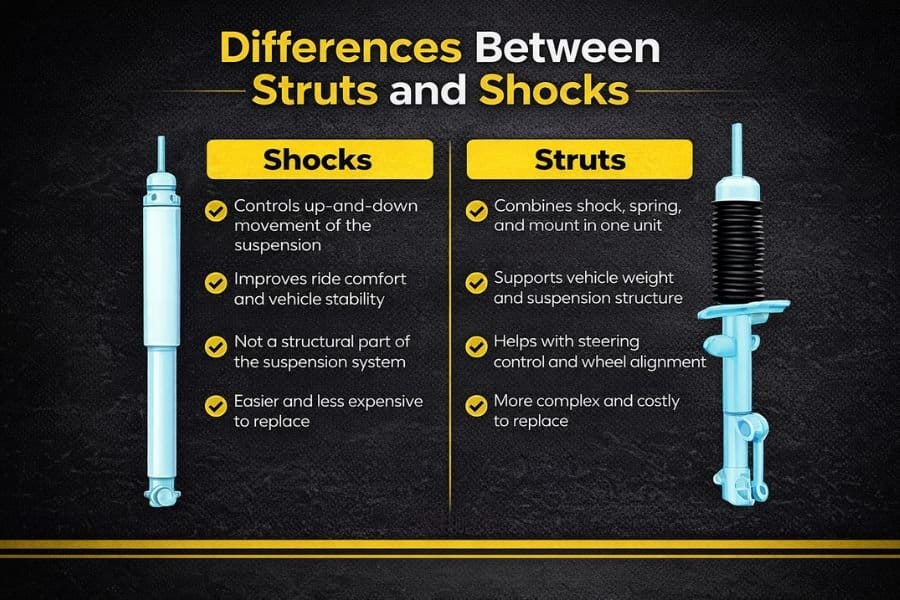
A strut combines several suspension parts into one complete assembly. It houses a shock absorber plus a coil spring together. Shocks work independently to control bounce and vibration only. Think of struts as the main support structure for your wheel. Shocks serve as dampers that prevent excessive movement when driving.
What Are Shocks?
Shocks are hydraulic damping devices inside your vehicle’s suspension system. They stop excessive bouncing when your car hits bumps. Pressurized fluid moves through internal passages when suspension compresses, creating friction. This friction converts kinetic energy into heat, controlling movement gradually. Your shocks keep tires firmly planted on the road surface. Better tire contact means improved handling and safer driving always.
Shocks work with your vehicle’s springs in the suspension system. Springs handle vertical movement while shocks dampen that bouncing motion. Together, they provide control and comfort during all driving conditions.
What Shocks Do for Your Vehicle?
- Control suspension movement during acceleration, braking, and cornering situations
- Reduce the vibration and bounce that you'd feel inside the car
- Minimize body roll and sway during turns and lane changes
- Prevent premature tire wear by maintaining consistent road contact
- Improve overall ride quality on smooth and rough road surfaces
What Are Struts?
Struts are more than just damping devices in your suspension system. They’re actual structural components that combine multiple parts together. Each strut houses a shock absorber, coil spring, and mounting bracket. This combination makes struts handle two important jobs simultaneously. They absorb impacts from bumps while supporting your vehicle’s weight. They’re multifunctional compared to standalone shock absorbers, making replacement more complex.
What Struts Do for Your Vehicle?
- Support the suspension structure and your vehicle's total weight
- Act as pivot points for steering in front-wheel-drive vehicles
- Maintain proper wheel alignment and suspension geometry consistently
- Absorb bumps and vibration from rough road surfaces
- Provide mounting points for steering knuckles and suspension parts
Struts vs Shocks
Both components control motion and enhance your ride comfort. But they’re built differently and serve different suspension system roles. Shocks are purely damping devices that control spring movement only. Struts do double duty in your vehicle’s suspension system. They absorb impact and act as structural support components. Struts integrate a shock absorber, coil spring, and mounting assembly. Strut replacement is more complex and costly than shocks. You’ll need professional wheel alignment service after replacement work. Shocks are simpler to replace with less labor involved.
Key Takeaways
- Shocks control spring motion as non-structural components only
- Struts are structural units combining shock and spring together
- Front-wheel drive vehicles typically use struts for suspension systems
- Rear-wheel drive vehicles typically use shocks in the rear suspension
- Replacement costs are higher for struts due to alignment needs
- Both maintain ride comfort, stability, and tire contact always
Why Shocks and Struts Matter for Your Vehicle?
Shocks and struts are essential components of your suspension system. They do much more than just make your ride smooth. These parts directly affect your safety, comfort, and overall vehicle performance consistently.
Stability and Control on the Road
When cruising down the highway, you need to feel in control. Shocks and struts keep your vehicle stable by absorbing bumps. They ensure your tires stay firmly planted on pavement always. This means better handling during tight turns and sudden stops. Your car won’t bounce excessively or feel unpredictable anymore. You’ll notice improved stability, especially when navigating challenging road conditions.
Tire Wear and Road Traction
Uneven tire wear often signals worn shocks or struts underneath. These components help ensure your tires wear evenly across the surface. Even tire wear means better grip and improved road traction overall. Better traction translates to safer driving in all weather conditions. Your tires last longer when suspension components work properly. This saves you money on tire replacements down the road.
Tire Wear and Road Traction
Nobody enjoys a rough, bumpy ride during daily commutes. Shocks and struts minimize vibrations and bumps significantly. They allow you to cruise comfortably without feeling every pothole. Your passengers appreciate the smooth ride quality too. Long drives feel less tiring when the suspension works properly. Comfort directly impacts your driving experience every single day.
Handling and Overall Safety
Vehicle handling and safety depend heavily on suspension components. Shocks and struts help you steer with precision and confidence. They maintain stability during tricky driving situations constantly. When you need to stop quickly, suspension keeps tires grounded. Without proper shocks and struts, your ride feels shaky. Handling suffers and safety becomes compromised immediately. Don’t ignore suspension problems or warning signs
How Do I Know If My Car Has Shocks or Struts?
Finding out whether your vehicle has shocks or struts is easier than you might think. There are several straightforward ways to identify which suspension components your car uses.
Check the Owner’s Manual for Suspension Details
The easiest way to find out is to check your owner’s manual. It provides detailed information about your suspension system. Most manuals specify whether you have shocks, struts, or both components.
Inspect the Underside of Your Vehicle
Shocks typically mount vertically or nearly vertically behind the tires. They often look like a hand pump or cylindrical tube. Struts appear different; they look like a coil spring with a shock inside. Sometimes the shock mounts next to the spring instead. Check both front and rear wheels carefully. You might have shocks on one axle and struts on another.
Let a Professional Technician Inspect It
Still unsure which suspension components your vehicle has? Don’t guess and risk incorrect replacement later. Bring your car to our shop for a professional inspection today. At Wise Car Care, our experienced technicians can quickly identify your suspension type. We’ll explain exactly what you have underneath your vehicle. Professional diagnosis prevents costly mistakes and ensures proper repairs always.
What are the Signs of a Bad Shock and Strut?
Bad shocks and struts can make driving uncomfortable and even unsafe. Here are some signs to watch for:
- Your car feels bouncy or rough over bumps
- The front dips forward when you brake
- The car sways or leans in corners
- Tires show uneven or unusual wear
- You notice leaking fluid near the wheels
- Steering feels loose or harder to control
So the next question that comes to your mind is, “Can I drive with bad shocks and struts?” Well, the answer is “Yes” You can drive with bad shocks briefly, but schedule a suspension repair service soon. Worn shocks and struts reduce handling, increase braking distance, and cause excessive bouncing. Driving with failing suspension wears out tires, ball joints, and steering components quickly. Get a suspension repair service to restore control and prevent accidents during turns or stops.
Shocks and Struts Replacement Cost
Shock replacements generally cost less than strut replacements overall. You’re replacing simpler, smaller components with fewer labor requirements. Parts cost between $100–$300, typically. Strut replacements are more expensive due to the complexity involved. You’ll pay between $300–$800. Labor charges increase because alignment is always needed after installation.
Visit Our Auto Repair Shop in Houston
Your vehicle’s safety depends on properly functioning suspension components. Worn shocks and struts create serious handling and braking problems. Don’t risk your family’s safety by ignoring suspension issues. Wise Car Care is one of the leading auto repair shops in Houston, TX. Our experienced technicians inspect suspension systems with professional precision. We replace shocks and struts using quality parts always. We provide honest assessments without unnecessary upselling ever. Get the direction to our shop and contact us today for your suspension inspection appointment. Let’s keep your vehicle safe and performing excellently always.
Frequently Asked Questions
1. Can I replace a shock without replacing the strut assembly?
Yes. If your car has separate shock absorbers, they can be replaced individually. However, if your vehicle uses struts, replacing the shock usually means replacing the entire strut assembly.
2. How long do shocks and struts typically last in a car?
Most shocks and struts last around 50,000 to 100,000 km (30,000 to 60,000 miles), depending on factors like driving conditions, vehicle load, and road quality.
3. Are all struts also shock absorbers?
Yes. Every strut functions as a shock absorber, but not every shock absorber is a strut. Struts also provide structural support for the suspension system.
4. What is the difference between gas and hydraulic shocks?
Gas shocks use pressurized gas to reduce foaming and improve responsiveness, offering better stability. Hydraulic (oil) shocks rely on fluid to dampen movement. They are simpler but may perform less effectively under heavy use.
Saturday: 8:00 AM - 4:00 PM
Sunday: Closed