

2 Wheel Alignment vs 4 Wheel Alignment | Key Differences
When was the last time you checked your vehicle’s wheel alignment? Most car owners overlook this crucial maintenance task. Both two-wheel alignment and four-wheel alignment serve different purposes for your vehicle. Understanding the differences helps you make better decisions for your car’s health.
What Is 2 Wheel Alignment?
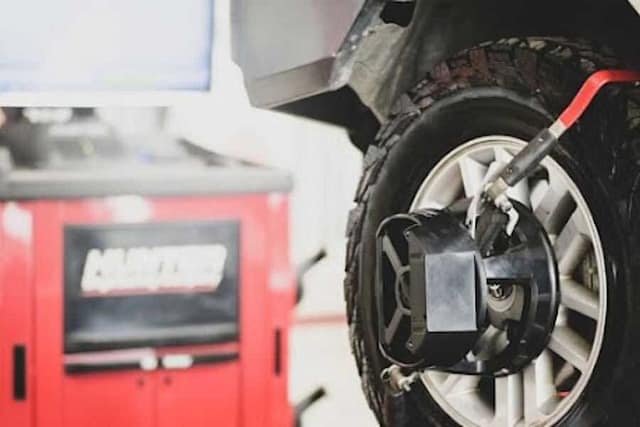
Two-wheel alignment, also called front-end alignment, targets the front wheels specifically. This service adjusts only the front axle to correct its angle. The process involves measuring and adjusting the front wheels’ position. Technicians use specialized equipment to achieve proper wheel geometry. This method remains popular because it costs less than full alignment.
Front wheel alignment focuses on three main angles: camber, caster, and toe. These angles determine how your wheels contact the road surface. When the front wheels drift out of alignment, your vehicle pulls to one side. You might notice uneven tire wear on the front tires first. The steering wheel might feel off-center during normal driving conditions.
Two-wheel alignment works well for front-wheel-drive vehicles primarily. Many budget-conscious car owners choose this option for basic maintenance. However, rear wheel issues don’t get addressed with this approach. Your rear axle remains unchanged throughout the entire alignment process.
What Is 4 Wheel Alignment?
Four-wheel alignment is a comprehensive service addressing all four wheels simultaneously. This method includes both front-end alignment and rear axle adjustment. Advanced alignment machines measure all four wheels at the same time. The rear wheels’ angle and positioning also receive careful adjustment. This holistic approach ensures complete vehicle handling and stability throughout.
Rear wheel alignment wasn’t always considered necessary by everyone historically. Modern vehicles, especially high-performance models, benefit significantly from four-wheel alignment services. Luxury cars often come with rear-wheel steering capabilities that require precision adjustment. The rear axle angle affects your vehicle’s handling characteristics remarkably. Properly aligned rear wheels improve overall driving stability and safety measures.
Four-wheel alignment addresses eight different angles across your entire vehicle. The service becomes more detailed and technically complex than two-wheel alignment. Professional technicians need advanced diagnostic equipment for accurate measurements. This comprehensive approach costs more but delivers superior results long-term. Your vehicle’s performance improves noticeably after professional four-wheel alignment completion.
Key Differences Between 2 and 4 Wheel Alignment
The most obvious difference lies in the scope and coverage areas. Two-wheel alignment addresses only the front axle wheels’ positioning. Four-wheel alignment involves measuring and adjusting all four wheels. This fundamental difference impacts pricing, time required, and overall effectiveness significantly.
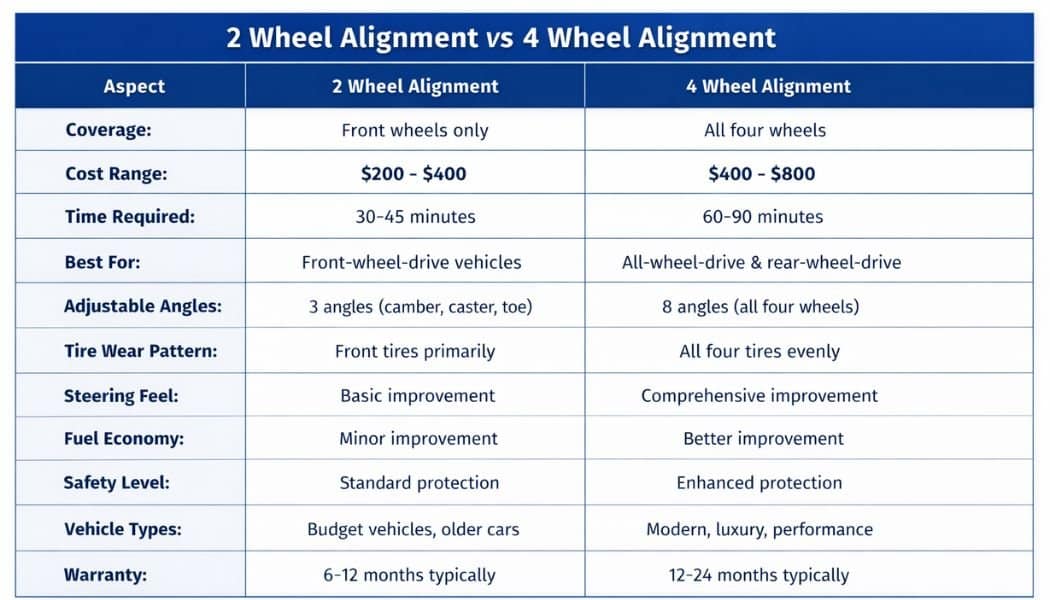
The time required differs substantially between these two alignment procedures. Two-wheel alignment takes approximately thirty to forty-five minutes, usually. Four-wheel alignment requires sixty to ninety minutes for completion, typically. Complex vehicles with advanced suspension systems need additional diagnostic time. Your technician’s experience level also affects the total service duration required.
Vehicle type significantly influences which alignment service proves most suitable. Front-wheel-drive vehicles respond well to two-wheel alignment services, typically. Rear-wheel-drive vehicles benefit substantially from four-wheel alignment procedures. All-wheel-drive vehicles absolutely require four-wheel alignment for optimal handling. Your owner’s manual provides specific manufacturer recommendations for alignment intervals. Following these guidelines ensures your vehicle maintains proper performance specifications always.
When Do You Need 2 Wheel Alignment?
Budget-conscious vehicle owners often choose two-wheel alignment for initial maintenance. This service works well if your rear wheels track straight naturally. You notice better steering response after front wheel alignment completion. Front tire wear improves noticeably when alignment angles return to specification.
Two-wheel alignment makes sense for older vehicles with basic suspension. Simple front-wheel-drive cars benefit adequately from this alignment service option. Your vehicle stops pulling to one side after proper front alignment. The steering wheel returns to the centered position during straight driving conditions.
However, two-wheel alignment misses important rear wheel alignment issues. If your rear wheels sit out of alignment, they cause problems. Even perfectly aligned front wheels cannot compensate for rear misalignment completely. Your vehicle’s handling may still feel slightly off despite front alignment.
When Do You Need 4 Wheel Alignment?
Four-wheel alignment becomes essential for modern vehicles with complex suspension systems. New cars, especially high-end models, require complete four-wheel alignment services. Performance vehicles need this comprehensive service to maintain handling precision. All-wheel-drive vehicles absolutely must have all four wheels properly aligned.
After any suspension repair or component replacement, four-wheel alignment becomes critical. Hitting a pothole or curb can knock your rear wheels out of alignment. Accidents, even minor ones, may require four-wheel alignment services afterward. Professional technicians recommend this service after significant collision damage repair work.
If your car shakes when braking, alignment might be one culprit. Misaligned rear wheels can contribute to brake vibration problems. Complete four-wheel alignment often resolves these concerning brake issues entirely. Never ignore vibration symptoms during braking without professional inspection first.
Uneven tire wear affecting all four tires suggests alignment problems. Four-wheel alignment corrects these patterns and extends tire life significantly. Vehicles pulling in specific directions benefit from complete alignment services. Your fuel economy improves when all wheels roll without resistance.
Understanding Wheel Balancing vs Wheel Alignment
It’s easy to mix up Wheel Balancing vs Wheel Alignment, but they’re actually two separate services, each designed to solve different driving issues. Wheel alignment adjusts your wheel angles relative to the vehicle’s frame. Wheel balancing ensures weight distribution across your tire and wheel assembly equally. Both services improve vehicle handling, but they address different mechanical issues.
Imbalanced wheels cause vibration that increases at highway speeds. Wheel balancing distributes weight evenly around your tire’s circumference properly. Professional equipment spins wheels and identifies heavy spots that need correction. Small weights attach to wheels to counterbalance uneven weight distribution issues.
Alignment addresses geometric angles, while balancing focuses on weight distribution. You might need both services for optimal vehicle performance and safety. Technicians perform these services separately using different specialized equipment entirely. Your vehicle benefits when both alignment and balancing receive proper attention regularly.
Common Signs Your Wheels Need Alignment
Steering wheel pulling to either side signals alignment problems clearly. You might notice this tendency especially when driving on flat highways. Releasing the steering wheel reveals how severe the pulling actually is. This safety concern requires professional alignment service as soon as possible. Uneven or premature tire wear indicates alignment issues affecting your vehicle. Inner, outer, or center tire wear patterns suggest different alignment problems. Replacing tires frequently due to poor wear suggests misalignment exists. Professional alignment prevents future tire replacement costs and improves safety measures.
Vibration in the steering wheel during straight-line driving signals trouble ahead. This sensation often indicates rear wheel misalignment in modern vehicles. Your steering feels loose or less responsive than normal functioning conditions. Professional alignment restores that crisp steering feel you once enjoyed driving. The steering wheel sits off-center when your car drives straight forward. This symptom frustrates drivers and indicates that front wheel misalignment exists. Correcting this issue improves overall driving comfort and handling characteristics significantly. Passengers notice immediately when steering feels improved after alignment service.
Benefits of Proper Wheel Alignment
Correctly aligned wheels extend your tire lifespan significantly and substantially. You’ll replace tires less frequently, saving considerable money over time. Tire wear patterns become uniform across all four tires, typically. Professional alignment protects your investment in quality tires dramatically.
Vehicle handling improves noticeably when all wheels sit in specification. Your car responds more precisely to steering inputs from drivers. The driving experience becomes more enjoyable and confidence-inspiring overall. Cornering feels more stable and controlled during normal driving situations.
Fuel economy improves when wheels roll without resistance or dragging. Misaligned wheels create friction that increases fuel consumption significantly. Modern vehicles show measurable fuel savings after proper alignment services. Your wallet benefits alongside improved vehicle performance and overall efficiency.
Safety increases substantially when your vehicle handles as designed originally. Proper alignment reduces accident risks during emergency maneuvers or evasive actions. Your vehicle remains controllable in unexpected traffic situations admirably. Passengers feel safer when the car handles predictably and responsively.
How Do You Know If You Need 2 or 4 Wheel Alignment?
Determining whether you need two or four wheel alignment depends on several factors. First, check your vehicle type and manufacturer recommendations from your owner’s manual. Front-wheel-drive vehicles typically function well with two wheel alignment services. Rear-wheel-drive and all-wheel-drive vehicles absolutely require four wheel alignment for optimal handling. Your vehicle’s age matters significantly too, as modern cars have complex suspension systems.
Newer vehicles almost certainly need four wheel alignment services absolutely. Additionally, assess recent incidents like collisions or pothole impacts you’ve experienced. Professional technicians can perform free inspections to determine your specific alignment needs. They’ll recommend the appropriate service based on your vehicle’s condition and suspension complexity. Trust their expertise rather than making decisions based purely on cost considerations.
Conclusion
Understanding 2 Wheel Alignment vs 4 Wheel Alignment helps drivers choose wisely. Each suits different vehicles and budgets, with two-wheel for simpler setups and four-wheel for modern, fully adjustable cars. Regular alignment maintenance keeps your vehicle running safely and efficiently. Your tires last longer, fuel economy improves, and handling feels better. The investment in professional alignment services pays dividends over time continuously. Schedule your alignment service today and experience the difference yourself.
Don’t ignore signs that your wheels need alignment attention immediately. Pulling steering wheels, uneven tire wear, and vibration indicate problems. Professional technicians at reputable shops can assess your vehicle thoroughly. They’ll recommend the appropriate alignment service for your specific situation.
Taking care of your car doesn’t have to be complicated. If you’re looking for reliable wheel alignment in Houston, Wise Car Care is here to help. Whether your vehicle needs a two-wheel or four-wheel alignment, our experienced technicians make sure everything is set just right. Proper alignment means smoother driving, better tire life, and added safety. Swing by Wise Car Care and keep your car feeling its best.
Saturday: 8:00 AM - 4:00 PM
Sunday: Closed