

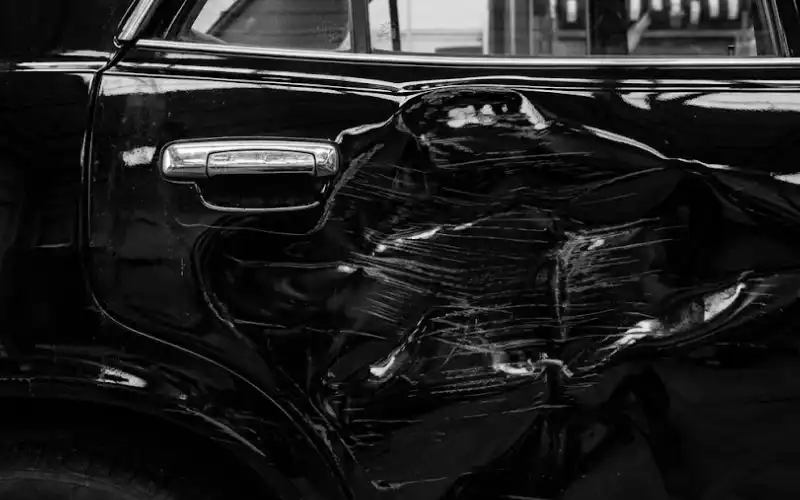
Stage-by-Stage Breakdown of the Collision Repair Process
Stage 1: Initial Inspection and Damage Assessment (Day 1)
Every collision repair begins with a complete inspection of all damage on your vehicle. Experienced technicians look beyond the obvious visible damage to find hidden structural or mechanical issues underneath.
Collision damage often hides behind panels and inside the vehicle’s frame where it is not immediately visible. A proper inspection catches hidden damage before repairs begin, preventing costly discoveries later in the process.
Our auto body repair service starts every job with a detailed written damage assessment and photo documentation. This thorough documentation protects you and ensures insurance companies have complete and accurate information.
The technician also checks mechanical components that may have been affected by the collision forces. Suspension components, cooling systems, and steering components often sustain damage in moderate to severe collisions.
Stage 2: Insurance Estimate and Approval (1 to 5 Days)
After the damage assessment, your insurance company reviews and approves the repair estimate. This stage is completely outside the body shop’s control and depends entirely on your insurance company’s process.
Some insurance companies send an adjuster to physically inspect the vehicle at our shop. Others review the estimate and photos remotely and provide approval without any in-person inspection required.
Straightforward minor damage claims often receive approval within one business day from most major insurers. Complex claims involving structural damage or multiple systems may require several days of review and back-and-forth communication.
Supplemental approvals are sometimes needed when additional hidden damage is discovered after repairs begin. This additional approval round can add two to five days to your total repair timeline unexpectedly.
According to the Insurance Information Institute, working with a shop that has established relationships with your insurer streamlines the approval process. Shops that regularly work with major insurance companies often process approvals faster than unknown shops.
Stage 3: Parts Ordering and Procurement (1 to 14 Days)
Parts availability is one of the most significant variables affecting your total collision repair timeline. The right parts must arrive before technicians can begin the actual repair work on your vehicle.
Common parts for popular vehicles like the Toyota Camry, Honda Accord, and Ford F-150 are usually in stock locally. These repairs begin quickly since parts arrive within one to two business days from nearby distributors.
Specialty parts for European luxury vehicles, older vehicles, or uncommon models often take much longer to source. BMW, Mercedes, and Audi parts sometimes require five to fourteen days depending on availability and origin.
Discontinued or rare parts for older vehicles can extend timelines significantly beyond normal expectations. In some cases, parts must be sourced from specialized suppliers or even salvage yards, adding time to your repair.
Asking your body shop about parts availability during the estimate stage helps set accurate timeline expectations. A good shop communicates proactively about parts delays rather than leaving you wondering about your vehicle’s status.
Stage 4: Structural and Frame Repair (1 to 5 Days)
Vehicles with structural or frame damage require specialized equipment and careful measurement throughout the repair. This is one of the more time-intensive stages of collision repair and should never be rushed.
Modern vehicles use unibody construction where the body and frame are integrated into one structural unit. Any significant collision force can distort this structure and require precision straightening and measurement work.
Frame straightening uses computerized measuring systems and hydraulic pulling equipment to restore factory geometry. Technicians make incremental adjustments and measure constantly to ensure the structure returns to exact specifications.
Rushing structural repairs creates safety risks that could affect your vehicle’s performance in a future collision. A properly repaired structure protects you in future accidents, while an improperly repaired one may not.
Our body shop uses advanced computerized frame measurement systems to verify complete structural restoration. We never complete a vehicle without confirming measurements match the manufacturer’s original specifications exactly.
Stage 5: Body Panel Repair and Replacement (1 to 5 Days)
With the structure confirmed correct, body panel work begins, involving either repairing existing panels or replacing them. The decision between repair and replacement depends on the extent of damage and cost-effectiveness.
Minor dents and damage in accessible areas can often be repaired using paintless dent repair or traditional methods. This is faster than replacement and costs less while maintaining the original factory panel when possible.
Severely damaged panels that cannot be straightened properly require complete replacement with new parts. Panel replacement takes more time but ensures proper fit, finish, and structural integrity for the repaired area.
New panels must be carefully fitted and aligned to match adjacent panels precisely for proper gaps and lines. This alignment work requires skill and patience to ensure the finished repair is visually seamless and correct.
Adjacent panels sometimes need disassembly to properly align and fit the replaced component correctly. This additional disassembly adds time but produces far better results than attempting repairs without proper access.
Stage 6: Priming, Painting, and Color Matching (2 to 4 Days)
The painting stage is where collision repair truly becomes an art form requiring significant skill and experience. Proper preparation before paint application is just as important as the paint process itself.
Primer application creates the foundation for paint adhesion and helps identify any remaining surface imperfections. Primer is applied, sanded multiple times, and inspected carefully before any color coat is sprayed.
Color matching is one of the most technically challenging aspects of any collision repair job. Your vehicle’s exact color code is only the starting point since paint fades and changes over years of sun exposure.
Experienced paint technicians mix and adjust formulas until they achieve an exact visual match to your existing paint. This color matching process takes time and skill to execute properly, especially on vehicles with special effect paints.
Paint application involves multiple coats, including base coat color layers and protective clear coat over the top. Each coat requires proper flash time before the next layer is applied for a durable and beautiful finish.
Stage 7: Reassembly and Detail Work (1 to 2 Days)
With painting complete, technicians reassemble all trim pieces, moldings, lights, and mechanical components. This reassembly stage requires careful attention to ensure everything fits correctly and functions properly.
Electrical connections to lights, sensors, and cameras must be properly reconnected and tested during reassembly. Modern vehicles have numerous electronic components near the collision area that must function correctly after repairs.
ADAS calibration is an increasingly important step that adds time to modern vehicle collision repairs. Advanced driver assistance systems, including cameras, radar, and sensors, often require professional recalibration after body work.
According to the National Highway Traffic Safety Administration, improper ADAS calibration after collision repair can compromise critical safety systems. These systems must work correctly since they are integral to your vehicle’s active safety features.
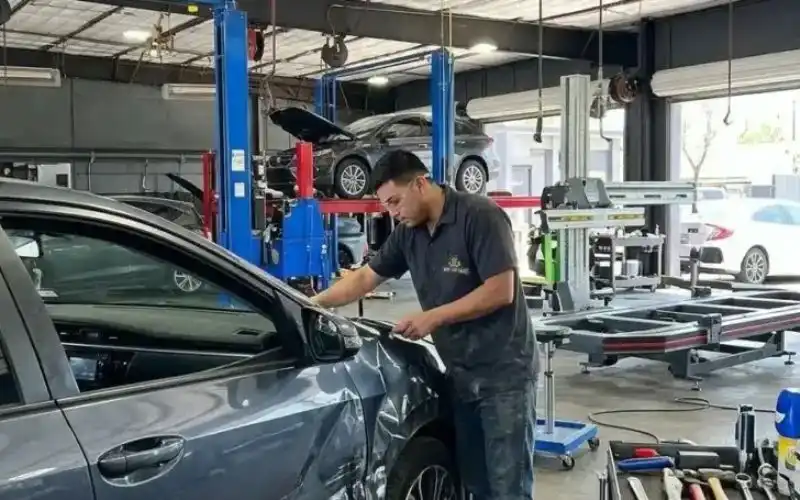
What Causes Collision Repairs to Take Longer Than Expected
Several factors can make collision repairs take longer than the original estimate. Knowing these common delays can help you plan ahead:
Parts availability: Waiting for replacement parts is one of the most common causes of repair delays, especially when parts are backordered or difficult to source.
Insurance approval: Hidden damage found during repairs may require a supplemental estimate and additional approval from the insurance company, adding extra time.
Shop workload: Busy collision repair shops may need more time to move your vehicle through inspection, repair, paint, and final quality checks.
Paint matching: Special-effect colors, older paint, or faded finishes can require extra time to achieve a seamless match with the rest of the vehicle.
Hidden damage: Damage that is not visible during the initial inspection may require additional repairs once the vehicle is disassembled.
Trust Wise Car Care for Collision Repair in Houston
Our experienced body technicians have repaired hundreds of collision-damaged vehicles for Houston area drivers. We understand that being without your vehicle is stressful, and we work efficiently to return it as quickly as possible.
We provide a detailed timeline estimate at the start of every repair based on damage assessment and parts availability. Our team communicates proactively about any delays rather than leaving you wondering about your vehicle.
Every collision repair we perform meets strict quality standards before we return your vehicle. We inspect panel gaps, paint finish, electrical systems, and mechanical integrity before considering any repair complete.
We work directly with all major insurance companies to streamline the approval and supplement process. Our established relationships help move insurance approvals faster than shops without these long-term working relationships.
Frequently Asked Questions About Collision Repair Timelines
Will My Insurance Company Affect How Long My Repair Takes?
Yes, insurance approval timing significantly affects your total collision repair timeline from start to finish. Shops cannot begin ordering parts or performing repairs until they receive authorization from your insurance company.
Straightforward claims with clear documentation typically receive approval within one to two business days. Complex claims involving structural damage, multiple systems, or disputed liability can take five or more days for approval.
Can I Get My Car Repaired Faster by Going to Any Body Shop?
Higher volume shops with more technicians and resources sometimes complete repairs faster than smaller operations. However, speed should never be prioritized over quality, especially in structural collision repairs.
The fastest repair is not always the best repair, particularly when structural components or safety systems are involved. Proper frame straightening, paint curing, and ADAS calibration all require adequate time regardless of shop preference.
Do Parts Delays Always Extend My Repair Timeline?
Yes, parts delays directly extend your repair timeline since technicians cannot complete work without the necessary components. Common parts for popular vehicles usually arrive within one to two days, while specialty parts can take much longer.
European luxury vehicles and older models with discontinued parts experience the longest parts-related delays. In rare cases, parts must be sourced internationally or from specialized suppliers, adding two or more weeks.
How Will I Know the Status of My Repair While It Is in the Shop?
A professional body shop should provide regular proactive updates throughout your entire repair process. You should not need to call multiple times wondering about your vehicle’s status during a lengthy repair.
Ask about the shop’s communication process during your initial drop-off and estimate appointment. Good shops establish clear communication schedules and contact you immediately when any unexpected issues or delays arise.