Fleet Vehicle Maintenance Checklist for Houston Businesses
Every Houston business operating fleet vehicles needs a structured maintenance checklist to control costs, prevent breakdowns, and protect drivers. A well-maintained fleet reduces unexpected downtime, extends vehicle life, and keeps your business running smoothly every single day.
Fleet maintenance is fundamentally different from personal vehicle maintenance because the stakes are higher on every single vehicle. A fleet breakdown does not just cost a repair bill. It costs a missed delivery, a lost client, an idle driver, and potential liability from a vehicle that failed in the field.
This checklist covers the 10 most critical maintenance categories every Houston fleet manager needs to track systematically. Follow it consistently, and you will dramatically reduce emergency repairs and keep your total fleet operating cost under control.
Why Fleet Maintenance Matters More in Houston
Houston’s environment creates harsher operating conditions for commercial vehicles than almost any other American city. Understanding these local factors helps you build a maintenance program that actually matches your fleet’s real-world demands.
Extreme summer heat exceeding 100 degrees accelerates engine oil breakdown, coolant degradation, and battery wear faster than manufacturer intervals assume. Standard maintenance schedules are designed for moderate climates and often fall short for Houston conditions.
Stop-and-go traffic on I-10, Highway 59, and the Beltway creates severe service conditions for every drivetrain component. Delivery vehicles and service trucks cycling through Houston neighborhoods face more braking events per mile than highway routes do.
Houston flooding events expose fleet vehicles to water intrusion affecting electrical systems, brake components, and wheel bearings regularly. Vehicles driven through standing water need specific inspection protocols that a standard maintenance checklist may not include.
Heavy loads carried by delivery vans, service trucks, and utility vehicles accelerate suspension, tire, and brake wear significantly. A fleet operating in Houston under load needs shorter service intervals than the manufacturer calculates for standard passenger use.
The 10 Point Fleet Vehicle Maintenance Checklist
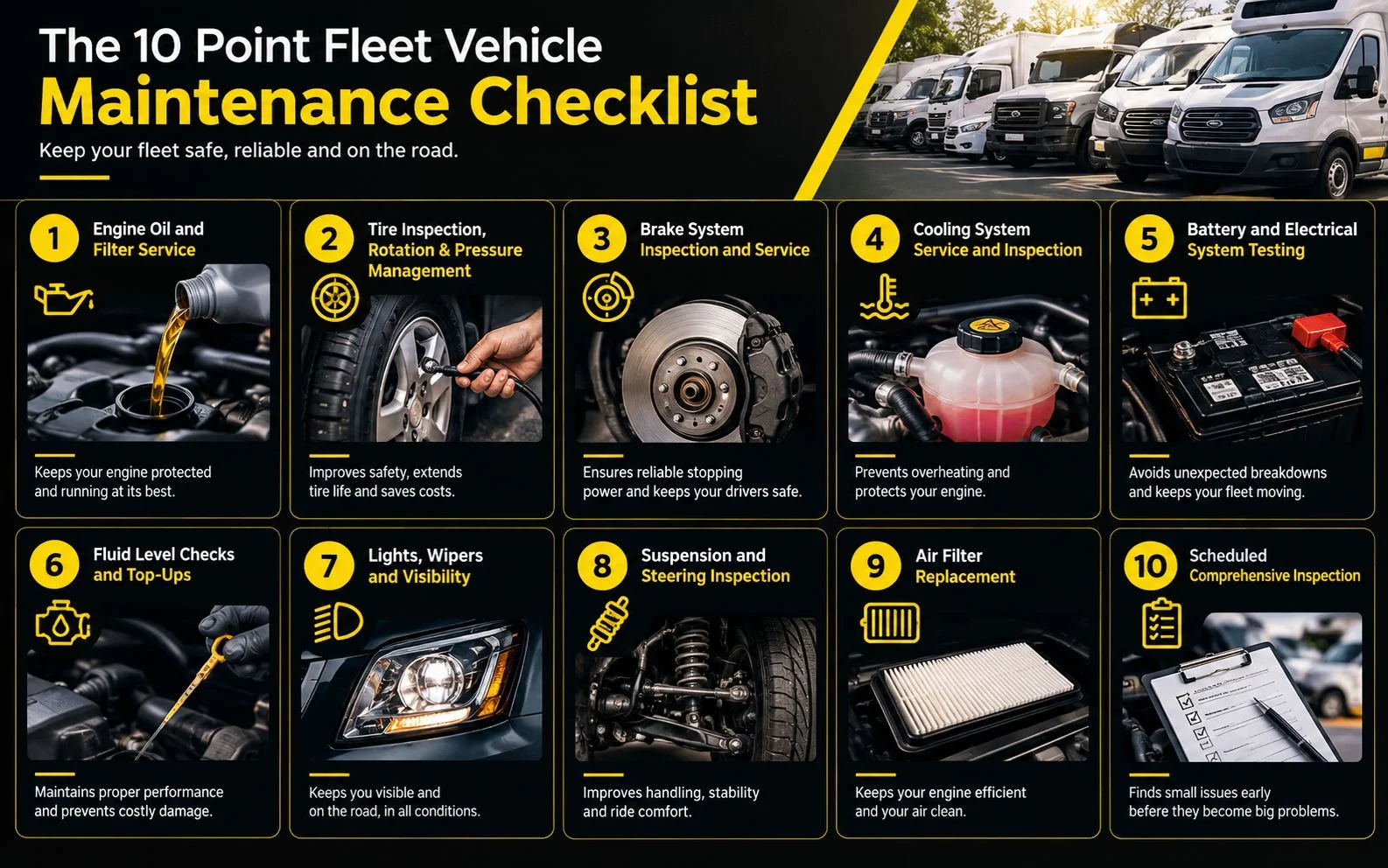
Checklist Item 1: Engine Oil and Filter Service
Engine oil is the most fundamental protection your fleet vehicles have against catastrophic engine failure. For commercial vehicles operating in Houston’s heat under load, standard oil change intervals are often too long for adequate protection.
Recommended service frequency:
Use oil specifications that meet your manufacturer’s severe service requirements for Houston operating conditions. Cheap oil is the most expensive decision you can make for a fleet that operates in extreme Texas heat daily.
Always replace the oil filter at every oil change without exception. A clogged filter forces unfiltered, contaminated oil through your engine and causes bearing damage that sidelines vehicles for weeks at a time.
Our fleet maintenance services include coordinated oil change scheduling for multiple vehicles to minimize your operational disruption. We work around your fleet’s schedule to service vehicles during off-peak hours whenever your operation requires it.
Checklist Item 2: Tire Inspection, Rotation, and Pressure Management
Tires are the single most important safety component on any fleet vehicle and the most expensive to replace prematurely. A systematic tire program saves Houston fleet operators thousands of dollars annually compared to reactive tire replacement.
Monthly tire checks should include:
Rotate tires every 6,000 to 8,000 miles to equalize wear across all wheel positions on every vehicle. Fleet vehicles carrying consistent loads develop front-to-rear wear differences faster than personal vehicles in normal use.
Document every tire inspection with date, mileage, tread depth readings, and pressure measurements for each vehicle. This data reveals wear patterns that point to alignment or suspension problems before those issues cause blowouts in the field.
Checklist Item 3: Brake System Inspection and Service
Commercial vehicles stop harder and more frequently than passenger vehicles, making brake maintenance absolutely critical for fleet safety. A brake failure on a loaded delivery vehicle creates liability exposure far beyond the repair cost itself.
Brake inspection at every service should include:
Houston’s stop-and-go delivery routes wear brake pads at two to three times the rate of highway driving. Fleet managers should expect to replace brake pads every 20,000 to 35,000 miles for urban delivery vehicles under typical Houston conditions.
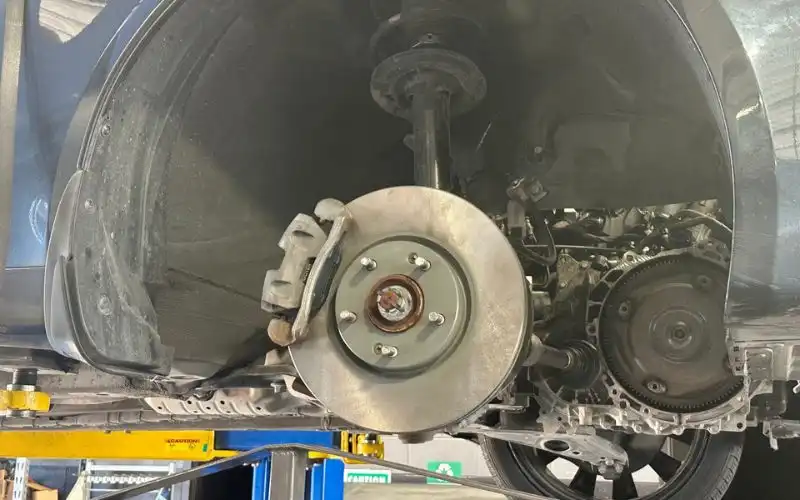
Our brake repair service offers fleet pricing for brake work performed on multiple vehicles within the same service window. Scheduling brake inspections proactively prevents the emergency brake replacements that strand vehicles during peak delivery hours.
Checklist Item 4: Cooling System Service and Inspection
Houston summer temperatures push cooling systems harder than they were designed for in moderate climate testing. A fleet vehicle that overheats on a job site or delivery route costs your business far more than a cooling system service ever could.
Annual cooling system service should include:
Change coolant every three years or 50,000 miles, whichever comes first, for fleet vehicles in Houston’s climate. Old coolant loses its corrosion inhibitors and becomes acidic, damaging aluminum components from the inside outward.
Maintain a log of any overheating incidents for each vehicle since repeat overheating accelerates head gasket wear. A vehicle that overheats twice should receive a complete cooling system evaluation before being returned to full duty.
Checklist Item 5: Battery and Electrical System Testing
Houston heat kills commercial vehicle batteries faster than cold weather does in northern climates. Fleet vehicles often show battery failure as a slow start that drivers ignore for weeks before the battery leaves them stranded somewhere.
Quarterly battery testing should measure:
Replace commercial vehicle batteries proactively after 2.5 to 3 years in Houston’s climate regardless of current test results. A fleet battery that tests marginally acceptable today often fails within the next 90 days during extreme summer heat.
Track battery installation dates for every fleet vehicle in your maintenance log and schedule proactive replacements accordingly. The cost of one towing call and emergency replacement exceeds the cost of proactive replacement for most commercial vehicle battery sizes.
Checklist Item 6: Transmission and Drivetrain Service
Automatic transmissions in fleet vehicles operating under load in Houston’s heat face conditions that shorten fluid life significantly. Transmission fluid that is dark, burnt-smelling, or overdue for service dramatically increases transmission failure risk.
Transmission service intervals for fleet vehicles:
Include driveshaft, CV axle, and differential inspections during every major service visit for rear-wheel and Four Wheel Drive fleet vehicles. Grease fitting lubrication on driveshaft joints prevents premature wear that causes vibration and drivetrain noise.
Document all transmission services with date, mileage, fluid condition notes, and any observed symptoms like slipping or delayed engagement. This history helps technicians identify developing transmission problems before they result in complete transmission failure.
Checklist Item 7: Wheel Alignment and Suspension Inspection
Commercial vehicles operating on Houston’s rough roads experience alignment and suspension wear faster than passenger vehicles on smoother routes. A fleet vehicle operating on incorrect alignment wastes tire life, fuel, and eventually suspension components.
Alignment and suspension checks should occur:
Suspension component inspection at each service should cover ball joints, tie rod ends, control arm bushings, shock absorbers, and struts for wear and play. A worn ball joint on a loaded delivery van creates liability exposure that far exceeds the cost of the replacement part.
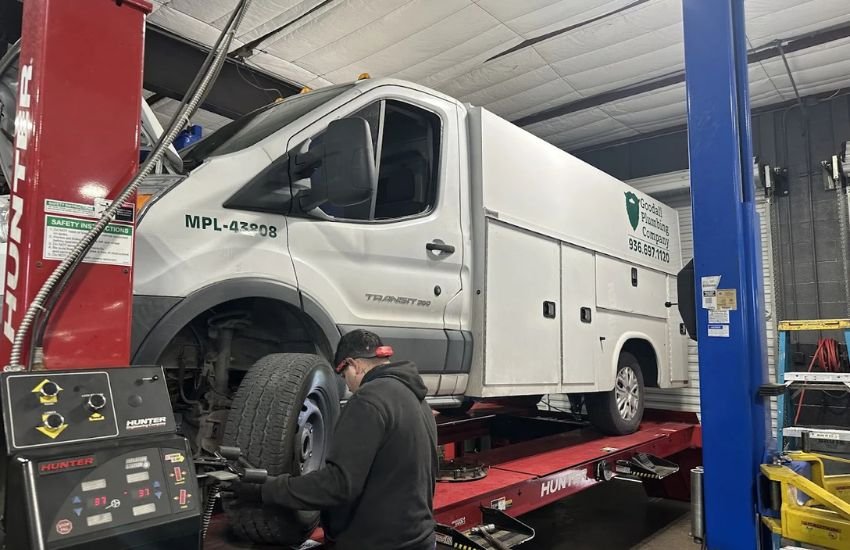
Our suspension repair service provides fleet managers with detailed written condition reports on every vehicle inspected. These reports support your maintenance documentation requirements and help justify vehicle replacement decisions when repair costs become disproportionate.
Checklist Item 8: Air Filter and Fuel System Service
Commercial vehicles operating on Houston construction sites, industrial areas, and dusty distribution routes clog engine air filters faster than normal suburban driving. A restricted air filter reduces engine performance and fuel economy immediately and measurably.
Air filtration service schedule:
Include fuel injector cleaning in your fleet maintenance rotation every 30,000 to 40,000 miles for gasoline vehicles. Carbon deposits on direct injection engines build up faster in vehicles operating on short routes that never fully warm up the engine.
Diesel fleet vehicles need specific attention to diesel particulate filter regeneration and DEF fluid levels. Short urban routes prevent DPF self-cleaning cycles from completing, which causes expensive DPF failures and emissions compliance issues.
Checklist Item 9: Lights, Safety Systems, and Wiper Inspection
Commercial vehicles have legal obligations for working lights and safety equipment that passenger vehicles do not always face. A fleet vehicle operating with non-functional lights creates liability exposure and potential DOT compliance violations simultaneously.
Monthly safety equipment checks should include:
Document every light and safety system check with the technician’s initials and date for each vehicle. This documentation demonstrates reasonable care in vehicle maintenance and is valuable evidence in liability situations.
Checklist Item 10: Fleet Records, Documentation, and Scheduling
The maintenance checklist is only as effective as the record-keeping system used to track and schedule it. Inconsistent documentation turns a great maintenance program into an unenforceable series of good intentions.
Every fleet vehicle record should contain:
Use fleet management software or even a well-maintained spreadsheet to schedule and track upcoming service needs. Reactive maintenance that responds only to breakdowns costs two to three times more than proactive scheduled maintenance programs.
Our fleet maintenance services provide Houston businesses with coordinated scheduling, detailed service reports, and proactive reminders when vehicles are approaching their next service intervals. We treat your fleet like the revenue-generating asset it actually is.
How Wise Car Care Supports Houston Fleet Operations
Our shop has been serving Houston fleet clients ranging from small delivery operations to multi-vehicle service company fleets for many years. We understand that fleet vehicles generate revenue and every hour of downtime has a direct dollar cost to your business.
We offer priority scheduling for fleet vehicles to minimize the time each vehicle spends off the road at our facility. Overnight and early morning appointments keep your fleet vehicles working during your peak operational hours.
Fleet clients receive detailed written condition reports on every vehicle inspected at our shop. These reports document current component status, upcoming service needs, and any safety concerns that require prompt attention before the vehicle returns to service.
All fleet services are performed by our ASE-certified technicians using quality parts that meet or exceed manufacturer specifications. We never substitute inferior parts to reduce per-vehicle cost since fleet uptime depends on parts that last through demanding commercial use.
We are located at 6259 N Eldridge Parkway, serving Houston businesses throughout the greater metropolitan area. We are open Monday through Friday from 8:00 AM to 6:00 PM with Saturday availability from 8:00 AM to 4:00 PM.
Call us today at 713 466 9300 to discuss your fleet’s specific maintenance needs and schedule your first fleet service appointment.
Frequently Asked Questions About Fleet Vehicle Maintenance in Houston
How Often Should Fleet Vehicles Be Serviced in Houston?
Houston’s extreme heat and stop-and-go traffic qualify as severe service conditions that shorten standard maintenance intervals. Most fleet vehicles operating in Houston should follow severe service schedules rather than standard intervals listed in the owner’s manual.
Engine oil changes every 4,000 to 5,000 miles, brake inspections every 15,000 miles, and tire rotations every 6,000 to 8,000 miles are appropriate starting points for most Houston fleet operations. Vehicles under heavy load or operating in dusty conditions need even more frequent attention.
What Is the Most Common Cause of Fleet Vehicle Breakdowns in Houston?
Battery failure is the most common cause of unexpected fleet vehicle breakdowns in Houston during summer months. Extreme heat accelerates battery internal degradation, and vehicles that start normally in cooler months fail suddenly when summer temperatures peak.
Engine overheating from neglected cooling system maintenance is the second most common cause of serious breakdowns. Fleet vehicles operating under load in Houston’s summer heat need annual cooling system inspections to prevent expensive roadside overheating incidents.
How Much Should a Houston Business Budget for Fleet Maintenance?
Industry benchmarks suggest budgeting between 15 and 20 cents per mile for light to medium duty fleet vehicle maintenance. This figure covers all scheduled maintenance, routine repairs, and a portion of the inevitable unexpected repairs any fleet experiences.
Houston businesses should add 15 to 20 percent above national benchmarks due to our climate’s accelerating effect on component wear. Tires, batteries, and cooling system components all cost more per vehicle annually in Houston than in moderate climate markets.
A fleet of ten light-duty vehicles driving 20,000 miles annually each should budget approximately $30,000 to $40,000 per year for total fleet maintenance costs in Houston. This budget prevents the far higher cost of deferred maintenance and emergency repairs.
What Documentation Should Fleet Managers Keep for Each Vehicle?
Every fleet vehicle should have a dedicated maintenance file containing complete service history, tire records, battery records, and all inspection reports. This documentation serves multiple purposes, including warranty compliance, insurance requirements, and resale value documentation.
Maintenance records also protect your business in liability situations by demonstrating reasonable vehicle care and compliance with safety standards. A fleet that cannot produce maintenance records for a vehicle involved in an accident faces substantially greater liability exposure.
Minimum documentation for each vehicle should include service date and mileage, all work performed and parts replaced, technician identification, and next service due date. We provide detailed written service reports for every fleet vehicle we service to support your documentation requirements.
Should Fleet Vehicles Follow the Same Maintenance Schedule as Personal Vehicles?
No, commercial fleet vehicles almost always need more frequent maintenance than the same vehicle model used personally. Commercial use typically involves higher daily mileage, heavier loads, more idling time, and more demanding operating environments than personal use.
Manufacturer maintenance schedules include a severe service option specifically for commercial and demanding use conditions. Houston fleet vehicles should almost always follow the severe service schedule rather than the normal service schedule in every maintenance category.
Speak with your fleet maintenance provider about creating vehicle-specific schedules based on each unit’s actual use profile. A vehicle running 50 miles per day in city traffic needs a different schedule than an identical vehicle running highway routes.
How Do I Know When a Fleet Vehicle Should Be Replaced Rather Than Repaired?
The standard fleet industry guideline suggests replacing a vehicle when annual repair costs exceed 30 percent of the vehicle’s current market value. A vehicle worth $12,000 that requires $4,000 in repairs annually is approaching the point where replacement produces better financial outcomes.
Reliability is equally important as cost since a vehicle that breaks down regularly costs more in driver downtime and missed business than repair invoices reflect. Track total cost of ownership, including downtime costs for each vehicle rather than just repair invoices.