

Symptoms of Bad Wheel Alignment and Common Causes
Your car is pulling to the right. Again. You grip the wheel a little tighter. You ignore it. Sound familiar? That’s a classic sign of bad wheel alignment. Trust me, after 15+ years in the auto repair industry, I’ve seen alignment problems wreck perfectly good tires. I’ve seen them cause accidents. And I’ve seen drivers spend hundreds of dollars on new tires without fixing the root cause. Don’t be that driver.
In this guide, I’m going to walk you through everything you need to know about bad wheel alignment. The warning signs. The causes. And most importantly, how to fix it before it costs you serious money.
What Is Wheel Alignment, Exactly?
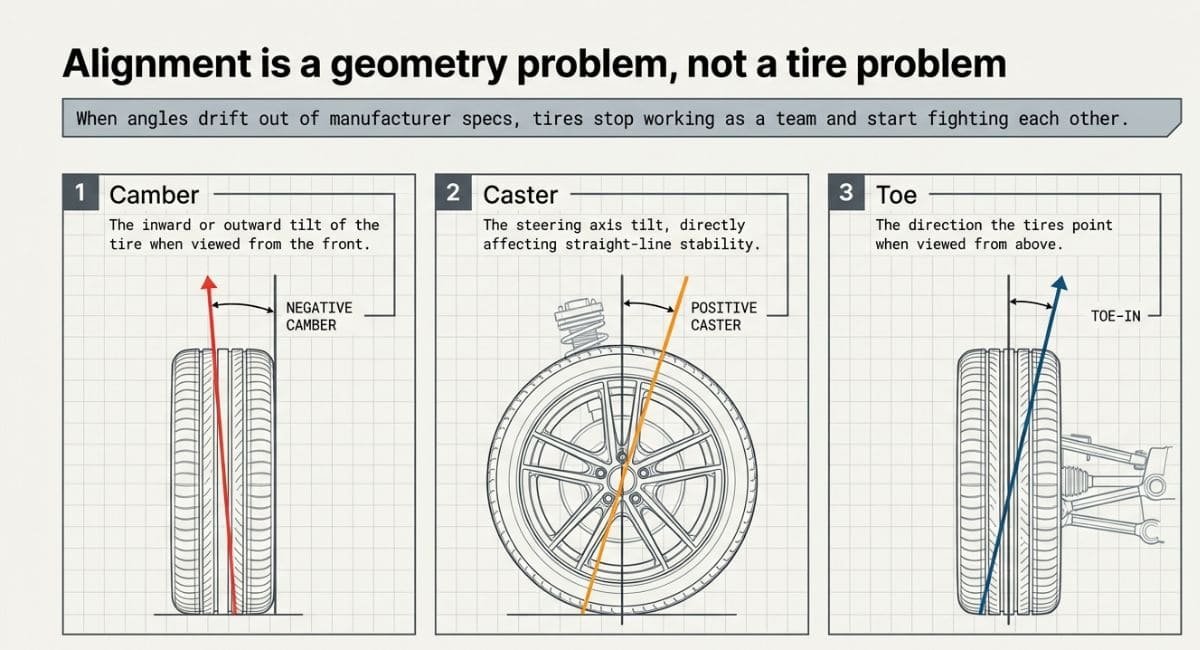
Wheel alignment is the adjustment of your car’s suspension system. It’s not about the tires themselves; it’s about the angles. When those angles drift out of the manufacturer’s specs, your tires stop working together as a team. They start fighting each other. And that fight has real consequences for your car and your wallet.
Three main angles control your alignment:
- Camber — the tilt of the tire viewed from the front
- Caster — the steering axis tilt, affecting stability
- Toe — the direction tires point, viewed from above
Even a tiny shift in any of these angles can cause real problems. The good news? Catching it early saves you a lot of trouble. Want to understand more? Read our guide on wheel balancing vs wheel alignment to see how these two services work together.
7 Clear Symptoms of Bad Wheel Alignment
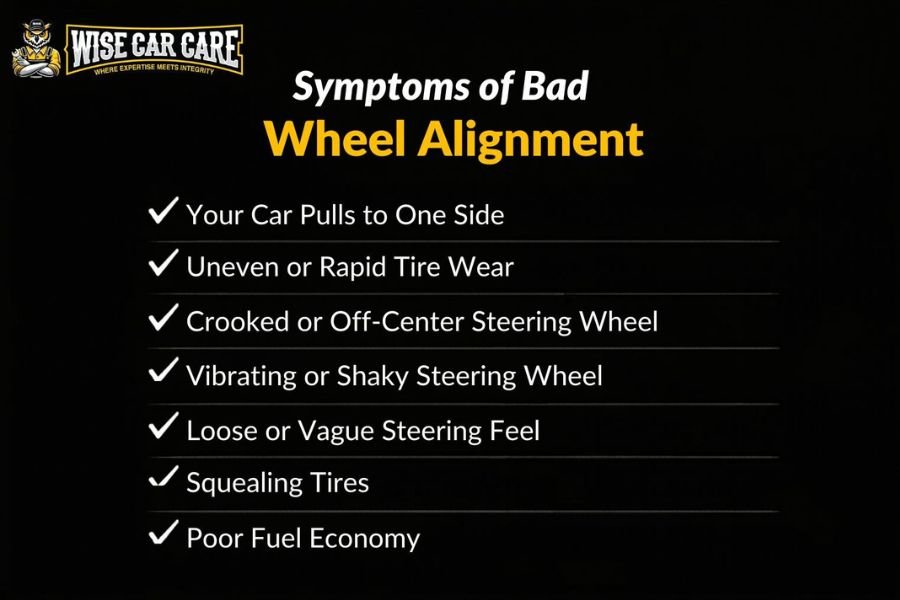
Let’s get into the real stuff. Here are the signs you should never ignore.
1. Your Car Pulls to One Side
This is the most common complaint I hear. You’re driving straight, hands loose on the wheel. The car drifts left or right. If it happens consistently, your alignment is almost certainly off. The drift indicates your toe or camber angles are uneven.
Test it safely: Find a flat, empty road. Briefly loosen your grip on the steering wheel. If the car moves in any direction, get it checked. The stronger the pull, the worse the problem.
2. Uneven or Rapid Tire Wear
This one silently drains your money. Misalignment forces your tires to scrub the pavement at the wrong angle rather than roll smoothly. You’ll notice unusual wear patterns like:
- Excessive wear only on the inner or outer edge
- Feathering diagonal scallops across the tread
- One tire wore far faster than the others
These patterns are your tires telling you something is wrong. Ignoring them means you’re burning through expensive tires fast. This is directly tied to proper tire rotation, too. Check out our blog on wheel alignment after new tires, a must-read before you install a fresh set.
3. Crooked or Off-Center Steering Wheel
When you’re driving straight, your steering wheel should be straight. The logo or center emblem should sit perfectly level. If it’s tilted even slightly, 5 to 10 degrees, that’s a warning sign. This is one of those issues that creeps up gradually. One day, you realize you’ve been driving with a crooked wheel for months.
This symptom alone is usually enough to confirm alignment is off. A simple professional alignment check will tell you exactly how far.
4. Vibrating or Shaky Steering Wheel
Steering wheel vibration is an alarm bell. It can come from unbalanced tires or bad alignment, often both. When tires wear unevenly due to misalignment, they create imbalances that translate into vibration at the wheel. You’ll typically feel it most at highway speeds.
Don’t confuse this with engine issues; always rule those out first. But vibration + pulling to one side together? That’s almost always an alignment-and-balance problem.
5. Loose or Vague Steering Feel
Steering should feel tight, responsive, and connected. If it feels sloppy, floaty, or disconnected, that’s not normal. Misalignment can cause the steering to feel “wandery.” You find yourself constantly making micro-corrections. It’s exhausting and dangerous, especially on the highway.
Loose steering can also mean worn ball joints or tie rod ends, which directly cause alignment problems, too. Read our deep dive on what power steering is in a car to better understand your steering system.
6. Squealing Tires
Squealing tires aren’t just from hard braking. When alignment is off, tires scrub sideways during normal turns. That sideways scrubbing creates that characteristic squeal. If your tires squeak through gentle corners at normal speed, alignment is a very likely culprit.
This symptom also accelerates tread wear rapidly. So the sooner you fix the alignment, the sooner the squealing stops.
7. Poor Fuel Economy
This one surprises a lot of people. Bad alignment increases rolling resistance. Your tires are fighting the road instead of rolling with it. Your engine has to work harder to maintain speed. You burn more fuel. It’s that simple. If your gas mileage has dropped for no obvious reason, alignment is worth checking.
What Causes Bad Wheel Alignment?
Alignment doesn’t go bad overnight. Here are the most common culprits:
Potholes and Road Impacts
This is the #1 cause I see. A hard hit from a pothole or curb can knock alignment out instantly. Even one significant impact can bend a tie rod or control arm. Houston roads are rough. This is a real concern for local drivers. If you’ve hit something hard recently, get an alignment check right away.
Worn Suspension Components
Ball joints, bushings, and tie rods wear down over time. As they develop play, alignment angles become inconsistent. Often, a technician will spot worn parts during an alignment check. It’s why you should never skip the inspection step. Our guide on the difference between a strut and a shock explains how these components affect your ride quality.
Normal Wear and Tear Over Time
Even perfect driving can’t stop gradual alignment drift. Road vibrations, temperature changes, and mileage all play a role. Most manufacturers recommend an alignment check every 10,000–12,000 miles. Or at least once a year, whichever comes first.
Suspension Modifications
Lifted or lowered your ride? Installed new springs or shocks? Any suspension modification changes your alignment angles. Always get an alignment done after any suspension work. Skipping this step will prematurely destroy your new tires.
Minor Accidents and Fender-Benders
Even a slow-speed bump can shift alignment angles. Many drivers walk away from minor collisions thinking all is fine. But hidden damage to steering components is very common. Always get an alignment check after any collision, no matter how small.
How to Fix Bad Wheel Alignment
Here’s the truth: alignment is not a DIY job. It requires computerized alignment equipment and trained technicians. But understanding the process helps you know what to expect.
Step 1: Inspect the Suspension First
A good technician will inspect before they align. Worn ball joints, bent tie rods, or bad bushings must be replaced first. Aligning a car with worn parts is a waste of money. The alignment won’t hold, and the problem will return quickly. Fixing the root cause is always step one.
Step 2: Use Professional Alignment Equipment
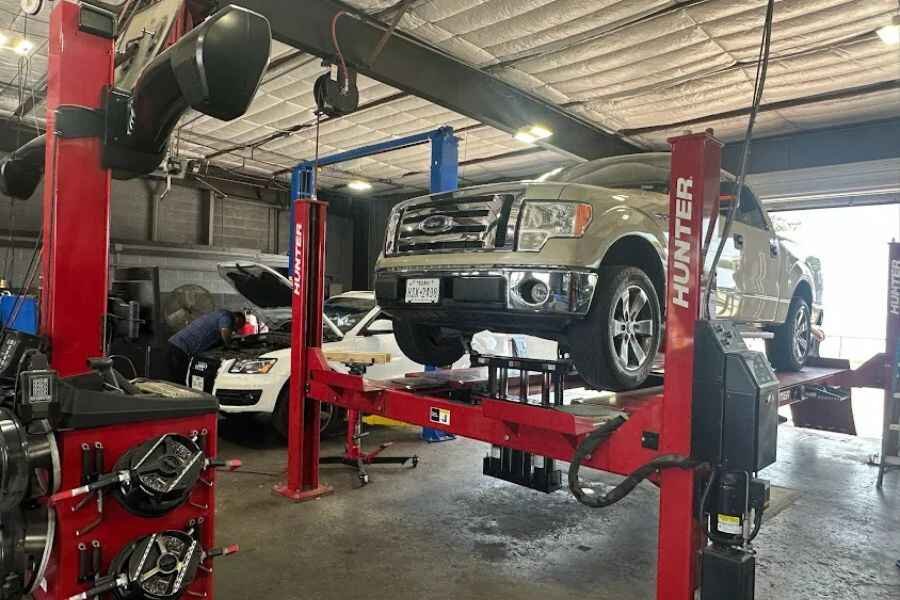
Modern wheel alignment machines use lasers and sensors. They measure camber, caster, and toe precisely to fractions of a degree. The technician adjusts each angle to match your car’s factory specs. This typically takes 30 minutes to 2 hours, depending on the vehicle. Want to know exactly how long? See our detailed blog: How long does a wheel alignment take.
Step 3: Choose the Right Type of Alignment
Not all cars need the same alignment service. Front-wheel drive vehicles typically need a 2-wheel alignment. All-wheel drive and 4WD vehicles usually need a 4-wheel alignment. Not sure which one your car needs? Our blog on 2-wheel alignment vs 4-wheel alignment breaks it down clearly.
Step 4: Follow Up With Tire Rotation
After getting aligned, rotate your tires. This helps even out any wear that occurred while the alignment was off. It extends the life of your tires significantly. According to NHTSA vehicle safety guidelines, proper tire maintenance, including alignment, reduces blowout risk.
Experience Top-Quality Service at Wise Car Care
After 15 years in this industry, I can tell you one thing with certainty: alignment problems don’t get better on their own. They get worse. Slowly. Quietly. Until you’re buying new tires way too soon or dealing with a scary moment on the highway.
The good news is that fixing alignment is fast, affordable, and completely routine. If any of the symptoms in this guide sounded familiar, book an alignment check today. Don’t wait for the tires to tell you in the loudest possible way.
Wise Car Care is the leading auto repair shop in Houston, and it has certified technicians who use the latest alignment technology. We inspect your suspension, align it to factory specs, and give you a complete report every time. Trust our wheel alignment service and call us at +1 (713) 466-9300.
Frequently Asked Questions
Can bad wheel alignment cause vibration?
Yes. Misalignment causes uneven tire wear, which creates vibration at speed. Always inspect both alignment and balance when you feel vibration.
Can I drive with bad wheel alignment?
You can, but you shouldn’t. Every mile you drive with misalignment damages your tires faster. It also puts extra strain on steering and suspension components. The longer you wait, the more expensive the repair gets.
How long does a wheel alignment last?
Under normal driving conditions, a good alignment typically lasts 10,000–12,000 miles. Rough roads, potholes, and accidents can shorten that considerably.
Can alignment affect my brakes?
Indirectly, yes. Misalignment causes uneven tire wear, which can affect how your car brakes and handles. If you notice your car pulling when braking, both alignment and brakes should be inspected.