

Wheel Balancing vs Wheel Alignment | Which Do You Need?
When it comes to vehicle maintenance, tire care often takes center stage in conversations. Most drivers understand the importance of keeping their tires in good condition. However, many people confuse two critical services that affect how your car handles the road. These services are wheel balancing and wheel alignment, both of which are essential for vehicle safety and performance. Understanding the difference between these two maintenance tasks can save you money. It can also extend the lifespan of your tires significantly. Your vehicle deserves proper care from trained mechanics who know what matters most.
What is Wheel Balancing
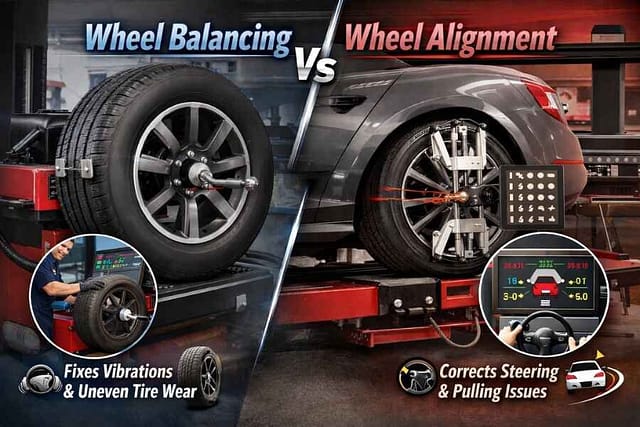
Wheel balancing is a service that ensures your tires wear evenly and smoothly. This process involves checking how the weight is distributed across your entire wheel. A mechanic places your wheel on a specialized machine to measure any imbalances that exist.
During the balancing process, small weights get attached to your wheel’s rim. These weights counteract heavy spots that naturally develop over time. Think of it like tuning a musical instrument to achieve perfect harmony. Your wheels need the same precise adjustment for smooth operation.
When your wheels lack proper balance, you’ll notice vibrations while driving. These vibrations typically happen at specific speeds on highways. Your steering wheel or the overall car might shake when you brake, or you could feel it through your seat. This unpleasant sensation indicates it’s time for a professional balancing service.
Common Signs Your Vehicle Needs Wheel Balancing
Unbalanced wheels create distinctive vibrations you’ll notice immediately while driving. These vibrations occur at specific speeds, usually above fifty miles per hour. You might feel them through the steering wheel or vehicle floor prominently.
Another telltale sign is uneven tire wear patterns across the surface. Your tires wear faster in certain spots rather than uniformly. This irregular wear indicates weight distribution problems that need immediate professional attention.
What Is Wheel Alignment?
Wheel alignment refers to adjusting your vehicle’s suspension angles correctly. It’s not about balance but rather the directional positioning of your wheels. Your car has three critical angles mechanics adjust during alignment service. The first angle is called camber, affecting how wheels tilt inward or outward. Toe angle describes whether the wheels point inward or straight forward. Caster angle influences steering stability and how wheels return to center.
Proper alignment ensures your wheels are positioned according to manufacturer specifications. This alignment maintains contact with the road surface appropriately. It improves handling, safety, and tire longevity significantly for your vehicle. Steering wheel vibration intensifies as you accelerate to higher speeds. The pulsing feeling becomes more pronounced at highway speeds, specifically. Your vehicle might shimmy or shake noticeably during normal driving conditions.
Common Signs Your Car Needs Wheel Alignment
If your vehicle pulls to one side while driving straight, alignment help is needed. This pulling happens even when you’re not applying steering pressure actively. You’ll notice it on flat, straight roads most obviously.
Uneven tire wear is another alignment problem that develops over time. However, this wear pattern differs from balancing issues in specific ways. Your tires wear excessively on one edge or throughout the surface.
Your steering wheel might feel off-center even when driving in straight directions. Steering response becomes less responsive or feels sluggish than normal. These signs mean your suspension angles need professional adjustment services.
How Wheel Balancing and Alignment Differ Fundamentally
Wheel balancing addresses weight distribution around the entire tire and wheel. Alignment concerns the angle and direction your wheels point. These are two completely different automotive maintenance procedures addressing separate issues.
Balancing fixes vibration problems caused by uneven weight distribution on tires. Alignment corrects pulling, wandering, and steering response issues from angle problems. Understanding this distinction helps you identify which service your vehicle actually needs.
The machines used for each service are completely different in operation. Balancing machines measure and identify weight distribution discrepancies electronically. Alignment machines use laser technology and sensors for angle measurement and adjustment.
Why Tire Balancing vs Alignment Both Matter for Your Safety
Both services directly impact your vehicle’s safety and driving experience significantly. Balanced wheels prevent vibrations that could mask important dashboard warning signals. Proper alignment ensures consistent traction and predictable vehicle handling at all times.
Unbalanced wheels cause excessive stress on suspension and steering components. This stress leads to premature wear and potentially expensive repairs later. Misaligned wheels create dangerous handling characteristics that increase accident risk substantially.
Regular balancing and alignment maintenance extends your tire lifespan considerably. Your vehicle handles better and rides more smoothly with proper maintenance. Fuel efficiency improves when your vehicle operates with correct specifications throughout.
The Cost Difference Between These Two Services
Wheel balancing typically costs between $50 and $100 per service. The price varies based on your vehicle size and tire type. Some facilities charge per wheel while others charge for the complete set.
Wheel alignment services generally cost between $100 and $300 per service. Luxury vehicles and those with advanced suspension systems cost more. Four-wheel alignment costs significantly more than front-wheel alignment services typically.
The investment in these services saves money long-term through reduced tire wear. You’ll avoid expensive suspension damage from neglecting these critical maintenance procedures. Think of it as preventive maintenance that protects your overall vehicle investment.
How Often Should You Get These Services Done?
Professional mechanics recommend checking wheel balance annually at minimum. You might need more frequent balancing if you drive on rough roads. Each time you replace tires, new tire balancing is absolutely essential.
Wheel alignment should be checked annually or after hitting significant road hazards. Pothole impacts and curb strikes can knock your alignment out. Major collisions definitely require realignment to ensure vehicle safety and performance.
Many drivers get alignment checks during their regular maintenance appointments conveniently. Some shops offer free alignment checks as part of their customer service. Taking advantage of these offers helps catch problems before they become serious.
What Happens If You Ignore These Maintenance Needs?
Continuing to drive with unbalanced wheels causes progressive vibration and discomfort. The vibrations transfer through your entire suspension system and vehicle frame. Eventually, this causes damage to bearings, shocks, and other expensive components.
Ignoring alignment problems leads to dangerous handling characteristics when driving. Your vehicle becomes unpredictable during braking, turning, or emergency maneuvers. This unpredictability increases accident risk for you and other drivers significantly.
Tire damage accelerates dramatically with both unbalanced and misaligned wheel conditions. You might experience blowouts from excessive wear and stress on tires. Replacing tires frequently becomes unavoidable and very costly without proper maintenance.
DIY Checks You Can Perform at Home Safely
Inspect your tires regularly for uneven wear patterns that suggest problems. Look at the inner edges, outer edges, and center of your tires. Excessive wear in specific areas indicates either balancing or alignment issues developing.
Feel your steering wheel carefully during straight-line driving on flat roads. Does it pull consistently toward one side or feel off-center? Record these observations to share with your mechanic during appointments.
Listen for unusual vibrations that worsen at specific speeds during driving. Note the speeds where vibration becomes most noticeable for your mechanic. These observations help technicians diagnose problems more efficiently and accurately.
Combining Services for Maximum Vehicle Performance
Many shops recommend getting both services performed at the same time. This combined approach addresses all wheel-related issues in one visit. Scheduling both appointments together saves time and often reduces total costs.
Getting both services ensures your vehicle operates at peak performance levels. Your ride smoothness improves significantly when all angles and balance are corrected. Fuel efficiency increases when your vehicle runs with proper specifications throughout.
Professional mechanics often identify both problems during initial vehicle inspections thoroughly. Addressing both issues prevents similar problems from developing again soon. This comprehensive approach protects your vehicle investment and ensures optimal safety.
The Bottom Line: Which Service Do You Really Need?
The answer depends on your vehicle’s specific symptoms and condition. Vibrations suggest balancing problems that need immediate professional attention. Pulling or wandering indicates alignment problems requiring adjustment services. Ideally, you need both services performed as part of regular maintenance. Think of these services as essential preventive care for your vehicle. Scheduling them annually keeps your vehicle safe, efficient, and running smoothly.
Contact a trusted mechanic today to have your vehicle inspected thoroughly. Professional diagnosis ensures you get exactly the services your vehicle needs. Don’t ignore warning signs because addressing them early saves money significantly later. Your vehicle’s safety and performance depend on wheel balancing and alignment. Both services work together to keep your driving experience safe and comfortable. Make these maintenance items a regular part of your vehicle care routine.
Wise Car Care offers professional wheel alignment in Houston, ensuring your vehicle drives straight, handles smoothly, and tires wear evenly. Our skilled technicians use advanced alignment technology to improve steering control, fuel efficiency, and overall safety. Trust Wise Car Care for precise, reliable wheel alignment that keeps your car performing at its best.
Saturday: 8:00 AM - 4:00 PM
Sunday: Closed