

Wise Car Care – Auto repair

Mon–Fri: 8:00 am – 6:00 pm   Sat: 8:00 am – 4:00 pm 6259 N Eldridge Parkway Houston, TX

How Dirty Cabin Filters Affect Car AC?

If your car’s AC is blowing weak, warm, or smelly air, the cabin air filter might be the culprit. Most drivers never think about this small filter tucked behind the glove box. But it plays a huge role in how well your car’s AC works.

In this guide, you will learn exactly how a dirty cabin filter affects your car’s AC performance. You will also learn the warning signs, replacement tips, and when to call a professional.

What Is a Cabin Air Filter and Where Is It Located?
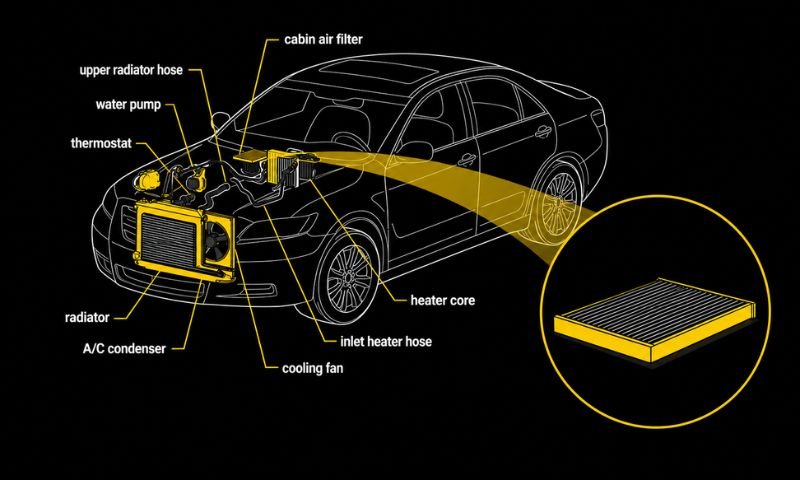
what is Cabin Air Filter in Car

A cabin air filter is a small but important component in your car. It filters all the air that flows into your vehicle cabin through the AC and heater vents. It traps dust, pollen, mold spores, smog particles, and other airborne contaminants. This keeps the air inside your car clean and safe to breathe.

Most cabin air filters are located behind the glove box or under the dashboard. In some vehicles, they are found under the hood near the windshield base. Unlike the engine air filter, the cabin filter works purely to protect the passenger compartment. It works hand in hand with your car’s AC evaporator, blower motor, and ductwork.

Can a Dirty Cabin Filter Affect AC in Your Car?

Yes, absolutely. A dirty cabin filter directly affects how your car’s AC system performs. Your AC pulls outside air through the cabin filter before blowing it into the cabin. When the filter gets clogged with dust and debris, airflow becomes restricted, and less air reaches the evaporator coil inside the AC system. This can lead to weak cooling, unpleasant odors, and extra strain on the system. Regular filter replacement and timely car AC repair service help maintain proper airflow, improve cooling efficiency, and keep your AC running smoothly. 

The evaporator needs steady airflow to absorb heat from the cabin. Without it, cooling efficiency drops significantly. You feel warm air even when the AC is set to maximum cold. Think of it like breathing through a thick cloth. The harder you breathe, the more exhausted you get. YourAC works the same way with a blocked filter.

Wise Car Care is a trusted auto repair shop in Houston, offering reliable solutions for dirty cabin filters and complete car AC repair service. Our skilled technicians improve airflow, cooling performance, and cabin air quality to keep your vehicle comfortable and running efficiently year-round.

How a Dirty Cabin Filter Affects Your Car AC: Step by Step

1. Restricted Airflow Through the Vents
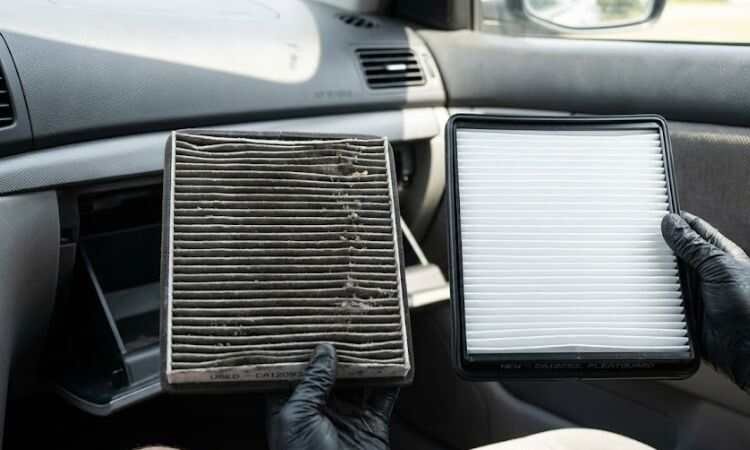
Heavily clogged dirty cabin air filter removed from car showing debris and reduced airflow

When dust, debris, and pollen build up in the filter, air cannot pass through freely. The blower motor has to work much harder to push air through. You will notice weaker airflow from the dashboard vents. Even on the highest fan setting, the air coming out feels insufficient. This is one of the earliest signs of a clogged cabin filter.

2. Reduced Cooling Performance

The evaporator coil in your car’s AC relies on consistent airflow to cool the cabin. A dirty cabin filter chokes that airflow. The refrigerant inside the evaporator cannot absorb heat properly. So the air that reaches you feels warm or only mildly cool. Your AC runs longer cycles, but still cannot keep up with the heat.

3. Evaporator Coil Freezing

This one surprises many car owners. A dirty cabin filter can actually cause the evaporator coil to freeze over. Here is what happens. The refrigerant keeps absorbing heat, but without enough warm air flowing through, it gets too cold. Moisture freezes on the coil surface, forming a layer of ice.

Once the coil freezes, no air can pass through at all. Your AC completely stops blowing cold air. You might even see water dripping inside the car when the ice melts.

4. Overworked Blower Motor

Your blower motor is responsible for pushing air through the cabin filter and into the vents. When the filter is clogged, the motor strains much harder than normal.

Over time, this constant overwork can burn out the blower motor. A blower motor replacement is far more expensive than a simple filter change. Do not let a clogged filter cause this kind of damage.

5. AC Compressor Stress

Reduced airflow increases the load on your entire AC system, including the compressor. If the system runs under poor conditions for too long, compressor damage can follow. You can read more about the symptoms of a bad AC compressor in a car to understand the risks involved.

6. Bad Odors Inside the Cabin

A dirty cabin filter becomes a breeding ground for bacteria, mold, and mildew. When your AC runs, these microorganisms get circulated into the cabin air.

You may notice a musty, stale, or even rotten smell coming from the vents. This smell is a clear sign your filter needs immediate attention.

7. Poor Defroster Performance

The cabin filter also affects your defrost system, which relies on the same airflow path. A clogged filter reduces the airflow directed over the windshield.

Your defroster will take much longer to clear fog or ice from the glass. This becomes a safety issue, especially during cold mornings or rainy weather.

Warning Signs Your Cabin Filter Is Affecting the Car AC

Knowing the signs your car AC needs immediate repair can save you from expensive repairs down the road. Here are the most common warning signs linked to a dirty cabin filter.

A certified technician can diagnose compressor issues, refrigerant leaks, blower motor failures, and more. Do not ignore these signs and hope they go away on their own.

How Often Should You Replace the Cabin Air Filter?

Most automakers recommend replacing the cabin air filter every 12,000 to 15,000 miles. This is roughly once a year for the average driver. However, if you drive in dusty, urban, or heavily polluted areas, you may need to replace it more often. City drivers who sit in traffic regularly should check their filter every 6,000 to 8,000 miles.

You should also check the filter before summer, when you rely on the car AC the most. A fresh filter going into the hot season ensures maximum cooling efficiency from day one.

Here are some factors that may require more frequent replacement:

How to Check If Your Cabin Air Filter Is Dirty

Checking your cabin filter is simple and takes only a few minutes. Here is how to do it.

  1. Locate the filter. It is usually behind the glove box or under the dashboard.
  2. Remove the filter carefully. Consult your owner’s manual if needed.
  3. Hold it up to a light source. If it looks dark, gray, or heavily loaded with debris, replace it.
  4. Smell the filter. A musty or foul odor means bacteria and mold are present.
  5. Never reuse a filter that is visibly dirty or smells bad. Always replace it with a new one.

A new cabin filter typically costs between $15 and $50, depending on your vehicle. It is one of the cheapest maintenance tasks you can do for your car’s AC health.

Types of Cabin Air Filters for Car AC Systems

Particulate Filters

These are the most basic cabin filters. They capture dust, pollen, and larger debris particles. They are affordable and effective for most everyday driving conditions.

Activated Carbon Filters

These include a layer of activated charcoal in addition to the particle filtration media. They are excellent at absorbing odors, exhaust fumes, and harmful gases like ozone.

If you frequently drive in city traffic with strong exhaust smells, a carbon filter is worth the extra cost.

HEPA Cabin Filters

High-efficiency particulate air filters capture very fine particles, including some bacteria and airborne viruses. These are the best option for allergy and asthma sufferers.

HEPA cabin filters cost more than standard options but deliver superior air quality inside the cabin.

DIY vs. Professional Cabin Filter Replacement

DIY Replacement

Replacing a cabin filter yourself is straightforward in most vehicles. It usually involves opening the glove box, unclipping a small panel, and swapping the old filter for a new one.

No special tools are required. The entire job takes around 10 to 15 minutes. Make sure you purchase the correct filter for your specific vehicle make, model, and year.

Professional Replacement

Some vehicles have awkward or difficult filter placements that make DIY replacement tricky. In those cases, a professional mechanic can handle it quickly and correctly.

A professional inspection is also recommended if you suspect deeper AC issues beyond just the filter. If replacing the filter does not restore proper cooling, the problem may lie elsewhere in the AC system.

Does a Dirty Cabin Filter Affect Fuel Economy?

Yes, it can. When the blower motor works harder due to a clogged filter, it consumes more electrical power. This puts extra load on the alternator and ultimately on the engine.

In stop-and-go city driving with the AC running constantly, a dirty cabin filter can measurably reduce your fuel efficiency. Keeping the filter clean is one of the easiest ways to maintain good fuel economy while staying cool.

Can a Dirty Cabin Filter Damage the Car AC System Permanently?

If left unchecked for a very long time, yes. A chronically clogged filter can cause the evaporator coil to freeze repeatedly. This repeated freezing stresses the refrigerant lines and the compressor.

The blower motor can burn out from constant overexertion. Mold growth inside the ductwork can also spread throughout the AC system. This causes persistent odors even after you replace the filter.

Prevention is always cheaper than a cure. Replace your cabin filter on schedule and avoid these costly long-term problems.

When to See a Car AC Professional

A new cabin filter solves most airflow and cooling complaints. But sometimes the problem goes deeper than the filter. You should visit a car AC specialist if:

Final Thoughts

A dirty cabin filter is one of the most overlooked causes of poor car AC performance. It restricts airflow, reduces cooling efficiency, strains your blower motor, and can even freeze the evaporator coil. The good news is that prevention is simple and affordable. Check your cabin filter every year or every 12,000 to 15,000 miles. Replace it on schedule. Choose the right filter type for your driving environment.

Frequently Asked Questions (FAQs)

1. Can a dirty cabin filter cause the AC not to blow cold air?

Yes. A clogged cabin filter restricts airflow to the evaporator coil. Without enough airflow, the evaporator cannot absorb heat properly. This results in warm or mildly cool air from the vents instead of truly cold air.

2. How do I know if my cabin filter is affecting my car AC?

Common signs include weak airflow from the vents, warm air despite the AC being on, musty odors from the vents, and the AC taking too long to cool the car. Checking the filter visually will confirm if it is dirty or clogged.

3. Will replacing the cabin filter improve AC cooling?

In most cases, yes. If a clogged cabin filter is the root cause, replacing it restores proper airflow immediately. You should notice improved cooling, stronger vent output, and fresher air inside the cabin right away.

4. Can a dirty cabin filter damage the AC compressor?

Over time, yes. Restricted airflow forces the entire AC system to work harder, including the compressor. Prolonged strain can shorten compressor lifespan and lead to costly repairs or a full compressor replacement.

5. How often should I change the cabin air filter?

Most manufacturers recommend every 12,000 to 15,000 miles or once a year. If you drive in dusty, polluted, or high-pollen environments, replace it every 6,000 to 8,000 miles for best results.

6. Can a dirty cabin filter cause a bad smell from the AC?

Absolutely. A clogged filter traps moisture and organic debris over time. Bacteria, mold, and mildew grow inside it. When the AC runs, these contaminants circulate through the vents and produce a musty or foul smell inside the cabin.

7. Is it hard to replace a cabin air filter myself?

For most vehicles, no. The cabin filter is usually accessible behind the glove box or under the dashboard. The job typically takes 10 to 15 minutes with no special tools required. Your vehicle owner’s manual will show the exact location and step-by-step instructions.