

Symptoms of a Bad Brake Master Cylinder | 8 Warning Signs
Your brake pedal feels different today, and something just does not seem right. The master cylinder could be the component quietly failing inside your brake system right now. I have diagnosed master cylinder problems for Houston drivers for over fifteen years at our shop. This component is the heart of your brake system, and its failure always demands immediate attention.
Most drivers do not know what a master cylinder does until something goes wrong with braking. Understanding the warning signs helps you act before a failing master cylinder becomes a complete brake failure. Let me walk you through every symptom of a bad master cylinder and what each one means for your safety. Your ability to stop safely on Houston’s busy roads depends on catching this problem early.
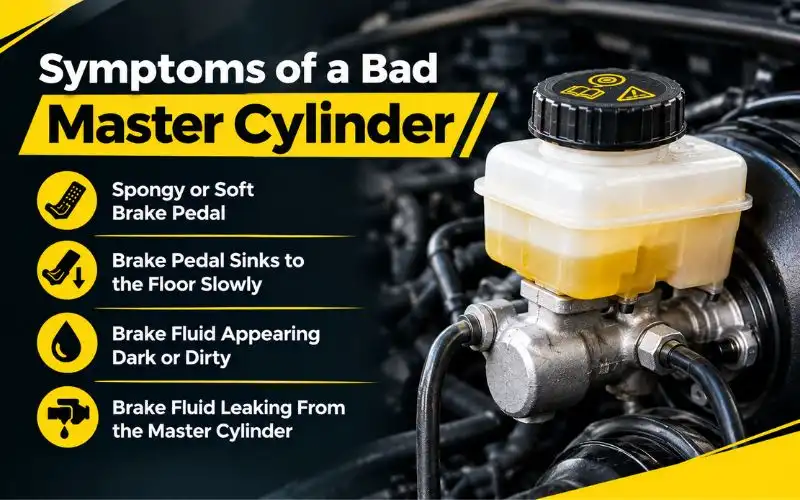
What Does the Brake Master Cylinder Do?
The master cylinder is the central hydraulic component that makes your entire braking system work. It sits directly in front of the driver between the brake pedal and the firewall of your vehicle. When you press the brake pedal, the master cylinder converts that physical force into hydraulic pressure. This pressure travels through brake lines to every wheel caliper and cylinder simultaneously.
The master cylinder contains two separate circuits for added safety redundancy. If one circuit fails, the other can still provide partial braking ability to prevent complete stopping failure. Inside the cylinder sits a piston assembly with rubber seals that compress fluid to build pressure. When these seals wear out, the cylinder can no longer maintain proper hydraulic pressure throughout your brake system.
The master cylinder also connects to your brake fluid reservoir that holds the fluid supply for the whole system. Any problem with the master cylinder affects every brake on your vehicle at the same time.
8 Warning Signs of a Bad Master Cylinder
Warning Sign 1: Spongy or Soft Brake Pedal
A spongy or soft brake pedal is the most common and noticeable symptom of master cylinder failure. Your pedal should feel firm and consistent, with the same resistance at the same point every time. When internal seals wear out, fluid bypasses the piston inside the cylinder instead of building pressure. This fluid bypass creates a soft, mushy pedal feel that makes stopping feel unpredictable and unreliable.
The spongy feeling often gets progressively worse over days or weeks as the seal deterioration continues. What starts as mild softness eventually becomes a pedal that sinks dramatically under normal braking force. Air in the brake lines from a previous service also creates a spongy pedal feel that mimics master cylinder failure. Professional diagnosis differentiates between these two causes before any expensive parts replacement is recommended.
Our brake repair service diagnoses the exact cause of soft pedal feel before recommending any specific repair. We never guess at brake system problems since your safety depends on accurate diagnosis every time.
Warning Sign 2: Brake Pedal Sinks to the Floor Slowly
A brake pedal that slowly creeps toward the floor while you hold steady pressure is a classic master cylinder symptom. This specific behavior distinguishes master cylinder failure from most other brake system problems. You press the pedal at a red light and hold it steady. The pedal gradually sinks lower over 30 to 60 seconds without any additional pressure from your foot. This slow sink is called pedal fade, and it means internal bypass is occurring inside the cylinder.
Worn piston seals allow high-pressure fluid to flow backward past the piston during sustained brake application. This backward flow reduces the hydraulic pressure maintaining your braking force at each wheel. This symptom is particularly dangerous at long red lights or during slow traffic where sustained pedal pressure is needed. Your stopping ability reduces progressively the longer you hold the pedal in an affected master cylinder.
Never confuse this slow sink with a pedal that drops immediately to the floor on first application. Immediate floor contact on first touch usually indicates a brake line rupture rather than master cylinder seal failure.
Read our detailed guide on why your brake pedal goes to the floor for complete information about this dangerous symptom. Understanding the difference between causes helps you respond appropriately to each specific brake pedal problem.
Warning Sign 3: Contaminated Brake Fluid Appearing Dark or Dirty
Your brake fluid should appear clear to light amber when it is in good condition inside the reservoir. Dark brown or black fluid indicates severe contamination that often accompanies or causes master cylinder seal failure. Master cylinder seals are made of rubber compounds that deteriorate over time from heat and age exposure. As these seals break down, rubber particles contaminate the brake fluid throughout the entire hydraulic circuit.
This contaminated fluid then accelerates wear on every other rubber seal and component throughout your brake system. A contaminated master cylinder spreads damage to calipers, wheel cylinders, and ABS module seals simultaneously.
Check your brake fluid reservoir cap while the engine is off on a flat surface for a quick assessment. Remove the cap and look at the fluid color and consistency compared to what fresh fluid should look like.
Fluid that looks like dark coffee or dirty motor oil needs immediate attention from a professional brake technician. This level of contamination means your master cylinder and possibly other brake components have been compromised.
Our guide on how often to change brake fluid explains how regular fluid changes prevent the contamination that destroys master cylinders prematurely. Houston’s humidity accelerates moisture absorption in brake fluid, making regular changes even more critical here.
Warning Sign 4: Brake Fluid Leaking From the Master Cylinder
Finding brake fluid leaking externally from the master cylinder is a clear sign of seal failure. Fluid leaks appear as wet spots around the cylinder body, the reservoir connection, or where brake lines attach. You may notice a slowly expanding wet stain on your firewall directly behind the master cylinder in the engine bay. This stain is brake fluid seeping past external seals that can no longer maintain their sealed connection.
Some master cylinder leaks occur toward the rear of the unit where it connects to the brake booster. These leaks drip into the booster and eventually contaminate its internal diaphragm, creating a secondary problem. Brake fluid leaks from any location are serious since your hydraulic circuit needs complete fluid volume to work. Losing fluid reduces hydraulic pressure, which reduces your braking effectiveness at all four wheels simultaneously.
Check under your car after it has been parked overnight for any fluid spots directly behind the front axle area. Brake fluid appears clear to light amber and feels slightly slippery between your fingers when touched.
Never top off leaking brake fluid without finding and fixing the leak source causing the loss. Adding fluid while the leak continues only delays the inevitable while your braking system continues to lose pressure capacity.
Warning Sign 5: Uneven Braking or Car Pulling to One Side
Your vehicle should slow down and stop in a perfectly straight line every single time you apply the brakes. When your car pulls noticeably to one side during braking, the master cylinder may be distributing pressure unequally. The master cylinder contains two separate hydraulic circuits that provide pressure to different wheel combinations. When one circuit develops an internal problem, it delivers less pressure than the functioning circuit to its wheels.
This pressure imbalance means one side of your vehicle stops harder than the other during every braking event. The car naturally pulls toward the side receiving more braking force since that side slows faster. This pulling sensation feels different from alignment-related pulling, which happens constantly during normal driving. Braking pull only occurs during brake application and releases when you lift your foot from the pedal.
Uneven braking creates dangerous handling problems, especially during emergency stops at highway speeds in Houston. The directional pull during emergency braking reduces your ability to steer around obstacles and hazards.
A sticking caliper or uneven brake pad wear also causes similar pulling behavior that can mimic master cylinder issues. Professional diagnosis identifies whether the master cylinder or another component is the actual cause of your pulling.
Warning Sign 6: Brake Warning Light Illuminating on Dashboard
Your vehicle’s brake warning light connects to sensors monitoring brake fluid level in the master cylinder reservoir. When fluid drops below the minimum level due to master cylinder leaks, this light activates immediately. A red brake warning light on your dashboard that appears during normal driving demands immediate attention without delay. This light confirms your brake system has detected a fault condition requiring professional diagnosis right away.
The warning light alone cannot distinguish between low fluid from a master cylinder leak versus other causes. Low fluid might also result from severely worn brake pads allowing caliper pistons to extend and drop the reservoir level. However, a master cylinder leak combined with a brake warning light creates an urgent situation that demands same-day service. These two symptoms together indicate your hydraulic brake system is actively losing its ability to function.
Never reset or ignore a brake warning light, hoping it will resolve without any professional intervention. Brake warning lights on modern vehicles are reliable indicators of real problems requiring actual repairs.
Warning Sign 7: Unusual Brake Pedal Feel During Initial Application
A properly functioning master cylinder provides consistent and predictable resistance immediately when you first touch the pedal. When the cylinder develops problems, the pedal may feel unusually different during that critical first touch. Some drivers describe a brief period of little resistance followed by the pedal firming up after pumping multiple times. This behavior occurs when internal seals have partial wear that allows some bypass before building minimal pressure.
Pumping the brakes multiple times to build a firmer pedal is a serious warning sign requiring immediate inspection. A properly functioning brake system should provide full braking ability on the very first pedal application. Other drivers notice the pedal feels fine during light braking but becomes unexpectedly soft during harder applications. This progressive softness under increased demand indicates seals that can maintain low pressure but fail under higher load.
Warning Sign 8: Visible Brake Fluid in the Brake Booster
The brake booster sits directly behind the master cylinder between the pedal and the master cylinder. When the master cylinder rear seals fail, brake fluid seeps backward into the brake booster assembly. You cannot usually see inside the brake booster without removing it, but certain clues suggest fluid intrusion. A brake booster that smells like brake fluid or shows fluid staining around its connection to the master cylinder indicates this problem.
Fluid inside the brake booster destroys its internal rubber diaphragm, which provides vacuum-assisted braking. A fluid-contaminated booster causes the brake pedal to feel very hard and require much greater foot pressure. This dual failure of both the master cylinder and brake booster significantly compounds your braking difficulty. Addressing the master cylinder promptly before fluid reaches the booster prevents this expensive secondary damage from occurring.
Signs of a hissing noise when braking alongside fluid contamination confirm brake booster damage from master cylinder leakage. Both components need replacement when this level of cross-contamination has occurred inside the system.
What Causes Master Cylinder Failure?
Understanding what causes a master cylinder to fail can help you catch problems early and avoid expensive repairs. In Houston, the climate and heavy traffic can also speed up wear.
- Age and high mileage
- Worn or damaged seals
- Contaminated or old brake fluid
- Moisture in the brake fluid
- Houston’s high humidity
- Overheated brake fluid
- Frequent stop-and-go traffic
- Heavy or repeated braking
- Physical damage from accidents
- Front-end collision or impact
Diagnosing a Bad Master Cylinder at Wise Car Care
Professional master cylinder diagnosis requires more than just observing symptoms since other brake components cause similar problems. Our technicians follow a systematic approach that accurately identifies the master cylinder as the actual cause. We begin with a detailed inspection of the brake fluid level, color, and condition inside the reservoir. Dark, contaminated fluid alongside symptoms strongly suggests that the master cylinder and potentially other seal-related problems exist.
The brake pedal test involves pressing the pedal to a set position and holding steady pressure for 30 seconds. A pedal that holds firm confirms proper seal function, while a pedal that slowly sinks reveals internal bypass occurring. We inspect all external surfaces of the master cylinder for any signs of fluid seepage, staining, or active leaks. Even small amounts of external fluid indicate seal failure that requires immediate master cylinder replacement.
A complete brake system pressure test confirms whether pressure builds correctly and holds throughout the entire hydraulic circuit. Low or inconsistent pressure readings point to master cylinder or brake line problems requiring further investigation. We also check the brake booster function since these two components work together, and failures in one affect the other. A comprehensive diagnosis of both components ensures we identify and fix all related brake system problems correctly.
How Much Does Master Cylinder Replacement Cost?
Master cylinder replacement cost varies based on your vehicle type, the quality of the replacement part, and your shop’s labor rates. Understanding typical costs helps you evaluate estimates and identify fair pricing.
Standard domestic vehicles, including Ford, Chevrolet, and Toyota, typically cost $300 to $500 for a complete master cylinder replacement. Parts range from $80 to $200, while labor adds $150 to $300 depending on accessibility on the specific vehicle.
Luxury vehicles and European brands like BMW, Mercedes, and Audi cost more for this repair due to higher parts prices. European master cylinder replacement typically costs $500 to $900 at specialist shops with proper parts and training.
A complete brake fluid flush should always accompany master cylinder replacement to remove contaminated fluid. This service adds $80 to $120 but is essential since contaminated fluid immediately damages the new cylinder’s seals.
Our brake maintenance tips for Houston drivers help you maintain your entire brake system and prevent master cylinder problems from developing prematurely. Following a regular maintenance schedule is always less expensive than emergency repairs from neglected brake systems.
Frequently Asked Questions About Bad Master Cylinder Symptoms
How Do I Know If My Brake Master Cylinder Is Failing?
The clearest symptom is a brake pedal that slowly sinks toward the floor while you hold steady pressure. This specific behavior at a red light or during slow traffic is the most reliable indicator of master cylinder seal failure.
Soft or spongy pedal feel combined with dark contaminated brake fluid strongly suggests master cylinder problems exist. Finding brake fluid leaking from around the cylinder body or its connections confirms external seal failure.
Can I Drive With a Bad Master Cylinder Safely?
No, driving with a failing master cylinder is genuinely dangerous and should be avoided whenever possible. A compromised master cylinder can fail completely without additional warning, leaving you without adequate braking ability.
The severity of your current symptoms determines how urgently you need to stop driving the vehicle. A pedal that sinks to the floor or feels extremely soft means parking the car and calling for professional assistance.
How Long Does Master Cylinder Replacement Take?
Master cylinder replacement typically takes 1.5 to 2.5 hours at a professional brake shop for most standard vehicles. This includes removal, installation, bench bleeding the new cylinder, and complete system bleeding at all four wheels.
Vehicles where the master cylinder is easily accessible complete the job toward the faster end of this range. Some vehicles with tight engine bays or complex brake line configurations take closer to the longer estimate.
What Is the Difference Between a Brake Booster and a Master Cylinder?
The brake booster amplifies your pedal force to make braking effortless with minimal foot pressure required. The master cylinder converts that amplified force into hydraulic pressure that reaches each wheel brake component.
These two components work together as a team, with the booster sitting behind the master cylinder in most vehicles. A failing booster makes the pedal feel very hard, while a failing master cylinder makes it feel soft or sinking.
How Often Should I Replace My Brake Master Cylinder?
The master cylinder does not have a set replacement interval the way spark plugs or filters do. It should last the life of the vehicle when brake fluid is changed regularly, and the system is properly maintained.
Regular brake fluid changes every two years prevent the moisture contamination that destroys master cylinder seals prematurely. Contaminated fluid is the leading preventable cause of early master cylinder failure in Houston’s humid climate.
Watch for warning symptoms rather than replacing on mileage, since a well-maintained cylinder lasts 100,000 miles or more. Prompt attention to symptoms when they appear is more important than any specific mileage-based replacement schedule.
What Fluid Does a Brake Master Cylinder Use?
The master cylinder uses the specific brake fluid type listed in your vehicle owner’s manual for your car. Most passenger vehicles use DOT 3 or DOT 4 brake fluid depending on the manufacturer’s specification.
European luxury vehicles often require DOT 4 or DOT 5.1 fluid for their high-performance brake systems. Using the wrong fluid type can damage seals and cause brake system problems similar to master cylinder failure symptoms.
Never use DOT 5 silicone fluid in a system designed for DOT 3 or 4 glycol-based fluid since these are incompatible. Mixing incompatible fluid types causes immediate and severe damage to every rubber seal in your brake system.