

What Happens If You Don't Change Your Oil Filter?
If you don’t change your oil filter, dirty, contaminated oil recirculates through your engine and causes serious damage. Skipping the filter while changing the oil defeats the entire purpose of fresh oil in your engine.
I have been performing oil changes and diagnosing engine problems for Houston drivers. This is one of the most common shortcuts drivers take that leads to expensive engine repairs down the road.
Your oil filter is not optional equipment, and it is not a component you can skip to save a few dollars. It is the only thing standing between your clean, fresh oil and the sludge, metal particles, and contaminants your engine produces.
Let me explain exactly what happens inside your engine when the oil filter is neglected or skipped entirely. The information in this guide could save you thousands of dollars in preventable engine damage.
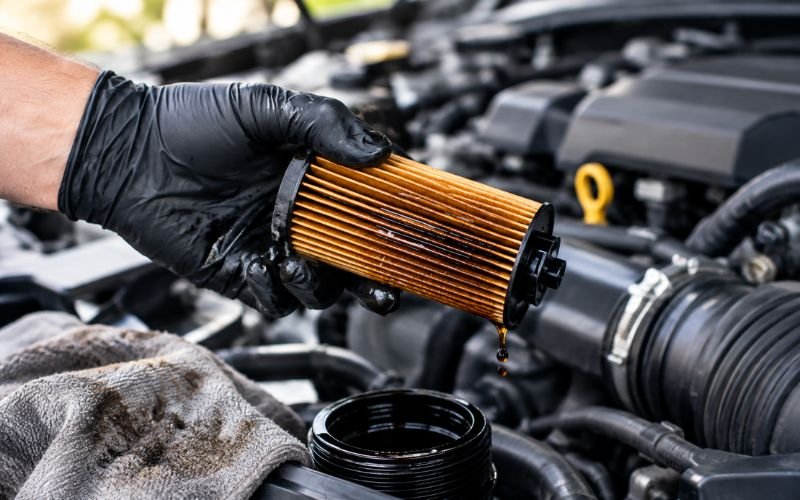
What Does an Oil Filter Actually Do?
Your oil filter sits in the lubrication circuit and cleans every drop of oil before it reaches critical engine components. Engine oil circulates through narrow passages to lubricate camshafts, crankshaft bearings, and valve train components continuously.
During normal combustion, your engine produces tiny metal particles, carbon deposits, combustion byproducts, and dirt contamination. These particles circulate with the oil and cause abrasive wear on every surface they contact during operation.
The oil filter captures these particles inside a pleated paper or synthetic filter media before they reach bearings. A clean filter can remove particles as small as 25 to 40 microns, depending on the filter quality and brand.
Without a functioning filter, these abrasive particles circulate freely and act like fine sandpaper on precision engine surfaces. The damage is microscopic at first but accumulates rapidly with every mile driven on contaminated, unfiltered oil.
What Happens If You Change Oil But Not the Filter?
Putting fresh oil through a clogged old filter immediately contaminates the new oil you just paid for. Old filters are saturated with trapped contaminants, sludge, and metal particles from the previous service interval.
When fresh oil flows through the old contaminated filter media, it picks up those stored contaminants immediately. Within minutes your brand new oil is already carrying the debris the old filter had been holding throughout the last service interval.
This is exactly why professional shops always replace the filter with every single oil change without exception. The filter and oil work together as a system, and replacing only one component makes no practical sense.
Think of it like cleaning your home with a dirty mop. You spread more contamination than you remove, regardless of how clean the soap water started out before use.
Our car oil change service always includes a new filter matched exactly to your vehicle’s specifications. We never reuse filters or skip this critical component of complete and proper engine lubrication service.
The Progression of Damage From a Neglected Oil Filter
Understanding how damage develops over time helps you appreciate why filter changes cannot be skipped or delayed. The progression is gradual at first but accelerates rapidly as contamination reaches critical levels inside.
Stage 1: Filter Saturation (Early Neglect)
During the first few thousand miles past the recommended service interval, your filter approaches its saturation capacity. The filter media fills with trapped particles and loses its ability to capture new contaminants entering the oil.
At this early stage, most of the contamination is still captured even as the filter reaches capacity. You may not notice any symptoms yet, and the engine runs relatively normally without obvious performance changes.
Stage 2: Bypass Valve Activation
Every oil filter has a pressure relief bypass valve designed to protect your engine if the filter clogs completely. When a saturated filter restricts oil flow beyond a safe threshold, this bypass valve opens automatically.
Once the bypass valve opens, completely unfiltered oil flows directly to your engine without any filtration at all. Every particle, metal fragment, and contaminant passes freely to your bearings and precision engine surfaces.
This stage is when real damage begins accelerating inside your engine from the unfiltered, contaminated oil. The bypass valve is a safety feature preventing oil starvation, but it allows dirty oil to flow unrestricted.
Stage 3: Contaminated Oil Damage
Unfiltered oil carrying abrasive particles creates microscopic scratches on bearing surfaces, cylinder walls, and the crankshaft. These scratches increase clearances between precision components that were originally machined to very tight specifications.
The specific damage includes:
- Worn crankshaft main bearings requiring expensive crankshaft replacement or engine rebuild
- Damaged camshaft lobes causing valve timing problems and reduced engine performance
- Scored cylinder walls requiring boring and oversized piston installation during rebuild
- Clogged hydraulic lifters causing ticking noises and valve train damage
- Restricted oil passages in the engine block reducing lubrication to remote components
Stage 4: Engine Sludge Formation
Old saturated filters cannot prevent the breakdown products of degraded oil from circulating continuously. These breakdown products combine with moisture, combustion byproducts, and dirt to form a thick tar-like sludge.
Sludge accumulates in oil passages, oil galleries, and the lower engine where it blocks critical lubrication pathways. A sludged engine loses oil pressure as passages clog and components that depend on oil flow begin to starve.
Engine sludge removal is possible in mild cases through engine cleaning procedures and multiple fresh oil changes. Advanced sludge accumulation requires engine disassembly and manual cleaning that costs thousands of dollars to complete properly.
Stage 5: Catastrophic Engine Failure
The end stage of severe oil filter neglect is complete engine failure from accumulated damage and oil starvation. Bearings that have been running on contaminated, unfiltered oil for extended periods eventually fail completely without warning.
A spun bearing destroys the crankshaft journal and requires complete engine replacement in most cases after failure. This catastrophic failure typically happens suddenly with a loud knocking sound and rapid complete loss of oil pressure.
At this stage, the repair cost often exceeds the value of the vehicle, making it economically irreparable. A situation that started as a skipped oil filter replacement ends with a totaled engine or complete vehicle loss.
How Often Should You Replace Your Oil Filter?
The standard professional recommendation is to replace your oil filter at every single oil change without exception. This applies whether you change oil every 3,000 miles with conventional oil or every 7,500 miles with synthetic.
Most quality oil filters are designed to last one full oil change interval before they reach their capacity limit. Expecting one filter to last through two or more oil change intervals exceeds its design specifications and capacity.
Some high-capacity filters marketed as extended service filters claim to last longer between replacements. Even these extended service filters should be replaced at least every other oil change for reliable engine protection.
In Houston’s extreme heat and stop-and-go traffic conditions, oil filter replacement at every change is especially important. Our climate creates more thermal stress and combustion byproducts that clog filters faster than moderate driving conditions.
Read our complete guide on how long you can go without an oil change to understand the full impact of delayed maintenance.
Signs Your Oil Filter May Be Failing or Clogged
Your engine communicates clearly when oil filtration has been compromised beyond safe operating limits. Recognizing these warning signs helps you act before minor filter neglect becomes major engine damage.
Warning signs to watch for:
- Low oil pressure warning light illuminating on your dashboard during normal driving
- Ticking or clattering sounds from the engine, especially during cold starts in the morning
- Noticeably darker engine oil at the dipstick between regular oil changes
- Reduced engine performance and sluggish acceleration from a previously responsive engine
- Metallic smell from the engine compartment that was not present before recently
- Check engine light appearing alongside rough running or unusual engine behavior
- Oil leaks developing from previously dry gaskets and seals around the engine
If you notice any combination of these symptoms, an oil system inspection is needed immediately. Early intervention prevents the type of damage that turns an oil filter problem into an engine replacement situation.
Oil leaks that develop alongside filter neglect deserve particular attention since they indicate system-wide pressure problems. Our guide on why your car is leaking oil explains how lubrication system problems contribute to developing leaks around seals and gaskets.
The Oil Filter Bypass Valve Explained
Many drivers do not know that oil filters contain a built-in bypass valve as a safety mechanism. This valve exists specifically to prevent complete oil starvation if the filter becomes completely blocked by contaminants.
The bypass valve is a spring-loaded pressure relief device that opens when filter restriction reaches a critical point. Standard bypass pressure thresholds range from 8 to 25 PSI depending on the manufacturer and engine specifications.
When the bypass valve opens, it routes oil around the clogged filter media to maintain flow to the engine. This prevents immediate engine seizure from total oil starvation but sends completely unfiltered oil to all components.
The bypass valve is a last-resort safety feature, not a designed operating mode for your engine’s lubrication system. Relying on bypass valve operation instead of timely filter replacement causes the progressive damage described in the stages above.
According to the American Petroleum Institute, regular oil and filter changes are the single most important maintenance item for extending engine life. This recommendation from the industry’s leading authority confirms what experienced mechanics have known for decades.
What Type of Oil Filter Should You Use?
Not all oil filters are created equal, and the quality differences among options significantly affect engine protection. Choosing the right filter for your vehicle and driving conditions matters as much as the replacement interval itself.
Oil filter quality tiers:
- Standard filters use basic paper media and provide adequate filtration for normal light driving conditions
- Mid-grade filters use improved media that captures smaller particles and holds more contamination before saturation
- Premium synthetic media filters capture the smallest particles and resist collapse under high-pressure conditions
- Extended service filters use high-capacity media designed for longer service intervals with frequent oil checks
For Houston drivers in extreme heat with stop-and-go commuting, mid-grade or premium filters provide better protection. The additional cost of a better filter is trivial compared to the engine protection value it provides throughout the interval.
How Much Does Neglecting Your Oil Filter Actually Cost?
Putting the financial reality of oil filter neglect into perspective makes the argument for proper maintenance very clear. A simple comparison between preventive costs and repair costs tells the entire story.
Preventive maintenance costs:
- New oil filter at every oil change: $8 to $25 depending on quality and vehicle
- Complete oil and filter change: $50 to $100 at a professional shop for most vehicles
- Annual oil change investment for average driver: $150 to $300 total
Repair costs from neglected filter:
- Bearing replacement during engine rebuild: $1,500 to $3,000 depending on engine size
- Complete engine rebuild with all damaged components: $3,000 to $7,000 for most vehicles
- Complete engine replacement with remanufactured unit: $5,000 to $10,000 or more
- Vehicle replacement if repair cost exceeds vehicle value: Loss of entire vehicle investment
The math is painfully simple in favor of proper filter maintenance at every oil change interval. Spending $15 on a filter prevents spending $5,000 on engine repairs from the same neglect compounded over time.
Tips for Proper Oil Filter Maintenance
Following these straightforward habits ensures your oil filter always provides maximum engine protection between services.
Best practices for oil filter maintenance:
- Always replace the filter at every oil change without exception, regardless of oil type used
- Check your oil level monthly between changes to monitor consumption and potential filter-related problems
- Use the correct filter specification for your vehicle, including thread size, bypass pressure, and anti-drainback valve
- Verify the filter was replaced by asking to see the old filter during any oil change service visit
- Verify the filter was replaced by asking to see the old filter during any oil change service visit
- Check for oil leaks around the filter area after any oil change since improper installation causes seal leaks
- Consider upgrading to a higher quality filter if you drive in severe service conditions like Houston traffic
Trust Wise Car Care for Complete Oil Change Service in Houston
Our ASE-certified technicians always replace your oil filter with a quality matched unit during every service visit. We never skip this critical step or reuse filters to save time or cut costs on any service.
We use quality filters and oils specifically selected for Houston’s extreme heat and demanding driving conditions. Your engine receives the exact protection it needs for our specific climate and traffic environment.
Every oil change service includes inspection of your oil drain plug, filter seal, and surrounding area for any leaks. We catch developing problems during routine service before they progress into expensive emergency repairs later.
All oil change and lubrication services are backed by our commitment to quality and professional workmanship throughout. Our team treats your engine with the same care we would give our own vehicles at every visit.
Frequently Asked Questions About Oil Filter Changes
Is It Okay to Change Oil Without Replacing the Filter?
No, changing oil without replacing the filter defeats the purpose of the fresh oil you just installed. New oil flowing through an old saturated filter immediately picks up the stored contamination from the previous service interval.
Within minutes of the engine starting, your brand new oil is already carrying the debris the old filter was holding. This contamination accelerates oil degradation and provides none of the protection fresh, clean oil should deliver.
Always treat oil and filter as a complete system where both must be replaced together for proper engine protection. Replacing one without the other is like putting clean water through a dirty pipe and expecting it to stay clean.
Can Skipping the Oil Filter Cause Oil Pressure Problems?
Yes, a clogged oil filter directly causes oil pressure problems that damage engine bearings and other lubrication dependent components. The clogged filter restricts oil flow until the bypass valve opens, reducing effective filtration pressure throughout.
Your oil pressure warning light illuminates when oil pressure drops below the safe minimum threshold for your engine. Seeing this light while driving is an emergency requiring immediate engine shutdown to prevent catastrophic bearing damage.
Never ignore an oil pressure warning light even briefly, since oil starvation damages bearings within seconds of pressure loss. Pull over safely and turn off the engine immediately any time this critical warning light activates.
How Do I Know If My Oil Filter Is Clogged?
A clogged oil filter activates the bypass valve which usually produces no immediately obvious symptoms initially. The first noticeable signs are often ticking sounds from the valve train and darker than normal oil on the dipstick.
Oil pressure warning light activation confirms the filter has restricted flow beyond what the bypass valve can compensate for adequately. At this stage, engine damage may already be occurring from the combination of restricted flow and unfiltered oil.
Does the Oil Filter Brand Matter for Engine Protection?
Yes, oil filter quality and brand affect how well your engine is protected between oil change intervals significantly. Budget filters use less filter media, have lower particle capture rates, and reach saturation capacity sooner than quality filters.
Premium filters from established manufacturers capture smaller particles, hold more contamination before saturation, and maintain structural integrity under pressure better. The $5 to $10 cost difference between budget and quality filters is insignificant compared to the protection difference.
How Long Can an Oil Filter Last Before Needing Replacement?
Standard oil filters are designed and tested to last one complete oil change interval for your specific vehicle and oil type. This means they should be replaced every 3,000 to 5,000 miles with conventional oil or every 5,000 to 7,500 miles with synthetic.
Extended service filters with higher capacity media are sometimes marketed for longer intervals between changes. Even these premium filters should receive fresh oil at standard intervals with careful attention to filter condition throughout.
Can I Check My Oil Filter Myself at Home?
You can visually inspect your oil filter for external damage, leaks, and loose installation from outside the vehicle. Look for oil seeping from around the filter seal, which indicates improper installation or a damaged seal.
Checking the actual internal filter condition requires removing the filter, which also releases your oil drain, so it is best done during a service. A professional technician can examine the filter media and note whether the filter shows signs of heavy contamination.