

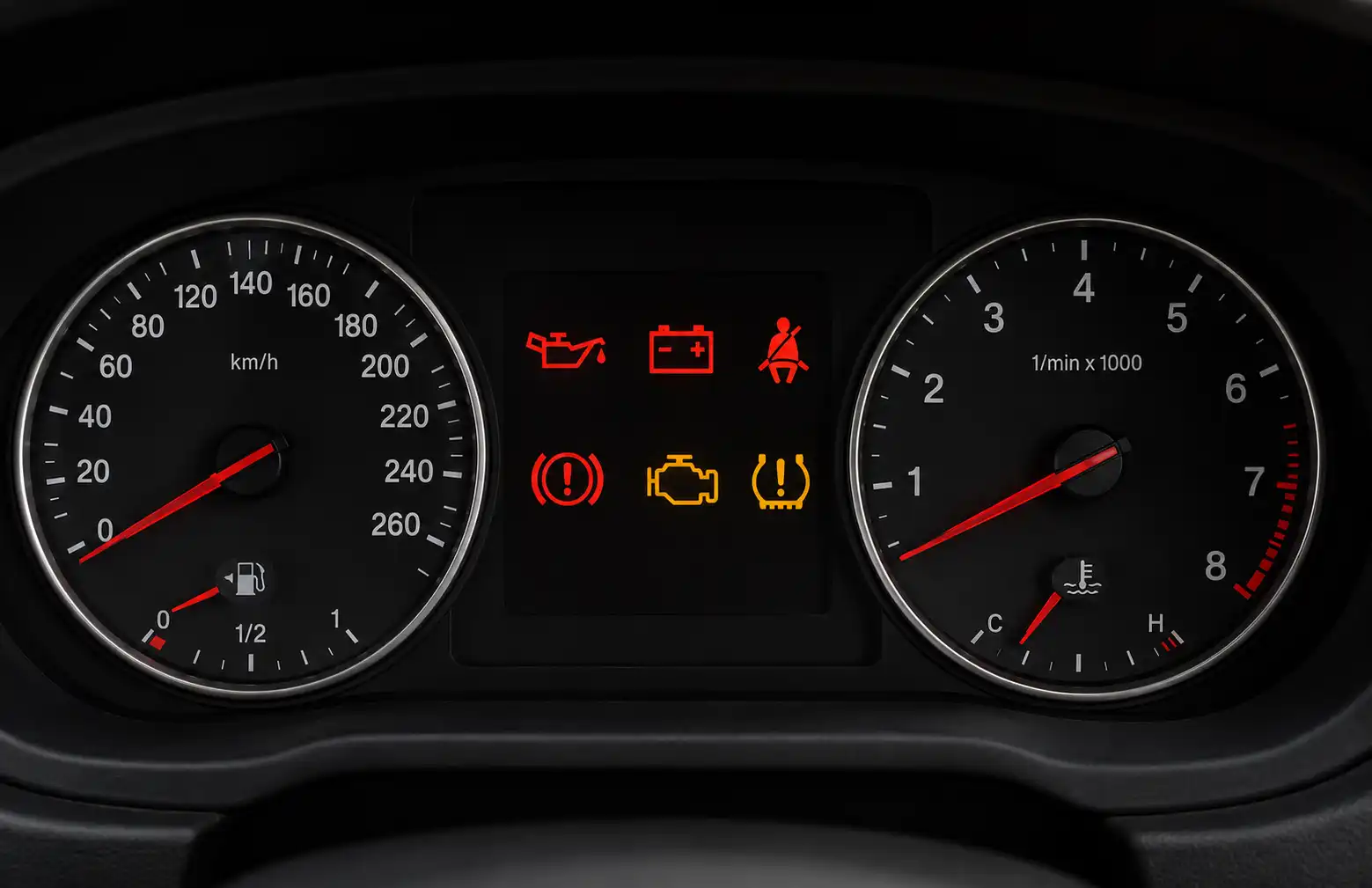
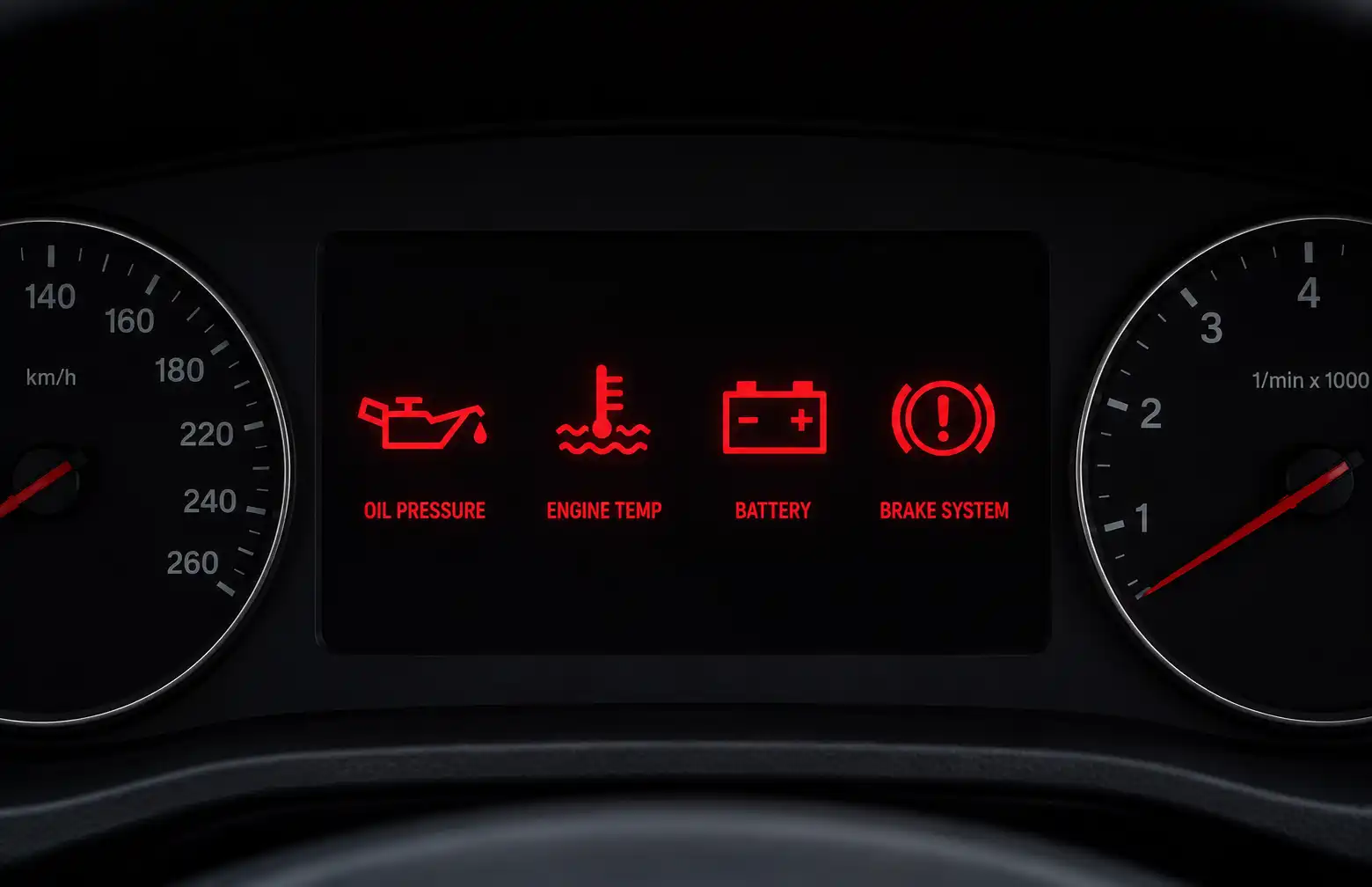
Engine Temperature Warning
The temperature warning light shows a thermometer symbol with waves indicating coolant temperature. Red illumination means your engine is overheating and suffering potential head gasket damage.
Pull over safely and turn off your engine immediately when temperature warning lights appear. Continuing to drive even one mile causes warped cylinder heads costing $2,000 to $5,000.
European engines are especially sensitive to overheating due to aluminum construction throughout. Aluminum components warp at lower temperatures than cast iron used in older domestic vehicles.
Let your engine cool completely before checking the coolant level in the reservoir. Never open a hot radiator cap, as pressurized coolant causes serious scalding burns to the skin.
Common overheating causes include coolant leaks, thermostat failure, water pump failure, or fan problems. Our engine diagnostics service pinpoints the exact cause of overheating quickly and accurately.
Battery and Charging System Warning
The battery warning light, shaped like a battery symbol, indicates charging system failure. Your alternator may have stopped charging the battery while driving down the road.
A failing alternator gives your battery approximately 20 to 30 minutes of power remaining. Prioritize getting to a safe location and calling for service immediately after parking.
European vehicles have higher electrical demands than domestic cars with more electronic systems. Multiple computers, air suspension, and advanced features drain batteries faster when alternators fail.
Dashboard dimming, power windows slowing, and radio flickering accompany battery warning lights typically. These symptoms confirm electrical system problems requiring immediate professional diagnosis and repair.
Brake System Warning
The brake warning light appears as an exclamation mark inside a circle with parentheses. This red symbol indicates serious brake system problems requiring immediate attention for safety.
First, check if your parking brake is fully released, as it triggers this light. If the parking brake is released and the light stays on, serious brake problems exist.
Low brake fluid indicates either a leak somewhere in the system or extremely worn pads. Both conditions compromise your ability to stop safely in emergencies. Find out how often brake fluid should be changed to keep your vehicle performing safely.
Pull over safely if you notice a soft brake pedal feel accompanying the brake warning light. Brake failure at highway speeds causes catastrophic accidents with other vehicles and barriers.
For comprehensive brake system maintenance, read our guide on brake maintenance tips for Houston drivers. Preventive brake care prevents dangerous warning light situations from developing unexpectedly. Get your free brake inspection in Houston at Wise Car Care.
Steering System Warning
The power steering warning shows a steering wheel with an exclamation mark beside it. Red illumination means your power steering system has failed, requiring immediate driving attention.
Without power steering, your vehicle steers very heavily, requiring significant physical force to turn. This becomes extremely dangerous during emergency maneuvers at highway speeds.
Modern European vehicles use electric power steering systems that fail due to electrical or software issues. These sophisticated systems require specialized diagnostic equipment to be repaired correctly.
Pull into a safe location and call for service when steering warning lights appear. Attempting to drive without power steering risks accidents due to the inability to control your vehicle.
Oil Level Low Warning
Some European vehicles have separate oil level and oil pressure warning lights for clarity. The oil level light indicates you need to add oil, but engine pressure is still adequate.
Unlike the oil pressure light, the oil level warning doesn’t require immediate shutdown necessarily. You have some time to safely reach a gas station or shop for oil.
Add the correct oil specification immediately after seeing this warning light appear. BMW, Mercedes, and Porsche require specific oil grades not available at all locations.
European vehicles consume oil more than typical domestic vehicles, especially high-performance models. Check oil level monthly to prevent surprise low oil level warnings during long drives.
Airbag System Warning (SRS)
The airbag warning light shows a seated person with a circle representing the deployed airbag. Red illumination means your supplemental restraint system has detected a fault condition.
This means your airbags may not deploy in an accident, protecting you from injury. A faulty airbag system leaves you without critical crash protection during accidents.
Some airbag faults cause accidental deployment, which is equally dangerous while driving at speed. Address SRS warning lights promptly through professional diagnosis and repair for occupant safety.
Yellow and Amber Warning Lights Requiring Service
Check Engine or Engine Management Light
The check engine light appears as an engine block symbol on most European vehicles. Yellow illumination indicates the engine management system detected a fault requiring diagnostic investigation.
This light covers hundreds of potential issues from minor sensor problems to serious failures. The only way to know the exact cause is professional computer diagnostic scanning.
A flashing check engine light indicates severe misfiring, potentially damaging your catalytic converter. Pull over safely and call for service immediately when the light blinks rapidly.
Steady yellow check engine lights indicate problems that should be diagnosed within the week. Ignoring check engine lights allows small problems to become expensive, major repairs later.
European vehicles store detailed fault codes in multiple control modules during Check Engine situations. Our diagnostic equipment reads codes from all systems, not just basic engine codes.
ABS Warning Light
The ABS warning light showing anti-lock braking system letters requires professional attention soon. Your regular brakes still work, but ABS protection during emergency stops is disabled.
ABS prevents wheel lockup during hard braking, maintaining steering control on slippery surfaces. Without ABS, you lose steering control during emergency braking situations.
Common ABS causes include faulty wheel speed sensors, damaged ABS rings, or control module issues. Wheel speed sensors fail from corrosion and impact damage on rough Houston roads.
European vehicles have sophisticated ABS systems with multiple sensors at each wheel constantly monitored. Accurate diagnosis requires professional equipment to read specific fault codes from the ABS module.
Tire Pressure Monitoring System
The TPMS warning shows a flat tire cross-section with an exclamation mark inside it. Yellow illumination means one or more tires have dropped below the proper pressure specification.
Check all four tires, including the spare, when TPMS warning lights appear while driving. Houston heat causes pressure fluctuations, making TPMS warnings more common in the summer months.
European vehicles require precise tire pressures specified in kilopascals or bars in addition to PSI. Check your door jamb sticker for exact pressure specifications for your specific vehicle.
Some European vehicles have individual tire pressure displays in the instrument cluster for convenience. This feature shows exactly which tire needs inflation, saving time during maintenance checks.
Traction Control and Stability System
The traction control warning shows a car with wavy lines beneath the tires, indicating slip. Illumination during driving means the system is actively working to maintain traction.
This light is normal when driving on wet or slippery surfaces in Houston rain. The system reduces engine power or applies brakes individually to prevent wheel spin.
If the light stays on continuously during normal dry road driving, system faults exist. A continuously illuminated traction control light requires professional diagnosis to restore system functionality.
Electronic stability programs in BMW, Mercedes, and Audi are more sophisticated than domestic alternatives. These systems require manufacturer-specific scan tools for accurate diagnosis and fault clearing.
Diesel Particulate Filter Warning
European diesel vehicles display DPF warning lights when the filter becomes clogged with soot. Yellow illumination means the filter needs regeneration through sustained highway speed driving.
Short city trips in Houston traffic prevent DPF from reaching the temperatures needed for self-cleaning. Drive at highway speeds for 20 to 30 minutes, allowing DPF regeneration to complete.
If the DPF light remains on after highway driving, the filter requires professional cleaning or replacement. Severely clogged DPF filters require workshop regeneration procedures using specialized diagnostic equipment.
Ignoring DPF warnings leads to complete filter blockage, costing $1,500 to $3,000 to replace. Simple highway drives prevent most DPF problems from developing into expensive repairs entirely.
Transmission Temperature Warning
Automatic transmission temperature warnings indicate fluid overheating from demanding driving conditions. This warning commonly appears during towing, mountain driving, or extended Houston traffic jams.
Pull over and let your vehicle idle with the transmission in park, allowing cooling to occur. Running the engine allows the cooling system to reduce transmission fluid temperature safely.
If the warning appears during normal driving without unusual demands, transmission service is needed. Worn transmission fluid loses its heat dissipation ability, causing temperature warnings during regular operation.
European transmissions require specific fluid types not interchangeable with domestic vehicle specifications. Using the wrong transmission fluid causes severe damage to sophisticated European gearbox components.
BMW Specific Warning Lights
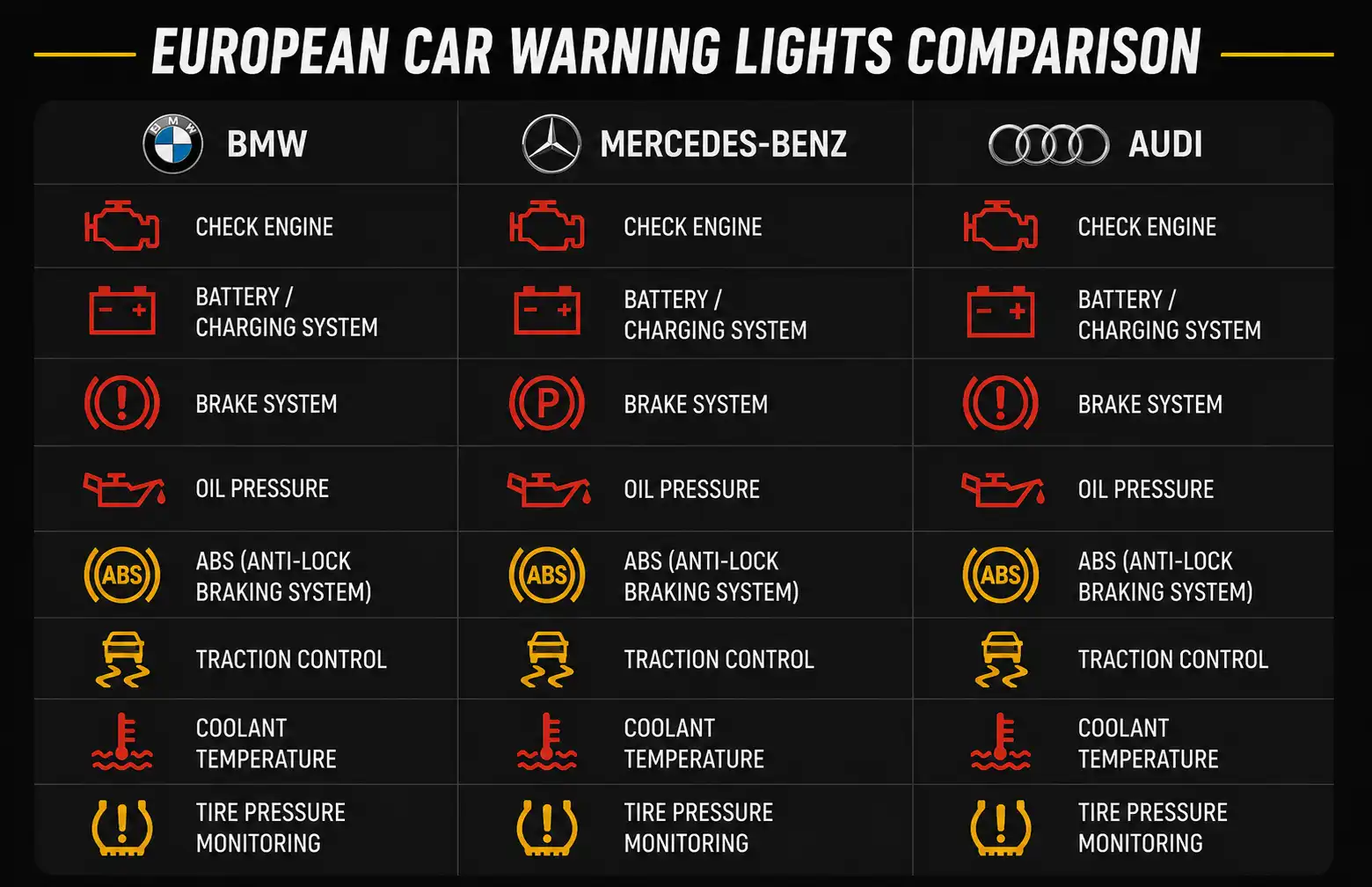
BMW vehicles display unique warning lights not found on other European manufacturers. Understanding BMW-specific symbols helps you respond appropriately to each unique warning situation.
The BMW service interval light appears as a wrench, or oil can symbol, in yellow. This indicator tracks mileage and time since last service, reminding you when maintenance is due.
BMW’s condition-based servicing system monitors multiple components individually for wear and condition. The system calculates optimal service intervals based on actual driving conditions and component wear.
Coolant level warnings appear separately from temperature warnings on many BMW models. Add coolant to the reservoir immediately when level warnings appear to prevent overheating damage.
BMW’s dynamic stability control system has its own dedicated warning light for faults detected. DSC problems require BMW-specific diagnostic equipment to read and interpret fault codes accurately.
Mercedes-Benz Specific Warning Lights
Mercedes-Benz vehicles use the intelligent service system, tracking multiple maintenance requirements simultaneously. Service due warnings appear in the instrument cluster, showing exactly what service is needed.
The ASSYST service system calculates oil change intervals based on driving style and conditions constantly. This sophisticated system extends intervals during highway driving and shortens them for city use.
Mercedes air suspension warning lights require immediate attention to prevent further system damage. Continued driving with air suspension faults damages struts and compressors, costing thousands to repair.
The BRAKE warning in Mercedes vehicles can indicate multiple different brake system conditions. Professional diagnosis determines whether this indicates pads, fluid, or hydraulic system issues.
Audi and Volkswagen Warning Lights
Audi and Volkswagen vehicles share many warning light symbols due to platform sharing between brands. The glow plug light for diesel models looks like a coil spring and requires attention.
Audi’s MMI system displays detailed warning messages in text form on many modern vehicles. These text messages provide more specific information than simple icons found on older vehicles.
The quattro All Wheel Drive system has dedicated warning lights for drivetrain fault conditions. AWD system warnings require immediate diagnosis, as driving without AWD causes uneven tire wear.
Volkswagen’s electronic power control light indicates engine management system problems affecting performance. This light commonly accompanies limp mode, which limits speed and power for protection.
When to Pull Over Immediately vs. Schedule Service
Pull over immediately and shut off the engine for these warning lights without exception. Oil pressure, engine temperature, brake failure, and steering failure lights require an immediate safe stop.
Schedule service within the day for red battery warnings and red airbag system lights. These systems don’t require immediate shutdown but demand same-day professional attention.
Schedule service within the week for all yellow and amber warning lights appearing. These indicate developing problems that won’t cause immediate breakdown but worsen without attention.
Ignoring yellow warning lights for months leads to more expensive repairs and potential breakdowns. Addressing problems early when yellow keeps costs predictable and manageable for owners.
What to Do When Warning Lights Come On
Stay calm and assess which light is illuminated and what color it displays on the dashboard. Color determines urgency and guides your immediate response to the warning situation.
For red lights, immediately reduce speed and find the nearest safe place to stop. Turn on hazard lights, warning other drivers you’re pulling over for safety reasons.
Never panic or brake suddenly when warning lights appear during highway driving speeds. Controlled safe stopping protects you and other drivers from secondary accident situations.
Call our European auto repair specialists immediately after safely stopping your vehicle nearby. We provide phone guidance, helping you determine if towing is necessary or if safe driving is possible.
Document what light appeared and any unusual sounds or sensations accompanying the warning. This information helps technicians diagnose problems faster, saving diagnostic time and your money.
Why European Cars Have More Warning Lights
European vehicles have significantly more electronic systems than typical domestic vehicles on the roads. BMW, Mercedes, and Audi use dozens of control modules monitoring hundreds of individual parameters.
Air suspension, active steering, advanced traction systems, and performance management all have dedicated monitoring. Each system generates specific fault codes readable only with manufacturer-appropriate diagnostic equipment.
This sophistication delivers superior performance and comfort but requires expert diagnosis when problems occur. Generic OBD scanners read only basic codes, missing European-specific fault information needed.
Independent shops specializing in European vehicles invest in manufacturer-specific diagnostic equipment for accuracy. We use advanced scan tools to read fault codes from every module in your European vehicle.
Our European auto repair service covers BMW, Mercedes, Audi, Volkswagen, Volvo, and more. We provide dealer-quality diagnostics at independent shop prices for Houston European car owners.
Preventive Maintenance Reduces Warning Light Occurrences
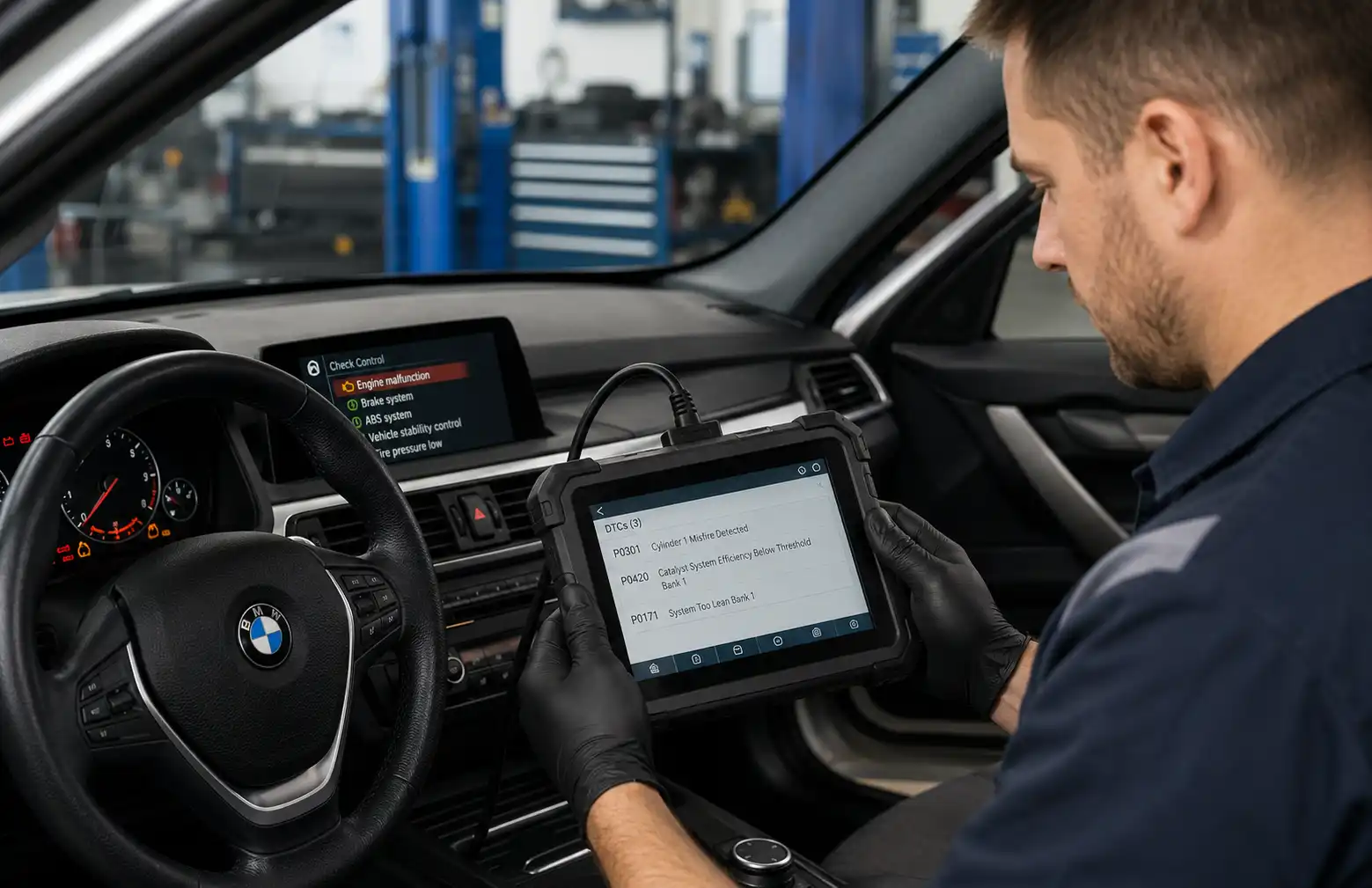
Regular preventive maintenance dramatically reduces the frequency of warning lights appearing on dashboards. Most warning lights indicate problems that developed from neglected maintenance over time.
Following manufacturer service intervals prevents sensor failures and component wear, triggering warnings. European vehicles have specific maintenance schedules designed for their sophisticated components and systems.
Oil quality matters enormously for European engines that require specific viscosity grades throughout operation. Using incorrect oil triggers oil pressure and engine management warnings from sensitive monitoring systems.
Schedule annual comprehensive inspections, allowing technicians to identify developing problems before warnings appear. Catching issues during inspections costs far less than emergency repairs after warning lights illuminate.
Contact Wise Car Care at 713-466-9300 for expert European vehicle maintenance and diagnostics. Our experienced technicians keep your BMW, Mercedes, or Audi running without unexpected warning light surprises.
Frequently Asked Questions About European Car Warning Lights
1. Is it safe to drive with a yellow warning light illuminated?
Yellow warning lights indicate developing problems requiring attention, but not immediately dangerous conditions. You can typically drive to a nearby repair shop safely when yellow lights appear. However, never ignore yellow warning lights, hoping they’ll resolve themselves without professional attention. Ignoring them allows small problems to develop into expensive failures requiring major repairs.
2. Why do European cars have more warning lights than American cars?
European vehicles have significantly more electronic systems and sensors than typical domestic vehicles. Dozens of control modules monitor hundreds of individual parameters, generating extensive warning light coverage. Air suspension, active steering, complex traction systems, and performance management all have dedicated monitoring. This sophistication provides superior performance and driving dynamics but requires expert maintenance.
3. Can I reset European car warning lights myself at home?
You can clear some basic warning lights using OBD scanners purchased at auto parts stores. However, clearing lights doesn’t fix the underlying problem that caused them to illuminate. Warning lights return immediately if the fault condition still exists in the vehicle. Clearing codes without repairs masks symptoms, potentially leading to more expensive damage later.
European-specific warning lights require manufacturer scan tools to clear properly from all modules. Generic OBD scanners often can’t access European-specific systems storing fault information permanently.
4. How much does European car warning light diagnosis cost?
European vehicle diagnostic scanning typically costs $100 to $200 at specialized independent shops. This scan reads fault codes from all modules throughout your entire vehicle’s system.
Dealerships charge $150 to $300 for the same diagnostic scanning with branded equipment. Independent European specialists provide equal or better diagnostics at significantly lower costs.
Some warning lights indicate minor issues with low repair costs while others involve expensive components. Professional diagnosis determines exact costs before authorizing any repairs on your vehicle.
5. What happens if I ignore the check engine light on my European car?
Ignoring check engine lights allows small sensor problems to develop into expensive, major failures. What costs $200 to fix today can become $2,000 if ignored for months of driving. Some check engine conditions cause catalytic converter damage, adding $1,500 to $3,000 to repairs. The catalytic converter is destroyed by misfires or rich fuel conditions, damaging expensive components.
Failed emissions tests result from active check engine lights during state inspection procedures. Addressing check engine lights promptly ensures your vehicle passes emissions inspection requirements.
6. Do European cars require dealer service for warning light repairs?
No, qualified independent European car specialists diagnose and repair all warning light issues. Independent shops like Wise Car Care use professional scan tools to read all European vehicle systems. Dealer service costs 30 to 50% more than independent specialist shops for identical work. You receive the same quality repairs for significantly less money at qualified independents. Choosing independent specialists doesn’t void your warranty if proper documentation is maintained. Keep all service records showing maintenance was performed to manufacturer specifications and intervals.
7. How long can I wait before addressing an amber warning light?
Address amber warning lights within one week of first noticing them appear while driving. These indicate developing problems that won’t cause immediate breakdown but worsen with continued driving. Some amber lights, like service interval reminders, can wait until your next scheduled appointment. Others, like ABS or traction control warnings, require attention sooner for safety assurance. When uncertain about urgency, call our shop describing the light symbol and vehicle information. We provide phone guidance, helping you determine appropriate response timing for your specific situation.