

Why Your Brake Pedal Goes to the Floor and How to Fix It
Your brake pedal suddenly sinks to the floor with little to no resistance while driving. This terrifying experience is one of the most dangerous brake problems you’ll ever encounter. I’ve been diagnosing sinking brake pedals for over 15 years in a Houston auto repair shop. A brake pedal that goes to the floor always indicates a serious brake system failure.
Your brake system uses hydraulic pressure to stop your vehicle quickly and safely. When the pedal sinks to the floor, hydraulic pressure has been lost somewhere in the system. This guide explains every cause, what to do immediately, and how to fix it. Your family’s safety depends on understanding and addressing this dangerous brake condition right away.
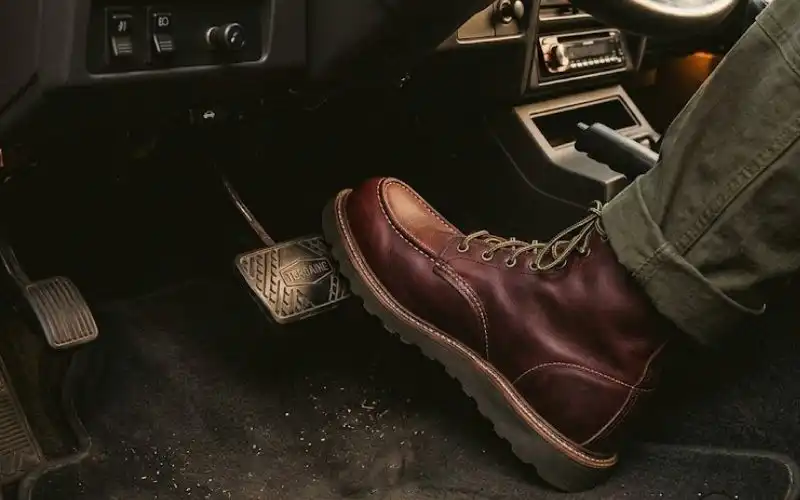
Is It Dangerous to Drive With a Sinking Brake Pedal
Yes, driving with a brake pedal that goes to the floor is extremely dangerous. You have compromised or zero braking ability, creating an immediate risk of serious accidents. Pull over safely and immediately when you feel the pedal sinking toward the floor. Turn on hazard lights, warning other drivers you’re experiencing an emergency situation.
Do not attempt to drive to a repair shop when pedal pressure is compromised significantly. One emergency stop without working brakes causes a serious accident, injuring you and others. Call for a tow truck and professional brake service immediately after safely stopping your vehicle. This situation cannot wait overnight or until a more convenient time permits service.
According to the National Highway Traffic Safety Administration, brake failures cause thousands of serious accidents annually. A sinking brake pedal is a critical safety emergency requiring immediate professional attention always.
Common Causes of a Brake Pedal That Goes to the Floor
1. Brake Fluid Leak in the System
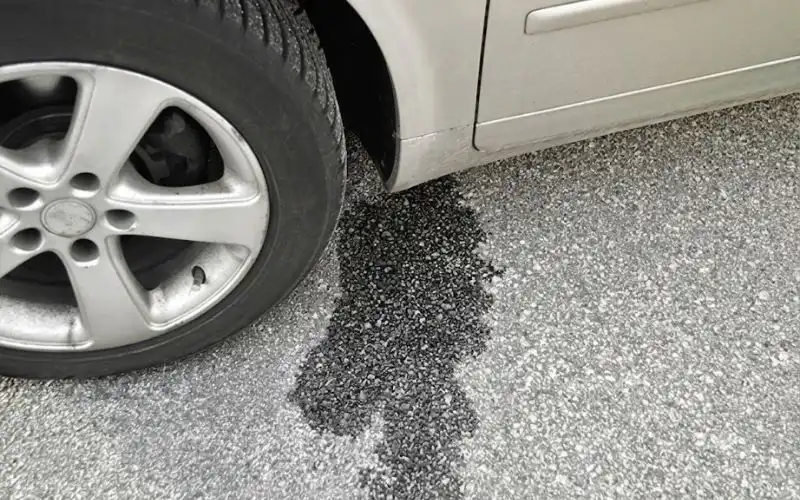
A brake fluid leak is the most common cause of a sinking brake pedal. Your hydraulic brake system requires sealed fluid-filled lines to create stopping pressure effectively. Leaking fluid reduces hydraulic pressure, causing the pedal to travel further before generating braking force. A significant leak causes the pedal to sink completely to the floor with no resistance.
Brake fluid leaks occur at several locations throughout your brake system. Brake line corrosion, caliper seal failure, wheel cylinder failure, and master cylinder leaks all cause pedal problems. Inspect the ground under your vehicle for clear to light brown fluid puddles. Brake fluid has an oily consistency and a slightly sweet odor, distinguishing it from other automotive fluids.
Look for wet spots on wheels, around brake lines, or under the hood near the master cylinder. Any visible moisture around brake components indicates a leak requiring immediate professional repair. Houston’s coastal humidity accelerates brake line corrosion, causing leaks faster than in dry climates. Older vehicles especially suffer from corroded steel brake lines developing pinhole leaks over time.
Check your brake fluid reservoir under the hood for low fluid levels regularly. Significantly low fluid confirms a leak somewhere in your brake system requiring immediate diagnosis. Our comprehensive brake repair service includes complete leak detection and brake line inspection. We find even small leaks before they cause complete brake failure and dangerous situations.
2. Failed Master Cylinder
The brake master cylinder is the heart of your entire hydraulic braking system. It converts brake pedal force into hydraulic pressure sent to all four wheel brakes. A failed master cylinder can no longer maintain proper hydraulic pressure throughout the system. The brake pedal travels to the floor because pressure bleeds back past worn internal seals.
Internal seal failure allows fluid to bypass pistons inside the master cylinder without resistance. You press the pedal, and fluid simply moves back and forth internally without pressurizing lines. Symptoms of master cylinder failure include a pedal that slowly sinks under steady pressure. You hold the brake pedal at a stoplight and feel it gradually creeping downward.
External master cylinder leaks appear as fluid weeping from the rear of the cylinder body. This area connects to the brake booster assembly located directly behind the master cylinder. Master cylinder failure is especially common on vehicles with old, contaminated brake fluid present. Moisture in brake fluid corrodes internal cylinder walls and deteriorates rubber seal components.
Houston’s humidity accelerates moisture contamination of brake fluid, causing premature master cylinder seal failure. Changing brake fluid every two years prevents this expensive failure from occurring.
3. Air in the Brake Lines
Air is compressible while brake fluid is not, making air in lines extremely dangerous. Even small air bubbles in brake lines cause a spongy pedal feel and reduced braking. Larger amounts of air cause the pedal to sink toward the floor without building pressure. You pump the pedal rapidly and feel pressure temporarily build, then quickly disappear.
Air enters brake lines during brake service when proper bleeding procedures are not followed. Any time a brake line is opened, air must be bled out completely before driving. Brake fluid leaks allow air to enter lines as the fluid level drops in the system. Fixing leaks and properly bleeding the system restores firm pedal feel and proper braking.
Severely worn brake pads allow calipers to extend far, causing air entry into the system. This is why addressing squeaking brakes early prevents more serious sinking pedal problems. Professional brake bleeding removes all air from every line and component in the system. This service restores proper hydraulic pressure and firm brake pedal feel throughout.
4. Worn or Damaged Brake Caliper Seals
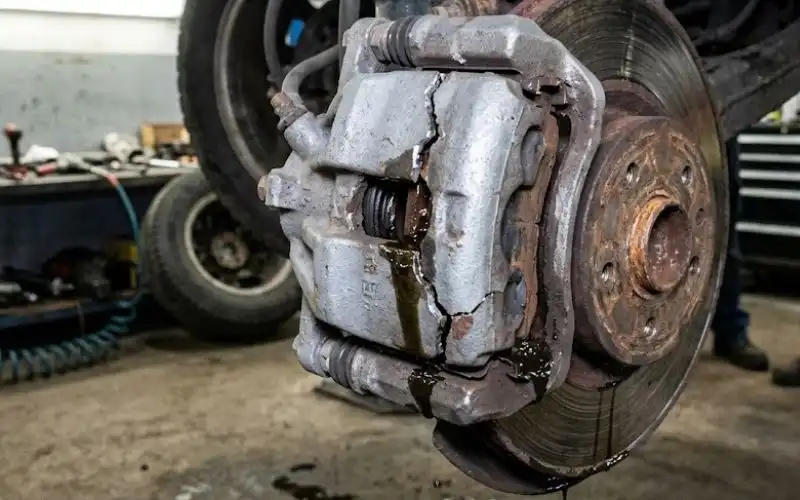
Brake caliper pistons use rubber seals to maintain hydraulic pressure during brake applications. When these seals wear or tear, fluid leaks past the piston, causing pressure loss. Leaking caliper seals often leave brown fluid stains on the inside of your wheels. This telltale sign indicates caliper seal failure requiring immediate caliper service or replacement.
A caliper with blown seals causes pedal travel to increase as pressure escapes around the piston. Pumping the brakes temporarily restores some pressure before it leaks away again quickly. Caliper seal failure commonly affects one wheel, causing uneven braking and vehicle pulling. Your car will pull strongly to one side when you apply brake pressure.
Complete caliper replacement is often more cost-effective than attempting seal replacement individually. New calipers restore proper sealing and include updated seal materials for longer service life. We always replace calipers in pairs on the same axle for balanced brake performance. This ensures equal braking force from both sides, preventing pulling and uneven pad wear.
5. Rear Drum Brake Wheel Cylinder Failure
Vehicles with rear drum brakes use wheel cylinders instead of calipers to apply braking force. These cylinders contain pistons and seals that push brake shoes against drum surfaces. Failed wheel cylinder seals leak brake fluid, causing pedal pressure loss and a sinking pedal. Brake fluid typically drips from behind the wheel through the backing plate to the ground.
Rust and corrosion are primary causes of wheel cylinder failure in humid Houston conditions. The harsh operating environment deteriorates rubber seals and corrodes cylinder bores over time. Wheel cylinder replacement costs $100 to $200 per wheel, including parts and installation labor. Both rear wheel cylinders should be replaced simultaneously for balanced brake performance.
After wheel cylinder replacement, the entire rear brake system requires proper adjustment for function. Brake shoes must be adjusted close to the drums to prevent excessive pedal travel.
6. Brake Booster Failure
The brake booster amplifies your pedal force, making braking effortless with minimal foot pressure. This vacuum-powered device significantly reduces the effort required for effective emergency stops. A failed brake booster requires extreme pedal force to achieve normal stopping distances. The pedal feels extremely hard and stiff, rather than sinking to the floor completely.
However, some brake booster failures allow partial pressure loss, causing a soft pedal feel. The pedal doesn’t sink to the floor completely, but lacks the firmness of normal operation. Brake booster failure is identifiable by a hard pedal requiring much more force than normal. You’ll notice a significantly increased pedal effort needed to achieve normal stopping performance.
Testing the brake booster function involves pumping the brake pedal with the engine off multiple times. Then, starting the engine while holding pedal pressure should cause the pedal to drop slightly. If the pedal doesn’t drop when starting the engine, your brake booster has failed. This indicates either a vacuum leak, a failed check valve, or an internally damaged booster diaphragm.
7. ABS System Malfunction
Modern vehicles have sophisticated anti-lock braking systems monitoring wheel speed during stops. ABS system malfunctions can occasionally affect brake pedal feel and pressure during application. An ABS module failure in some scenarios causes unusual pedal behavior during braking. The pedal may pulse, vibrate, or provide less resistance than expected during braking.
ABS warning lights typically illuminate alongside brake warning lights when ABS causes pedal issues. Never ignore ABS warning lights as they indicate reduced safety system protection available.
European vehicles with advanced brake management systems have additional failure modes affecting pedal feel. BMW, Mercedes, and Audi systems require specialized diagnostic equipment to properly diagnose pedal issues.
8. Severely Worn Brake Pads or Shoes
Completely worn brake pads allow calipers to extend so far that they contact the rotors metal-to-metal. This extreme caliper extension can allow brake fluid to push past caliper seal limits. Severely worn pads also allow so much caliper piston movement that pedal travel increases dramatically. You press the brake pedal, and it travels further than normal before engaging the rotors.
Regular brake inspections prevent pads from wearing this severely before replacement becomes necessary. Following our brake maintenance tips for Houston drivers prevents worn-pad pedal problems entirely.
What to Do Immediately When Your Brake Pedal Sinks
Stay completely calm and avoid sudden movements that could cause you to lose control. A gradual controlled response gives you the best chance of stopping safely without accidents.
Pump your brake pedal rapidly several times to attempt building hydraulic pressure temporarily. Pumping sometimes restores enough pressure for one emergency stop in minor leak situations.
Downshift your vehicle to lower gears using engine braking to reduce vehicle speed. Automatic transmission drivers can manually select lower gear positions to increase engine braking.
Use your emergency parking brake gradually if pedal braking remains completely ineffective while moving. Apply the parking brake slowly and steadily to avoid wheel lockup, causing loss of control.
Steer toward a safe stopping location like an open parking lot or wide road shoulder. Avoid sudden lane changes or turns that could cause accidents during emergency deceleration.
Turn on hazard lights immediately to warn other drivers of your emergency situation ahead. Other drivers need maximum warning time to create space around your vehicle safely.
Call 911 if you cannot stop safely or if traffic conditions create an immediate accident risk. Emergency responders can help create safe stopping conditions on busy highways for you.
After stopping safely, turn off your vehicle and do not attempt to drive further. Call Wise Car Care at 713-466-9300 immediately for emergency brake service and towing assistance.
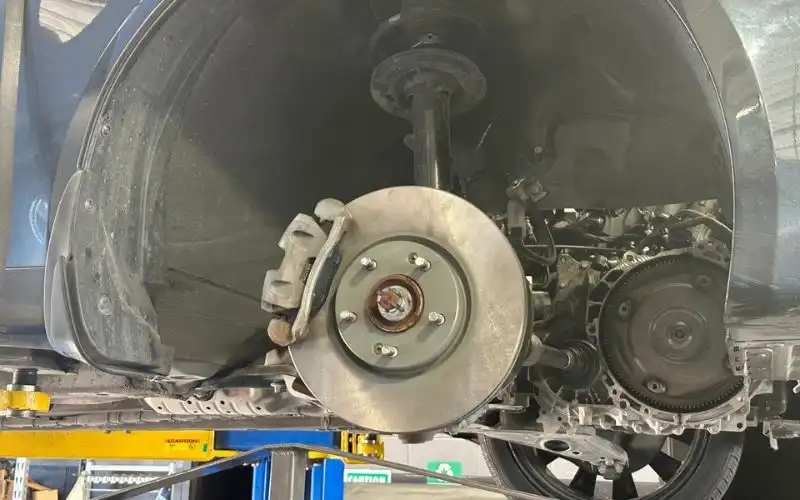
How Professionals Diagnose a Sinking Brake Pedal
Professional diagnosis begins with a thorough brake system inspection before any repairs are recommended. Proper diagnosis prevents replacing parts that don’t need replacement, saving time and money.
Technicians perform a pedal feel test, noting exactly how and when pedal pressure changes. A pedal that sinks under steady pressure indicates master cylinder internal bypass problems.
A pedal that sinks immediately on first application indicates external fluid leaks somewhere in the system. These two different pedal behaviors indicate completely different underlying causes requiring different repairs.
Visual inspection of all brake components checks for external fluid leaks and visible damage. We inspect the master cylinder, brake lines, calipers, wheel cylinders, and all connections.
Brake fluid level measurement confirms whether leaks have occurred in the hydraulic system. Significantly low fluid confirms leaks requiring location and repair before system recharging.
Pressure testing of the brake system identifies components that cannot hold proper hydraulic pressure. This specialized testing pinpoints weak components before the expensive trial-and-error part replacement.
Our brake specialists use advanced diagnostic equipment to identify the exact cause of pedal problems. We explain findings clearly before recommending repairs, ensuring you understand what needs fixing.
How to Fix a Brake Pedal That Goes to the Floor
Brake Fluid Leak Repair
Fixing brake fluid leaks requires locating every leak source and repairing or replacing components. Partial repairs leave remaining leaks that continue causing problems after initial service. Corroded brake lines must be replaced with new steel or stainless steel lines. We replace entire sections rather than patching corroded areas that will fail again quickly.
Caliper seal kits or complete caliper replacement seals leaking calipers permanently. New calipers provide updated seal materials and precision-machined bores for optimal performance. After all leaks are repaired, the complete brake system requires thorough bleeding to remove air. Every brake line must be bled until clean fluid flows freely without air bubbles.
Master Cylinder Replacement
Master cylinder replacement requires disconnecting brake lines and removing the unit from the booster. New master cylinders come pre-assembled, ready for installation with all internal components. Bleeding the master cylinder on the bench before installation removes air from internal passages. This bench bleeding prevents an airlock during system bleeding after installation is complete.
After installation, all brake lines require bleeding to remove any air introduced during repair. A firm brake pedal after bleeding confirms successful master cylinder replacement and proper installation.
Brake System Bleeding Procedure
Professional brake bleeding uses pressure or vacuum equipment for thorough air removal from all lines. We bleed every wheel starting from the furthest from the master cylinder, working systematically toward the nearest.
Vehicles with ABS systems require special scan tool procedures to bleed the ABS modulator. Generic bleeding procedures miss air trapped in ABS valves, causing persistent soft pedal conditions.
We test brake pedal firmness repeatedly during bleeding, ensuring all air is completely removed. A properly bled brake system has a firm, high pedal with no sponginess.
Complete Brake System Overhaul
Severely neglected brake systems with multiple component failures require a complete overhaul for safety. This comprehensive repair addresses every failed component simultaneously restoring full braking capability.
Complete overhauls typically include the master cylinder, all four calipers or wheel cylinders, and brake lines. Brake pads, rotors, and fresh brake fluid complete the comprehensive safety restoration service.
While expensive, complete overhauls eliminate all brake problems, providing years of reliable, safe braking. Partial repairs on severely neglected systems often leave remaining problems, causing return visits.
How Long Does Brake Pedal Repair Take
Simple repairs like brake bleeding take 30 minutes to 1 hour, depending on vehicle complexity. Knowing how long brake service takes helps you plan your schedule around repairs.
Master cylinder replacement typically takes 1.5 to 2.5 hours, including bench bleeding and full system bleeding. We test thoroughly before returning vehicles, ensuring proper brake pedal feel and safety.
Brake line replacement takes 2 to 4 hours, depending on how many lines require replacement. Corroded line systems may require full-day service for complete restoration of all lines.
Complete brake system overhauls take 4 to 8 hours, depending on vehicle complexity and damage extent. We communicate time estimates clearly and update you when unexpected issues arise during service.
Brake Pedal Repair Costs in Houston
Brake bleeding service costs $80 to $150 for most vehicles when performed professionally. This often resolves air in lines, causing soft pedal without requiring expensive part replacement.
Master cylinder replacement costs $300 to $600, including parts and labor for most vehicles. European luxury vehicles like BMW and Mercedes cost $500 to $900 for this repair.
Brake line replacement costs $150 to $400 per line, depending on location and accessibility. Complete brake line replacements for heavily corroded vehicles can reach $800 to $1,500 total.
Complete brake system overhauls range from $1,500 to $4,000, depending on vehicle and severity. This comprehensive service addresses every brake component, ensuring complete and reliable stopping ability.
Learn how to avoid emergency brake repair costs through regular preventive maintenance and timely inspections. Prevention costs far less than emergency repairs from completely failed brake systems.
Preventing Brake Pedal Problems
Regular brake fluid changes every two years remove moisture before it corrodes internal components. Fresh fluid maintains proper boiling point and lubricates seals preventing premature failure.
Schedule brake inspections twice yearly, catching small leaks and wear before they cause pedal problems. Technicians detect developing issues during inspections when repairs cost far less than emergencies.
Address squeaking, grinding, or soft pedal feel immediately before problems worsen into dangerous failures. Small problems become sinking pedal emergencies when ignored for weeks or months.
Avoid driving through deep water when possible to prevent water from entering brake components. Water in drums causes temporary pedal problems and accelerates corrosion inside brake hardware.
Check brake fluid level monthly under the hood, ensuring proper level in reservoir. Consistently dropping fluid levels indicate slow leaks requiring immediate professional inspection and repair.
Trust Wise Car Care for Brake Pedal Repairs
Our ASE-certified brake specialists diagnose and fix sinking pedal problems correctly every visit. We use advanced diagnostic equipment to identify the exact cause without expensive, unnecessary part replacement. Every brake repair includes our comprehensive 36-month or 36,000-mile warranty for peace of mind. If brake problems return during warranty, we fix them at absolutely no additional charge.
We stock brake components for most Houston-area vehicles, ensuring same-day repairs in most cases. You won’t wait days for parts while driving a vehicle with compromised braking ability. We’re located at 6259 N Eldridge Parkway, serving all Houston areas conveniently every day. We’re open Monday through Friday, 8:00 AM to 6:00 PM for service appointments.
Saturday appointments are available from 8:00 AM to 4:00 PM for weekend convenience. Call us at 713-466-9300 for emergency brake service or to schedule a brake inspection.
Don’t drive another mile with a sinking brake pedal, risking your family’s safety. Call us immediately for professional brake diagnosis and repair by Houston’s brake experts.
Frequently Asked Questions
1. Is it safe to pump the brakes when the pedal goes to the floor?
Pumping brakes temporarily builds pressure in systems with minor leaks or air present. This technique may provide enough braking force for one controlled stop in minor situations. However, pumping indicates a serious brake problem requiring immediate professional repair afterward. Never rely on pumping as a long-term solution for a sinking brake pedal.
Pumping may not help at all with severe leaks or complete master cylinder failure. In these cases, engine braking and the emergency brake become your only stopping options.
2. Can low brake fluid cause a pedal that goes to the floor?
Yes, extremely low brake fluid causes the pedal to sink or go completely to the floor. The hydraulic system needs sufficient fluid to build and maintain proper braking pressure. Low fluid indicates either a leak somewhere in the system or severely worn brake pads. Simply adding fluid without finding the cause only temporarily masks a dangerous underlying problem.
3. Why does my brake pedal slowly sink when holding pressure at a stoplight?
A brake pedal that slowly sinks under steady pressure indicates master cylinder internal bypass failure. Worn internal seals allow fluid to pass through the piston without maintaining hydraulic pressure. This is different from an immediate sinking pedal caused by external leaks in the system. Internal bypass in the master cylinder requires master cylinder replacement to permanently fix.
4. How much does it cost to fix a brake pedal that goes to the floor?
Repair costs depend entirely on which component caused the sinking pedal condition. Brake bleeding costs $80 to $150, while master cylinder replacement costs $300 to $600, typically. Brake line repairs range from $150 to $400 per line, depending on location and accessibility. Complete system overhauls for severely neglected vehicles reach $1,500 to $4,000 total investment.
5. Can I drive my car to a shop with a sinking brake pedal?
No, do not drive your vehicle when the brake pedal goes completely to the floor. You cannot stop safely in emergency situations, creating an immediate serious accident risk for everyone. Call for a tow truck to safely transport your vehicle to our shop for repair. The cost of towing is far less than a serious accident resulting from brake failure.
6. Why did my brake pedal suddenly go to the floor without warning?
Sudden complete pedal loss usually indicates a catastrophic brake line failure or caliper seal blowout. These failures happen quickly when corrosion or pressure weakens components beyond their failure point.