

What Causes a Brake Caliper to Stick?
There are several common reasons a brake caliper sticks. Understanding the root cause helps you fix it right the first time. Here are the most frequent culprits I see in the shop.
1. Corroded or Seized Caliper Pistons
The caliper piston sits inside a cylinder bore. It is sealed with a rubber dust boot and a piston seal. Over time, moisture enters the brake system. This is especially common in humid climates or during wet seasons. When water mixes with brake fluid, it speeds up corrosion inside the caliper. The piston develops rust and scale buildup. This makes it stick in the extended position. Once corroded, the piston cannot retract properly after you release the brake pedal.
Old brake fluid is a major factor here. Brake fluid is hygroscopic, meaning it naturally absorbs moisture from the air. The National Highway Traffic Safety Administration (NHTSA) recommends replacing brake fluid every two years for optimal brake performance. Fresh fluid protects metal components and maintains a higher boiling point, reducing the risk of brake fade.
2. Worn or Damaged Caliper Slide Pins
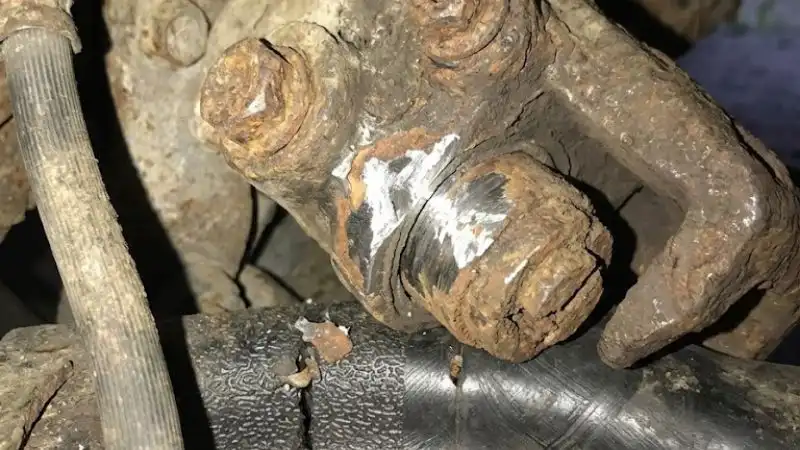
Slide pins allow the floating caliper to move freely. They are coated in a special brake lubricant and protected by rubber boots. When these boots crack or tear, dirt, water, and road debris get inside. The pins develop rust and corrosion. A corroded slide pin cannot move smoothly. This causes the caliper to bind on one side, holding the brake pad against the rotor.
This is one of the most common causes of caliper sticking I see every week. The fix is often simple: clean the slide pins, apply fresh caliper grease, and replace any cracked boots. If the pins are heavily corroded, replace them entirely.
3. Worn or Torn Caliper Piston Seal
The piston seal does two jobs. First, it creates a hydraulic seal, so brake pressure builds when you press the pedal. Second, it acts like a spring. When you release the brake, the seal rolls back slightly. This pulls the piston back into the bore. When this seal wears out or gets damaged, the piston cannot retract. The brake pad stays in contact with the rotor, causing a stuck caliper.
4. Collapsed Brake Hose
The flexible rubber brake hose connects the hard brake line to the caliper. These hoses handle constant pressure, heat, and movement. Over many years, the inner lining of the hose can deteriorate. It acts like a one-way valve; it lets fluid flow in under pressure but blocks it from flowing back out. This traps pressure in the caliper and keeps the piston extended. Even after you release the brake pedal, the caliper stays engaged.
A collapsed brake hose is easy to miss during a visual inspection. The outside of the hose may look fine while the inside is failing. This is why professional brake inspections should include testing hose flow, not just a visual check.
5. Vehicle Left Sitting for Extended Periods
If you park your car for weeks or months without driving it, surface rust can develop on the brake rotors very quickly. The brake pads can actually bond to the rotor surface. When you try to drive again, the pads tear away or leave hard rust deposits. These deposits can cause the caliper to sit unevenly and stick. Light surface rust usually clears up after a few brake applications. But if the car sat for a long time, you may need more serious intervention.
6. Handbrake Cable Tension
On rear drum brake systems or rear disc brakes with a mechanical parking brake, a stuck or over-tightened handbrake cable is a common culprit. If the cable does not release fully, the rear brakes stay partially engaged. This causes drag, overheating, and premature wear on the rear brake pads and rotors. Regular lubrication of the handbrake cable and mechanism can prevent this problem entirely.
7. Improper Brake Pad Installation
If someone installed brake pads incorrectly, the pads can bind in the caliper bracket. Pads that are the wrong size or installed without anti-squeal shims can also restrict caliper movement. Always use quality parts and follow the correct installation procedure. Using a brake caliper tool to properly compress the piston before installation is essential.
Symptoms of a Sticking Brake Caliper
Your car will tell you when something is wrong with your calipers. Here are the warning signs you should never ignore. Catching these early can save you money and keep you safe on the road.
Car Pulling to One Side
This is one of the most obvious signs of a stuck caliper. If the brakes on one side are engaged while the other side is free, your car will pull toward the stuck side. You will feel it most clearly when braking, but in severe cases, you may notice it during normal driving too. If your car drifts left or right without touching the wheel, get it checked immediately. Do not confuse this with pulling caused by uneven tire pressure or a suspension alignment issue, though those are also worth investigating.
Burning Smell After Driving
A hot, acrid, burning smell is a serious warning sign. When a caliper sticks, the brake pad grinds against the rotor continuously. The friction generates extreme heat. This heat burns the brake pad material and can even set the brake dust on fire. If you smell something burning after a drive, pull over safely and check your wheels. Carefully hover your hand near each wheel without touching it. An unusually hot wheel indicates a stuck caliper. If you notice brakes squeaking along with a burning smell, you likely have a severe sticking issue.
Reduced Fuel Economy
A sticking caliper creates constant drag. Your engine has to work harder to overcome the resistance. You will notice you are visiting the gas station more often than usual. If your fuel economy has dropped and you cannot explain why, a dragging brake is a likely suspect. This symptom is easy to overlook but is a clear sign that something is wrong.
Uneven Brake Pad Wear
Take a look at your brake pads during a tire rotation or oil change. If the inner pad on one wheel is significantly thinner than the outer pad, or if one wheel’s pads are much more worn than the opposite side, you likely have a caliper issue. A sticking piston causes uneven pad wear from the inside. A sticking slide pin causes the outer pad to wear faster than the inner pad. Either way, uneven wear is a red flag that needs attention.
Brake Pedal Feels Soft or Spongy
A spongy brake pedal that goes closer to the floor than usual can indicate air in the brake lines, low brake fluid, or a failing caliper piston seal. If the seal has failed, hydraulic pressure leaks around the piston instead of pushing it out. You will feel less pedal resistance and reduced stopping power. This is a safety emergency. Do not drive the vehicle until you have had the brakes inspected.
Grinding or Squealing Noises
Grinding sounds when you brake usually mean your brake pads are worn down to the metal backing plate. When a caliper sticks, pads wear down fast. Squealing noises can come from the wear indicator tabs on the pads. Both sounds mean you need brake service right away. Ignoring grinding will destroy your rotors and cost significantly more to repair.
Car Drags or Feels Sluggish
If your car feels like it is working harder than usual, or if it does not coast freely when you take your foot off the gas, a dragging caliper could be to blame. You can test this by driving slowly in a safe area and then coasting. If the car stops quickly without pressing the brake, you likely have a dragging brake. This also generates heat that can warp your brake rotors over time.
How to Diagnose a Sticking Brake Caliper
Before you start replacing parts, confirm that the caliper is actually the problem. Here is a simple diagnostic process I use in the shop.
Start by doing a visual inspection. Jack up the car safely and remove the wheel on the suspected side. Look at the brake pad thickness on both sides of the caliper. Check the caliper for brake fluid leaks around the piston boot. Inspect the slide pin boots for tears or cracks. Try to move the caliper by hand; it should slide smoothly on the pins.
Next, test the rotor temperature. Drive the car for 10 to 15 minutes normally. Then park and carefully feel the heat coming from each wheel without touching the rotor or caliper. A significantly hotter wheel on one side confirms a dragging brake. You can also use an infrared thermometer for a more accurate reading.
Check the brake hose by having someone press the brake pedal while you watch for the piston to extend. Then release the pedal and pinch the brake hose with hose pliers. If the caliper releases when you pinch the hose, a collapsed hose is your problem, not the caliper itself.
How to Fix a Sticking Brake Caliper
Once you have confirmed the caliper is sticking, you have a few options depending on the severity of the problem.
Option 1: Clean and Lubricate the Slide Pins
If the slide pins are corroded but not damaged, you can clean and re-lubricate them. Remove the pins, clean them with brake cleaner and a wire brush, and apply fresh caliper grease. Replace the rubber boots if they are cracked. This fix works well for mild sticking caused by dry or dirty slide pins. It is the least expensive repair and takes about an hour.
Option 2: Rebuild the Caliper
If the caliper piston is mildly corroded, a rebuild kit can save you money. A caliper rebuild kit typically costs less than $15 and includes new piston seals, dust boots, and hardware. You remove the caliper, disassemble it, clean all metal surfaces, replace all rubber components, and reassemble. This takes more skill and time than just cleaning the pins, but it is a satisfying and cost-effective repair. Always flush and bleed the brake system after any caliper work.
Option 3: Replace the Caliper
If the piston is heavily corroded or seized, replacement is the best option. A new or remanufactured brake caliper typically costs between $35 and $200 depending on the vehicle. For safety, always replace calipers in pairs, both fronts or both rears, at the same time. This ensures balanced braking force from side to side. Mismatched calipers can cause the car to pull under braking.
When replacing calipers, also replace the brake pads and inspect the rotors. If the rotors are warped or deeply grooved from the sticking caliper, replace those too. Wondering how long brake service takes? A full caliper replacement with new pads typically takes two to four hours at a shop.
Option 4: Replace the Brake Hose
If a collapsed brake hose is trapping pressure, replace the hose. This is a straightforward job but requires bleeding the brake system afterward. Brake hoses should be inspected regularly for cracks, bulges, or soft spots. Replace them at the first sign of deterioration.
After any brake repair, always do a brake bleed to remove air from the system and restore full pedal feel. Test the brakes at low speed in a safe area before returning to normal driving. Taking care of brake problems early will help you avoid costly emergency brake repairs down the road.
Can You Drive With a Sticking Brake Caliper?
No. A sticking brake caliper is a serious safety hazard. I strongly advise against driving with a known stuck caliper. Here is why. The continuous heat from a dragging caliper can boil your brake fluid. Boiled brake fluid contains vapor bubbles, and vapor is compressible. When you press the pedal, the vapor compresses instead of transmitting force to the caliper. This is called brake fade, and it can cause complete brake failure.
Extreme heat can also warp your brake rotors and damage your wheel bearings. In the worst cases, excessive heat near the wheel can start a fire. If you suspect a stuck caliper, have the vehicle towed or drive it very carefully and directly to a repair shop. Do not use the highway or travel at high speed.
How to Prevent Brake Caliper Sticking
Prevention is always better than an expensive repair. Here are the best ways to keep your calipers working smoothly for years.
Change your brake fluid every two years or every 30,000 miles, whichever comes first. Fresh brake fluid is less likely to absorb moisture and will protect your calipers from internal corrosion.
Have your brakes inspected at least once a year. During a brake inspection, a technician should check pad thickness, rotor condition, caliper operation, slide pin lubrication, hose condition, and brake fluid quality. Regular inspections catch problems before they become expensive repairs.
Lubricate the slide pins and caliper hardware every time you change your brake pads. Use only caliper-approved silicone or synthetic grease. Never use petroleum-based grease near rubber brake components. It will damage the seals and boots.
If you live in a region that uses road salt in winter, clean your brakes more frequently. Salt accelerates corrosion on all metal brake components. A rinse under the wheel wells after driving in salted conditions goes a long way.
Drive your car regularly. Sitting for long periods is hard on brake components. If you have a vehicle that sits for extended periods, apply and release the brakes a few times during storage checks to prevent pads from bonding to the rotors.
According to Consumer Reports, brake maintenance is one of the most skipped yet most critical services vehicle owners neglect. Staying on top of brake maintenance is one of the smartest investments you can make in your vehicle’s safety and longevity.
When to See a Professional
Not all brake problems are DIY-friendly. If you notice any of the following, take your car to a professional right away.
You see brake fluid leaking from the caliper or around the wheel area. The brake pedal goes to the floor or feels spongy. You hear loud metal-on-metal grinding from any wheel. The car pulls hard to one side under braking. You smell burning after a short drive.
A qualified technician has the tools and experience to diagnose caliper problems accurately. Attempting a brake repair without the right knowledge can make the situation more dangerous. Your brakes are not the place to cut corners.
Frequently Asked Questions
How do I know if my brake caliper is sticking?
The most common signs include the car pulling to one side when braking, a burning smell after driving, uneven brake pad wear, reduced fuel economy, and a wheel that is noticeably hotter than the others. You may also hear squealing or grinding noises coming from one wheel.
Can a sticking brake caliper fix itself?
Rarely. Light surface rust bonding a pad to the rotor after the car has been sitting may clear up after a few brake applications. But a corroded piston, seized slide pin, or collapsed brake hose will not fix itself. These problems get progressively worse and can lead to complete brake failure. Always have a sticking caliper properly diagnosed and repaired.
How much does it cost to fix a sticking brake caliper?
The cost depends on the repair needed. Cleaning and lubricating slide pins typically costs $50 to $100 at a shop. Replacing a caliper can range from $150 to $400 per side, including parts and labor. If the rotors and pads also need replacement, expect to pay $300 to $700 or more for a complete brake service on one axle. Costs vary by vehicle make, model, and location.
Is it safe to drive with a sticking brake caliper?
No, it is not safe. A sticking caliper causes continuous heat buildup, which can boil your brake fluid and cause brake fade or complete failure. It can also damage your rotors, wheel bearings, and in extreme cases cause a fire. If you suspect a sticking caliper, drive directly to a shop or have the vehicle towed.
What happens if you ignore a sticking brake caliper?
Ignoring the problem will cause your brake pads to wear out very quickly, often unevenly. The constant friction will warp or score your brake rotors, requiring replacement. The excessive heat can damage wheel bearings and brake hoses. Brake fluid can boil, leading to loss of braking ability. The longer you wait, the more expensive and dangerous the repair becomes.