

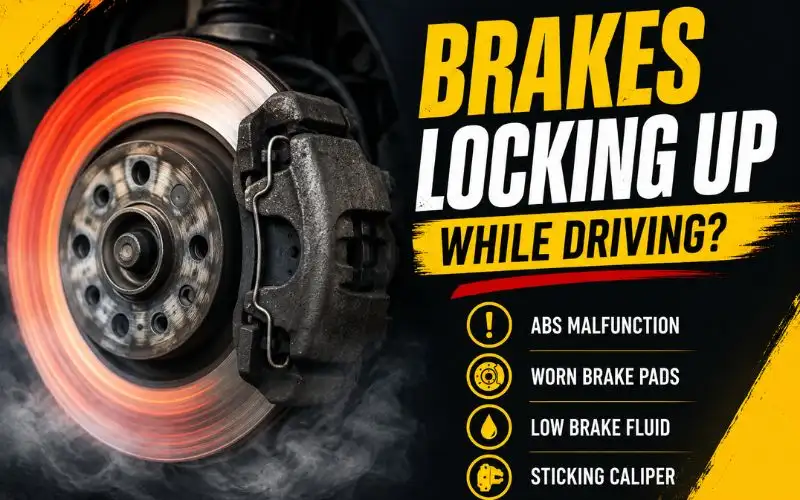
Top Causes of Brake Lockup While Driving
1. Seized or Stuck Brake Calipers
A stuck brake caliper is the most common cause of brake lockup on one specific wheel. Calipers contain pistons that press brake pads against rotors to create stopping friction during braking. When a caliper piston seizes in the extended position, it keeps the brake pad clamped against the rotor constantly. The affected wheel essentially has its brake permanently applied while you try to drive normally.
This constant friction generates enormous heat at that specific wheel during driving. You may smell burning from that corner of the car or notice the wheel is extremely hot after a short drive. A seized caliper eventually locks the wheel completely as heat causes the rotor and pad to bind fully. At this point, the wheel stops turning, and the tire begins to skid on the pavement.
Our brake repair service includes complete caliper inspection and testing on every visit. We identify sticking calipers before they cause dangerous lockup situations on Houston’s busy roads.
2. Brake Fluid Problems Causing Hydraulic Pressure Issues
Your brake system relies on hydraulic fluid to transmit force from the master cylinder to each wheel. Problems with this fluid can create uneven or excessive pressure that causes one or more brakes to lock. Contaminated brake fluid absorbs moisture from the air over time due to its hygroscopic nature. This moisture lowers the boiling point of the fluid significantly below its original specification.
When heated brake fluid boils inside the caliper during heavy braking, it creates vapor bubbles. These vapor pockets cause sudden uncontrolled pressure spikes that can lock individual brakes unexpectedly. Old brake fluid also breaks down chemically and loses its ability to flow predictably through the system. This inconsistent flow creates pressure imbalances between different wheels during braking events.
Read our complete guide on how often to change brake fluid for Houston’s specific climate conditions. Regular fluid changes prevent the moisture contamination that leads to dangerous pressure problems during braking.
Brake fluid should be changed every two years in Houston’s humid climate to prevent moisture buildup. This inexpensive service eliminates one of the most serious causes of sudden brake lockup on the road.
3. Worn or Damaged Brake Pads Creating Uneven Friction
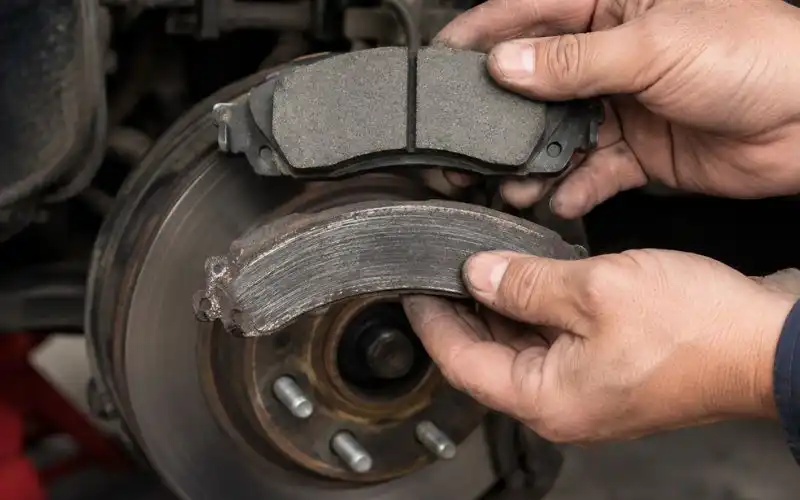
Severely worn brake pads can cause unexpected and dangerous brake lockup in certain conditions. When pads wear completely through to the metal backing plate, the friction characteristics change dramatically. Metal-to-metal contact between the backing plate and rotor creates extreme and uncontrolled friction. This sudden increase in stopping force can lock a wheel without any gradual warning beforehand.
Worn pads also create excessive heat that can cause rotors to warp and brake components to bind. A warped rotor catches and binds against worn pads in ways that normal thickness pads would not. Read our detailed guide on brake pads wearing out to understand how wear leads to these dangerous situations. Catching pad wear early prevents the metal contact that can cause sudden and uncontrolled brake lockup.
Uneven pad wear from a sticking caliper also creates imbalanced friction between the left and right wheels. This imbalance means one side stops harder than the other, causing the car to pull or spin during braking. Knowing whether you should replace all brake pads at once helps you maintain proper friction balance across all four wheels. Balanced pads on every axle prevent the uneven stopping forces that contribute to dangerous lockup events.
4. Faulty ABS System Failing to Prevent Wheel Lockup
Modern vehicles have anti-lock braking systems specifically designed to prevent wheel lockup during hard stops. The ABS rapidly pulses brake pressure to each wheel to maintain rolling contact with the road. When the ABS system fails, this critical protection disappears entirely and lockup becomes possible again. Faulty wheel speed sensors are the most common cause of ABS failure in most vehicles.
Wheel speed sensors monitor how fast each wheel is rotating during normal driving and braking. When a sensor fails or gets damaged, the ABS computer cannot tell if a wheel is locking. Houston’s rough roads and pothole impacts can damage wheel speed sensors and their wiring harnesses. The sensor sits close to the road, and road debris can strike and damage it during normal driving.
ABS module failures are less common but also cause complete system shutdown when they occur. The ABS warning light on your dashboard illuminates whenever the system detects a fault in any component. Never ignore an ABS warning light since it means your lockup protection is completely disabled. Have it diagnosed promptly since the system that prevents dangerous lockup is no longer working for you.
5. Brake Hose Deterioration Causing Pressure Trapping
Your brake system uses flexible rubber hoses to connect the rigid metal brake lines to each caliper. These hoses must flex as the suspension moves up and down during normal driving. Over time, the rubber inside these hoses deteriorates and develops internal cracks or collapses. This internal deterioration creates a one-way valve effect that traps hydraulic pressure in the caliper.
When pressure becomes trapped in a caliper, the brake stays partially or fully applied while you drive. You may notice the car feels like it is dragging or pulling toward the side with the affected hose. The trapped pressure prevents the caliper piston from retracting fully after you release the brake pedal. This ongoing pressure application creates exactly the conditions that lead to complete wheel lockup.
Brake hose deterioration is difficult to detect from outside since the damage is entirely internal. A technician must perform a pressure release test to confirm whether a hose is trapping pressure inside.
6. Overheated Brakes Leading to Brake Fade and Lockup
Brake fade happens when excessive heat reduces the friction capability of your brake pads dramatically. This typically occurs during prolonged heavy braking on long downhill grades or extended stop-and-go traffic. During brake fade, the friction material on the pads begins to outgas, creating a vapor layer between the pad and rotor. This vapor layer dramatically reduces friction and changes how the brakes respond to pedal input.
In severe cases, overheated brakes can suddenly lock up as rotor and pad temperatures fluctuate rapidly. The unpredictable friction changes from extreme heat can cause sudden uncontrolled stopping events. Brake fade is more common during towing, mountain driving, or extended heavy traffic situations. Houston’s summer heat makes brake fade more likely since ambient temperatures are already extremely high to start.
Allowing your brakes to cool completely after heavy use prevents fade from developing into lockup. Avoid riding your brakes on long descents and use engine braking to reduce the heat burden.
7. Master Cylinder Failure Creating Uncontrolled Pressure
The master cylinder is the central component that generates and distributes hydraulic pressure to all four brakes. When internal seals inside the master cylinder fail, pressure distribution becomes unpredictable and uncontrolled. A failed master cylinder can sometimes send excessive uncontrolled pressure to specific brake circuits. This pressure spike can lock one or more wheels without any intentional pedal input from the driver.
Partial master cylinder failure often presents as intermittent brake problems before becoming a complete failure. You may notice the pedal feeling different, the car pulling during stops, or one wheel locking occasionally. Master cylinder problems require immediate professional attention since this component controls your entire brake system. A failing master cylinder can become a complete brake system failure with very little additional warning.
If you have ever noticed a hissing noise when braking, it could point to master cylinder or brake booster issues. These two components work together, and problems in either one can affect overall brake system pressure control.
8. Contaminated Brake Pads Causing Unpredictable Friction
Brake pads contaminated with oil, grease, or brake fluid can create wildly unpredictable friction levels. Contamination dramatically reduces and then suddenly increases friction as the pad temperature changes. This unpredictable friction behavior can cause sudden lockup as a contaminated pad grabs aggressively. The driver experiences normal braking one moment and then sudden unexpected wheel lockup the next.
Oil contamination typically comes from a leaking axle seal, wheel bearing, or caliper seal nearby. Brake fluid contamination on pads happens when a caliper seal leaks fluid directly onto the pad surface. Contaminated brake pads cannot be cleaned and must be completely replaced immediately. Any contamination in your brake system also requires finding and fixing the source of the contaminating fluid.
Replacing contaminated pads alongside fixing the underlying leak source completely eliminates this lockup cause. This repair also prevents new pads from becoming contaminated immediately after installation from the same leak.
9. Emergency Braking Without ABS on Slippery Surfaces
Drivers of older vehicles without ABS need to understand proper emergency braking technique on slippery roads. Applying maximum brake pressure all at once on a wet or slippery surface locks all four wheels. Without ABS technology modulating that pressure automatically, wheel lockup is almost guaranteed in emergency situations. The driver must manually pump the brakes to maintain some wheel rotation and steering ability.
If your vehicle does not have ABS, consider the safety benefits of upgrading to a newer vehicle with modern braking systems. Alternatively, extra following distance in wet conditions gives you more time and distance to stop safely.
10. Parking Brake Cable Seizing and Engaging While Driving
The parking brake cable can seize in the engaged position from corrosion, dirt, or cold weather contraction. When this happens, the rear brakes stay partially or fully applied while you attempt to drive normally. Driving with a seized parking brake cable creates constant drag at the rear wheels and extreme heat. The prolonged heat and friction can cause the rear brakes to fully lock during normal driving.
You may think you released the parking brake completely, but a seized cable prevents full release. This problem is particularly common on vehicles that are driven infrequently or stored outdoors in Houston’s humidity. Watch for the parking brake warning light staying illuminated after releasing the handle or pedal. Feel for any drag or resistance when accelerating from a stop as early signs of this problem.
Parking brake cable replacement is typically an affordable repair that prevents this dangerous rear wheel lockup cause. Have it checked immediately if you suspect the cable is not releasing completely after disengagement.
What to Do Immediately When Brakes Lock Up While Driving?
Stay calm and do not panic when you feel your brakes lock up while driving. Panic leads to overcorrection that can make the situation significantly more dangerous for everyone involved. If you have ABS, apply firm steady pressure and hold it without pumping the pedal. Let the ABS system do its job of pulsing the brakes while you steer around obstacles.
If you do not have ABS, release the brake pedal slightly to allow the wheels to roll again. Then reapply pressure more gradually to maintain maximum braking without full lockup occurring.
Steer in the direction you want the vehicle to go while managing your braking pressure. Keeping your eyes focused on where you want to go helps your steering instincts work correctly. Signal with your hazard lights once the situation is under control to warn other drivers around you. Move to a safe location and turn off the engine once you have brought the vehicle to a stop.
Call for professional help rather than attempting to drive a vehicle that just experienced brake lockup. The underlying cause needs professional diagnosis before you trust your brakes again on any road.
Signs Your Brakes May Lock Up Before It Happens
Certain warning signs appear before brakes actually lock up completely during driving. Recognizing these early warnings helps you schedule repairs before experiencing a dangerous lockup event on the road.