

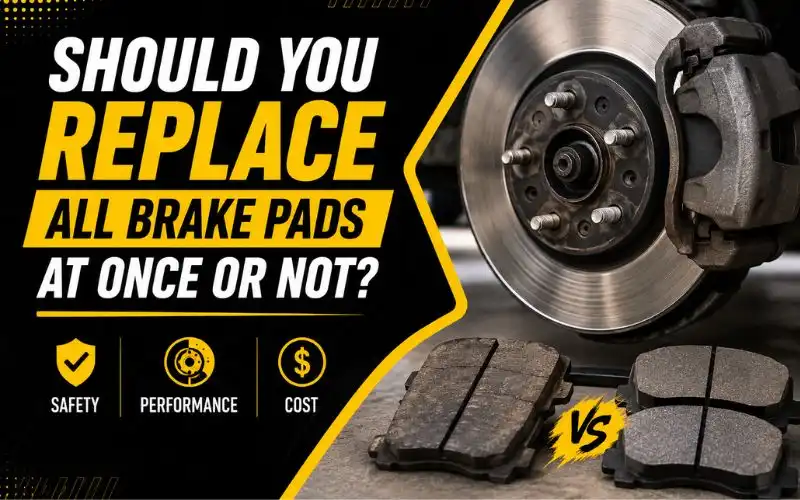
How Brake Pads Work in Pairs and Why That Matters
Your vehicle has four brake assemblies, one at each wheel, but they do not work independently. They work in matched pairs across each axle to create balanced and even stopping force. Your front left and front right brakes work together as one pair during every stop. Your rear left and rear right brakes work together as a separate pair at the same time.
When you press the brake pedal, hydraulic pressure is sent equally to both sides of each axle. This equal pressure is what keeps your car stopping in a straight line every single time. If one side has thick new pads and the other side has thin worn pads, the balance is broken. Unequal friction means unequal stopping force, and that causes your car to pull during braking.
This pulling is not just uncomfortable. It is a genuine safety hazard, especially in emergency braking situations on Houston highways and busy intersections. This is why the golden rule in professional brake service is to always replace pads in axle pairs. Never replace just one brake pad on one side of an axle and leave the other side alone.
The Standard Professional Recommendation: Replace in Axle Pairs
The professional standard across the auto repair industry is to replace brake pads in pairs by axle. This means both front pads together or both rear pads together at minimum. If your front left pad is worn down and needs replacement, your front right pad must be replaced too. Even if the right side pad has slightly more material remaining, it gets replaced at the same time.
This ensures perfectly matched friction on both sides of the front axle for even, balanced braking. Matching brake pads is one of the most important principles of safe brake system service. Our comprehensive brake repair service in Houston always follows this axle pair replacement standard on every vehicle we service. Your safety depends on balanced braking force across every axle of your vehicle.
The cost of replacing both pads on the same axle is not significantly more than replacing just one. The labor is essentially the same since the technician already has that corner of the car disassembled.
Do You Need to Replace All Four Brake Pads at the Same Time?
Replacing all four brake pads at once is not always necessary, and sometimes it is not the right choice. The decision should be based on the actual measured condition of your rear pads when fronts need replacement.
Front brake pads almost always wear out faster than rear brake pads on most standard vehicles. Front brakes handle approximately 60 to 70% of your vehicle’s total stopping force during normal braking.
This means your front pads may need replacing two to three times before your rear pads wear down. Automatically replacing all four every time the fronts are worn is not always necessary or cost-effective.
However, there are specific situations where replacing all four brake pads at the same time makes excellent sense. Understanding these situations helps you make the smartest financial and safety decision for your car.
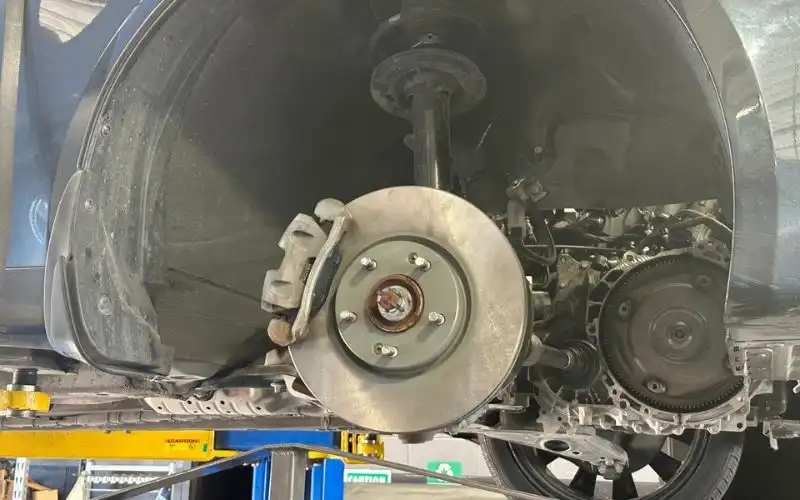
When You Should Replace All Four Brake Pads Together
All Four Pads Are at or Near Minimum Thickness
If an inspection reveals that all four pads are at or approaching minimum thickness together, replace all four. This situation makes complete sense both financially and logistically for your vehicle. Combining all four into one service visit saves on total labor costs significantly. You pay for lifting the car and working on the brakes once rather than scheduling two separate visits.
Have a technician measure all four pads when any pair needs replacement. This measurement tells you whether the other pair is close enough to minimum thickness to justify doing everything together.
The Rear Pads Have Less Than Half Their Original Thickness
If your rear pads have lost more than half their original thickness when fronts need replacing, replace all four. Replacing the rears now prevents a second brake service visit in the near future. Our guide on brake pads wearing out explains how to monitor pad thickness effectively over time. Understanding wear rates helps you make informed decisions about timing all four pad replacements together.
Proactively replacing rears that have significant wear prevents the more expensive damage from worn pads grinding on rotors. A small investment now eliminates a larger expense very soon down the road.
You Are Experiencing Uneven Braking or Pulling
If your car pulls to one side during braking, replacing all four pads is often the right move. Uneven pad wear across different axles can contribute to overall brake system imbalance and handling problems. A complete four-pad replacement combined with rotor inspection gives your entire brake system a fresh and balanced start. This comprehensive approach often solves pulling and uneven braking problems completely and efficiently.
If you have been hearing a hissing noise when braking or other unusual sounds, a full brake inspection should come first. Let the inspection guide whether all four pads need replacement at this time.
High Mileage Vehicles With Unknown Service History
If you recently purchased a used vehicle and do not know its brake service history, replace all four. Starting fresh with matched pads on all four wheels gives you complete confidence in your brake system. Unknown service history means you cannot predict when the other pads will reach minimum thickness. Replacing all four establishes a known starting point for all future brake maintenance and scheduling.
This is especially important for Houston drivers who buy used vehicles and immediately face demanding stop-and-go traffic. Knowing exactly where your brakes stand eliminates guesswork and increases your confidence on the road.
Before a Long Road Trip or Major Driving Event
If any pads are significantly worn and you have a long road trip planned, replace all four now. The peace of mind alone is worth the cost before driving hundreds of miles away from home. Texas road trips to San Antonio, Austin, or Dallas involve sustained highway driving with varying terrain demands. Starting any significant journey with fresh brake pads on all four wheels is always the smart choice.
When It Is Acceptable to Replace Just the Front or Rear Pads
Replacing only the front or only the rear pads is perfectly acceptable when the other pair has adequate life remaining. The key is knowing exactly how much life the other pair actually has before making this decision. If your rear pads still have 60% or more of their original thickness remaining when fronts need replacing, wait on the rears. Replacing pads with significant life remaining wastes money without providing any safety benefit.
The important rule is to always replace both pads on the same axle together regardless of which axle needs service. Never replace a single pad on just one side of an axle under any circumstances.
Our brake maintenance tips for Houston drivers cover how to monitor both front and rear pad condition between services. Staying on top of brake wear helps you plan services intelligently and avoid surprise emergency repairs.
Why Front Brake Pads Wear Faster Than Rear Pads
Understanding why fronts wear faster than rears helps you anticipate your brake service schedule better. Weight transfer during braking shifts the car’s weight forward, putting more load on the front axle. This weight shift means your front brakes are doing significantly more work on every single stop. The friction material on front pads absorbs more heat and wears down faster as a direct result.
Rear brake pads on many vehicles also benefit from electronic brake force distribution systems in modern cars. These systems intelligently reduce rear brake pressure to prevent rear wheel lockup during heavy braking. This reduced rear pressure means rear pads experience less wear over the same number of miles driven. The difference in wear rates is why you almost never need to replace all four at exactly the same time.
What Happens If You Only Replace One Brake Pad on One Side
Replacing a single brake pad on just one side of an axle is a serious mistake that creates real danger. This creates an immediate imbalance in braking force across that axle every time you stop. The side with the new thicker pad grips harder than the side with the old thinner pad. Your car will pull strongly toward the side with the new pad during every braking event.
This pulling is dangerous and unpredictable, especially in emergency stops at highway speeds in Houston traffic. Drivers behind you cannot anticipate your car moving sideways when you hit the brakes suddenly. The uneven grip also causes the new pad to wear much faster than it should since it is doing most of the work alone. This turns what seemed like a money-saving shortcut into an expensive problem very quickly.
Always treat brake pad replacement as a paired axle service without exception on any vehicle you own. This simple rule protects your safety and protects the longevity of every new brake pad you install.
Should You Replace Brake Rotors When You Replace All Four Pads?
This is a closely related question that comes up every time we discuss replacing all four brake pads. The answer depends on the current condition of your rotors at the time of service. Rotors should be measured for thickness and inspected for warping or deep scoring during every brake service. Rotors that are warped, deeply grooved, or below minimum thickness must be replaced alongside the new pads.
Installing new pads on severely worn or warped rotors significantly shortens the life of the new pads. The rough or uneven rotor surface causes the new pads to wear unevenly and make noise. Rotors in good condition with adequate thickness can be resurfaced to provide a clean mating surface for new pads. Resurfacing removes a small amount of material to restore a smooth and flat braking surface.
If your rotors are in very good condition and close to new thickness, they may not need any service at all. Our technicians measure every rotor and give you an honest assessment before recommending any replacement.
The Cost Difference Between Replacing Two and Four Brake Pads
Understanding the cost breakdown helps you make a financially smart decision about replacing two versus four pads. The parts cost for rear brake pads adds to the total, but the labor addition is often modest. When your car is already on a lift with the technician working on the brakes, adding the rear pads is efficient. The technician does not have to raise the car again or set up for a completely separate service visit.
Two axle brake pad replacement together at one visit often costs significantly less than two separate single axle visits. The labor efficiency of doing everything at once creates real savings on your total repair bill. Get a specific quote for doing all four pads versus just the front or rear at one visit. The price difference may be smaller than you expect, and the convenience may be worth it if rears are also getting close.
If you want to understand exactly what the service timeline looks like, read our guide on how long brake service takes at a professional shop. Knowing the time commitment helps you plan your appointment around your Houston schedule efficiently.
Warning Signs That Tell You to Check All Four Brake Pads Immediately
Certain brake symptoms tell you to inspect all four pads right away rather than waiting for scheduled service. Pay attention to these warning signs since they can indicate problems on any axle of your vehicle. A squealing or squeaking sound that happens consistently means at least one set of pads has reached the wear indicator. Read our guide on why your brakes are squeaking to understand exactly what different sounds mean for your brake system.
A soft or spongy brake pedal means air or fluid problems that affect all four brakes simultaneously. Learn more about this serious symptom in our detailed guide on why your brake pedal goes to the floor and what to do.
Your car pulling noticeably to one side during braking means uneven pad thickness somewhere on one axle. This symptom always warrants a complete inspection of all four pads and rotors without delay. A grinding noise from any wheel during braking means that pad has completely worn through to metal contact. This situation requires immediate inspection of all four corners since the damage may be more widespread.
A brake warning light on your dashboard means your onboard computer has detected a brake system concern. Have all four corners inspected whenever this light appears since the cause may involve multiple wheels.
How to Monitor Your Brake Pads Between Professional Services
Staying aware of your brake pad condition between shop visits helps you plan service appointments intelligently. A few simple habits keep you informed without requiring any special tools or technical knowledge. Look through your wheel spokes at the brake pad pressed against the rotor on each wheel. You should see at least a quarter inch of pad material between the caliper and the rotor surface.
Less than 3 millimeters of visible friction material means you should schedule brake service very soon. This visual check takes about 30 seconds per wheel and is worth doing monthly on any vehicle. Listen to your brakes every day while driving around Houston since they communicate their condition through sound. Squealing means you are approaching the wear indicator, while grinding means you have already passed it.
Have your brakes professionally measured during every oil change or, at minimum, every six months consistently. This regular measurement gives you accurate data to make smart decisions about when to replace pads across all four wheels.
According to the National Highway Traffic Safety Administration, brake system maintenance directly reduces the risk of brake-related vehicle crashes. Staying on top of all four brake pads protects you and every other driver sharing Houston roads with you.
Professional Recommendation Summarized Simply
Replace brake pads in axle pairs at absolute minimum, every single time without exception. This is non-negotiable for safety and ensures balanced braking performance across each axle. Replace all four pads at once when the other pair is at or near minimum thickness already. This is smart when the rear pads have less than 50 percent of their original thickness remaining.
Wait on replacing the other pair when they still have significant life remaining, measured accurately. Have the unused pair measured precisely rather than guessing so you make the right decision. Always get a professional inspection that measures all four pads whenever any pair needs replacement. Real measurements eliminate guessing and help you make the most informed and cost-effective decision possible.
Trust Wise Car Care for Expert Brake Pad Service in Houston
Our ASE-certified technicians measure all four brake pads on every vehicle that comes to our shop for brake work. We give you accurate measurements and honest recommendations rather than pushing unnecessary replacements. We explain exactly how much life each pad has remaining and what we recommend for your specific situation. You will fully understand why we are recommending two pads versus four before we begin any work.
We use quality brake pads that meet or exceed manufacturer specifications for every make and model we service. Proper parts combined with professional installation give you the best possible brake performance and longevity. Every brake service includes complete inspection of rotors, calipers, brake fluid, and related hardware. This thorough approach ensures your entire brake system is safe and working as it should be.
All brake repairs are covered by our 36-month or 36,000-mile parts and labor warranty. This warranty gives you complete confidence in the quality of every repair we perform on your vehicle. We are located at 6259 N Eldridge Parkway and serve all nearby Houston areas like Bear Creek.
Frequently Asked Questions About Replacing Brake Pads
Is It Okay to Replace Only the Front Brake Pads and Not the Rear?
Yes, replacing only the front brake pads is perfectly acceptable when rear pads still have adequate thickness. The key is having your rear pads professionally measured before making this decision.
Why Do Front Brake Pads Wear Out Before the Rear Pads?
Front brakes handle approximately 60 to 70% of your vehicle’s stopping force during normal braking events. This higher workload naturally causes front pads to wear down significantly faster than rear pads.
Can Replacing All Four Brake Pads Improve My Car’s Braking Performance?
Yes, replacing all four pads with matched quality pads can noticeably improve overall braking performance and feel. Fresh pads on all four corners give you predictable, balanced stopping force across your entire brake system.
What Happens If I Replace Just One Brake Pad on One Side of an Axle?
Replacing a single pad on just one side creates a dangerous braking imbalance that compromises your safety immediately. The side with the new pad grips much harder than the side with the old worn pad. This imbalance causes your car to pull strongly toward the new pad side during every braking event. In emergency stops at highway speeds, this pulling can cause loss of control and potential accidents.
How Do I Know If My Rear Brake Pads Are Worn Enough to Need Replacing Now?
The most reliable way is having a technician measure the actual thickness of all four pads during service. Pad thickness below 3 millimeters means replacement is needed soon regardless of which axle has that reading. You can also do a visual check by looking through your wheel spokes at the brake pad material. Less than a quarter inch of visible material means you should schedule a service appointment.