

What Is a PCV Valve and What Does It Do?
Your engine has a small but critically important component most drivers have never heard of. That component is the PCV valve, and it quietly protects your engine every single mile you drive. This tiny part causes surprising amounts of engine damage when it is neglected or fails completely.
Most drivers learn about their PCV valve for the first time when something has already gone wrong. Understanding what it does now helps you protect your engine before problems develop unexpectedly. Let me explain exactly what this component is, what it does, and why it matters so much. Your engine’s health depends on this simple valve working correctly every time you drive.
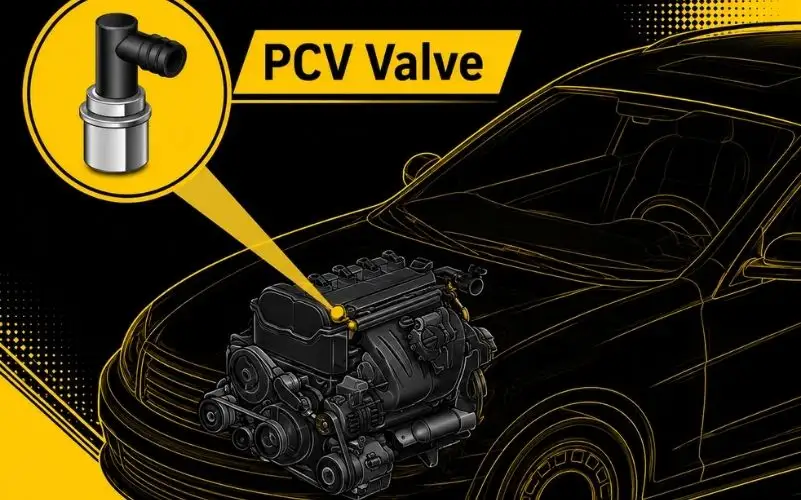
What Does PCV Stand For?
PCV stands for Positive Crankcase Ventilation, which describes exactly what the system does inside your engine. It ventilates the crankcase by removing harmful gases that build up during normal engine operation.
The crankcase is the lower portion of your engine that houses the crankshaft and contains engine oil. During normal combustion, some exhaust gases escape past your piston rings and enter this area.
These escaped gases are called blowby gases, and they contain water vapor, unburned fuel, and harmful chemicals. Without a way to remove them, these gases would destroy your engine oil and damage internal components.
The PCV system provides a controlled path for these harmful gases to leave the crankcase safely. Instead of venting them into the atmosphere, it routes them back into the intake for combustion.
How the PCV Valve Works in Your Engine
The PCV valve is a one-way, spring-loaded valve that controls the flow of crankcase gases. It sits between your valve cover and your intake manifold, connected by hoses or passages.
When your engine runs, vacuum from the intake manifold draws air through the crankcase ventilation system. This vacuum pulls blow-by gases out of the crankcase and sends them into the intake manifold.
The PCV valve opens and closes in response to engine vacuum changes during different operating conditions. During idle, high vacuum pulls the valve mostly open, allowing maximum gas flow out of the crankcase.
During hard acceleration, intake vacuum drops and the spring inside the valve partially closes the opening. This prevents too much airflow from disrupting the delicate air-fuel mixture your engine needs for performance.
The valve also prevents dangerous backfires from traveling backward into the crankcase through the ventilation system. This one-way protection is critical for preventing engine fires and internal component damage.
Fresh air enters the crankcase through the air filter and breather hoses to replace what the PCV draws out. This continuous circulation keeps the crankcase clean and free from harmful condensation and deposits.
Why the PCV Valve Matters So Much for Engine Health
This small, inexpensive component plays an outsized role in protecting your entire engine from serious damage. Understanding its importance helps you appreciate why regular inspection and replacement matter so much.
Without proper crankcase ventilation, blow-by gases mix with engine oil inside the crankcase continuously. This contamination creates a thick sludge that clogs oil passages and starves your engine of proper lubrication.
Engine sludge from neglected PCV maintenance is one of the leading causes of premature engine failure we see. Sludged engines require expensive cleaning or complete replacement that costs thousands of dollars to address.
Water vapor in blow-by gases also causes significant internal corrosion when it cannot escape the crankcase. This moisture turns into acids that attack engine bearings, cylinder walls, and other precision internal surfaces.
Unburned fuel vapors that remain trapped in the crankcase dilute your engine oil and reduce its viscosity. Thinned oil cannot protect internal surfaces properly and leads to rapid wear throughout the engine.
The PCV system also reduces harmful emissions your engine would otherwise release into Houston’s atmosphere. Environmental regulations require PCV systems on every modern vehicle sold since the early 1960s.
According to the Environmental Protection Agency, PCV systems prevent significant quantities of hydrocarbons from entering the atmosphere annually. Your PCV valve helps protect your engine and keep emissions under control. An engine diagnostic service can help identify PCV problems before they lead to bigger engine issues
Signs Your PCV Valve Is Failing or Has Failed
Your engine can show clear warning signs when the PCV valve is going bad. Knowing the bad PCV valve symptoms can help you spot the problem early and avoid more expensive engine repairs.
- Oil level dropping without visible leaks
- Rough idling or engine misfires
- Oil leaks around engine gaskets and seals
- Rough idling or engine misfires
- Check engine light coming on
- Sludge or dark buildup under the oil cap
- Whistling or hissing sounds from the engine
How Often Should the PCV Valve Be Replaced?
Most manufacturers recommend inspecting the PCV valve every 20,000 to 30,000 miles during routine maintenance. Many technicians recommend complete replacement every 30,000 to 50,000 miles regardless of apparent visual condition.
Houston’s extreme heat accelerates the deterioration of the rubber and plastic components in the PCV system. Heat causes PCV valve diaphragms to harden and hoses to crack faster than in cooler climates.
The PCV valve itself costs between $5 and $30 for most standard vehicles, making replacement extremely affordable. The labor to install it takes only 15 to 30 minutes on most engines when accessible.
This low-cost replacement prevents the expensive engine damage that results from a stuck or clogged valve. Spending $30 every 30,000 miles is far better than spending $3,000 on engine sludge damage repairs later.
Our tune-up service includes PCV valve inspection and replacement as a standard component of engine maintenance. We check this critical item alongside spark plugs, air filters, and fuel system components during every tune-up.
What Happens During a PCV Valve Inspection
Our technicians begin PCV inspection by locating the valve and checking it for obvious external damage. On most engines, the valve sits on top of or near the valve cover in an accessible location.
We remove the valve and shake it to check whether the internal spring and ball are functioning. A healthy PCV valve rattles when shaken, confirming the internal components move freely as designed.
No rattle when shaking indicates the valve is stuck in one position and needs immediate replacement. A stuck valve cannot regulate crankcase pressure properly regardless of which position it is frozen in.
We also inspect all connected hoses for cracking, deterioration, collapsing, or loose connections throughout the system. A perfect valve with a cracked hose still allows unmetered air to enter and disrupt engine operation.
The breather filter that allows fresh air into the crankcase is checked for clogging and condition. A clogged breather restricts fresh air entry and reduces the system’s ability to fully ventilate the crankcase.
PCV Valve Replacement: What the Process Involves
Replacing a PCV valve is one of the most straightforward engine maintenance tasks a technician performs. The entire process typically takes 15 to 30 minutes on most standard passenger vehicle engines.
The technician locates the valve on or near the valve cover and carefully disconnects the attached hoses. The old valve is removed, and the new valve is installed in its place with secure hose connections.
All hoses are inspected during this process and replaced if any cracks, hardening, or deterioration are found. Installing a new valve on old, deteriorated hoses creates an incomplete repair that leaves the system compromised.
After installation, the engine is started, and the new valve’s function is verified through vacuum testing. We confirm the system is drawing properly from the crankcase before considering the service complete.
The entire cost of PCV valve replacement at Wise Car Care is typically between $45 and $120, depending on your vehicle. This affordable service delivers significant engine protection value for a very modest investment.
The PCV System and Houston’s Specific Driving Conditions
Houston’s driving conditions create unique challenges for PCV systems that drivers in moderate climates never face. Understanding these local factors helps you appreciate why more frequent PCV inspection matters here.
Stop-and-go traffic on I-10, 290, and the Beltway creates more low-speed engine operation than highway driving. Extended low-speed operation allows more condensation to accumulate in the crankcase between highway driving cycles.
Houston’s extreme summer heat causes PCV valve diaphragms and seats to harden and lose flexibility faster. Hard internal components cannot open and close as precisely as they should during varying engine conditions.
Humidity from Houston’s coastal location creates more water vapor in blow-by gases entering the crankcase. This extra moisture makes proper PCV ventilation even more critical for preventing internal corrosion and sludge.
Frequent short trips in Houston traffic prevent engines from reaching full operating temperature consistently. Engines that never fully warm up have more moisture condensation in the crankcase that PCV systems must manage.
Following our Houston summer car maintenance checklist includes PCV system attention as part of seasonal vehicle preparation. Local conditions demand more proactive maintenance than manufacturer intervals designed for moderate climates assume.
How the PCV Valve Relates to Other Engine Systems
The PCV valve does not work in isolation but interacts with several other important engine systems. Understanding these connections shows why a failing PCV valve creates problems throughout your entire engine.
Your engine’s air-fuel management system relies on precise airflow measurements from the mass airflow sensor. A stuck-open PCV valve introduces unmetered air that the MAF sensor cannot account for properly.
This unmetered air creates lean fuel trim conditions that your engine computer struggles to compensate for. Long-term lean conditions cause combustion temperatures to rise and can damage pistons and cylinder heads.
The oxygen sensors in your exhaust also detect the lean conditions caused by excessive PCV airflow. These sensors send signals that cause the computer to add extra fuel, attempting to correct the mixture problem.
This constant correction uses more fuel than necessary and reduces your fuel economy measurably over time. Fixing a leaking PCV valve often restores fuel economy alongside eliminating drivability symptoms immediately.
A healthy PCV system helps keep your engine oil clean and flowing properly. If there’s oil in the PCV valve, it may mean the system isn’t working as it should. Fixing the issue early can help prevent sludge buildup and protect important engine parts.
DIY PCV Valve Replacement vs. Professional Service
Replacing a PCV valve is one of the more accessible DIY engine maintenance tasks for mechanically inclined drivers. The valve is visible and accessible on most standard vehicles without requiring special tools.
However, several factors make professional service the smarter choice for most Houston drivers every time. Finding the correct replacement valve requires matching the exact specification for your specific engine model.
Incorrect PCV valves that flow at the wrong rate cause the same problems as a failed original valve. A technician who knows your vehicle’s specifications installs the correct valve without any guesswork involved.
A professional inspection can also find problems with cracked hoses or clogged breather filters. Understanding the difference between a PCV Valve and a Breather Valve can help you identify which parts need attention for a proper repair.
Additionally, a professional service includes verification that the new valve is working correctly after installation. This confirmation step ensures you leave our shop with a properly functioning PCV system.
Preventing PCV-Related Engine Problems
Prevention is always more affordable than repairing the engine damage that a neglected PCV system causes. These simple habits protect your PCV system and the entire engine it defends from damage.
Schedule regular engine inspections that include PCV system checks at every tune-up service appointment. Our thorough inspection catches early signs of valve deterioration before symptoms develop during normal driving.
Change your engine oil on schedule since dirty oil accelerates sludge formation when PCV ventilation is imperfect. Fresh oil with proper additives resists sludge formation better than old, degraded oil during normal operation.
Use quality engine oil meeting your manufacturer’s viscosity and specification requirements for your specific engine. Premium oil with better detergent additives cleans the crankcase more effectively than bargain oil alternatives.
Avoid excessive short trips that prevent your engine from reaching full operating temperature after cold starts. Longer drives help evaporate moisture from the crankcase that short trips allow to accumulate over time.
Address any engine oil leak or consumption problem promptly since these symptoms often trace back to PCV failure. Early repair prevents the secondary damage that results from ignored crankcase ventilation problems in your engine.
Trust Wise Car Care for PCV Valve Service in Houston
Our ASE-certified technicians inspect and replace PCV valves as part of every comprehensive tune-up service we perform. We understand exactly how Houston’s climate affects this critical component and related systems.
We stock PCV valves and hoses for most common Houston-area vehicles, ensuring same-day service completion. You will not need to schedule a return visit for parts that are not available on your service day.
Every PCV valve replacement includes a complete inspection of all connected hoses and the breather filter system. This thorough approach ensures your entire crankcase ventilation system functions correctly after service.
All engine maintenance services we perform are backed by our 36-month or 36,000-mile parts and labor warranty. This warranty gives you complete confidence in every component we install on your vehicle.
Frequently Asked Questions About PCV Valves
What Happens If I Never Replace My PCV Valve?
A neglected PCV valve causes progressive engine damage that becomes increasingly expensive to repair over time. Crankcase pressure builds from a stuck closed valve and pushes oil past every seal in your engine.
How Much Does PCV Valve Replacement Cost?
PCV valve replacement at Wise Car Care typically costs between $45 and $120, including parts and labor. The parts themselves cost only $5 to $30 for most standard passenger vehicles on the road.
Labor adds $30 to $90 depending on how accessible the valve is on your specific engine design. Engines where the valve is buried behind other components take slightly longer to service than easily accessible designs.
Can a Bad PCV Valve Cause My Car to Fail an Emissions Test?
Yes, a failed PCV valve can cause your vehicle to fail an emissions test in several ways. A stuck-open valve causes lean running conditions that affect combustion efficiency and emission chemical output.
Poor combustion from PCV problems increases hydrocarbon and carbon monoxide output beyond acceptable emission limits. These elevated pollutants trigger failures during the tailpipe emissions portion of your state inspection.
How Do I Know If My PCV Valve Is Stuck Open or Stuck Closed?
A stuck-open valve causes lean running conditions, rough idle, excess oil consumption, and potential check engine lights. The engine runs as if it has a vacuum leak because the open valve introduces excessive unmetered air.
A stuck-closed valve causes excessive crankcase pressure that pushes oil past seals and creates oil leaks. You may also notice rough running and sludge buildup since gases cannot escape the crankcase properly.
Can I Drive With a Failed PCV Valve Without Causing Damage?
Driving with a failed PCV valve for a short period while scheduling repair is generally acceptable in most cases. However, extended driving with a completely failed valve causes progressively worsening engine damage over time.
A stuck closed valve builds crankcase pressure that damages seals with every mile of continued driving. A stuck open valve burns oil and creates lean conditions that cause combustion temperature increases.
Does the PCV Valve Affect My Fuel Economy?
Yes, a failed PCV valve affects fuel economy through several different mechanisms depending on how it fails. A stuck-open valve causes lean running conditions that the engine computer corrects by adding extra fuel.
This constant fuel correction uses more fuel than a properly running engine with correct crankcase ventilation requires. Houston drivers may notice their fuel economy declining gradually as their PCV valve deteriorates over time.