

Your car pulls to one side when you are driving because something is creating unequal force on the left or right wheels. The most common causes are wheel misalignment, uneven tire pressure, a stuck brake caliper, or worn steering and suspension components. I have been diagnosing pulling and drifting problems for Houston drivers for years at our shop. This symptom is one of the clearest signals that something specific has gone wrong and needs professional attention.
A car pulling to the right or a car pulling to the left is never something to ignore or adapt to over time. The underlying cause always affects your safety, your tires, and your fuel economy with every mile you drive. Let me walk you through all twelve causes so you can identify the most likely problem and know exactly what to do. Understanding the cause helps you communicate clearly when you call for an appointment and prepares you for the estimate.
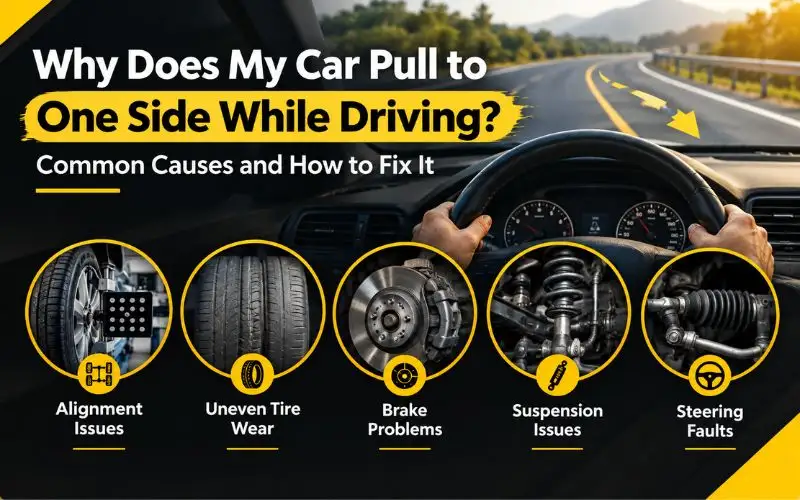
Why Pulling to One Side Is Always a Warning Sign
Your vehicle is designed to track perfectly straight on a flat road with no steering input from you. When it drifts or pulls consistently without any input, a mechanical imbalance exists somewhere in the system.
The direction of the pull often points directly toward the problem area. A car pulling to the right typically suggests a problem on the right side of the vehicle. A car pulling to the left suggests a problem on the left side.
However, not every cause follows this simple pattern. Some causes create asymmetrical forces that pull away from the side where the problem actually exists. A professional inspection with proper equipment always identifies the true cause accurately.
Reason 1: Wheel Alignment Is Off
Misaligned wheels are the single most common reason a vehicle pulls to one side during normal driving. When your wheels point at different angles instead of perfectly straight, the vehicle naturally drifts toward the misaligned side.
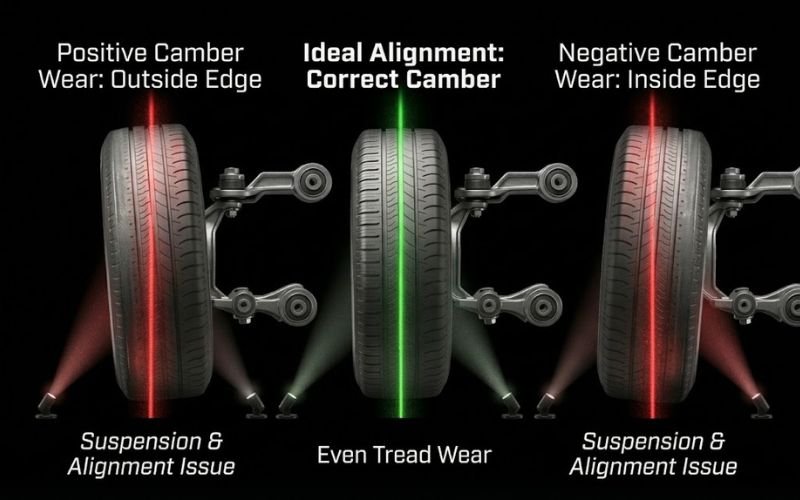
Toe, caster, and camber are the three alignment angles that must all fall within the manufacturer’s specified range. Even small deviations from these specifications cause noticeable pulling that worsens with vehicle speed.
Houston’s potholes and rough road surfaces knock alignment out of specification more frequently than smooth road environments. A single significant pothole impact can immediately shift your alignment enough to cause obvious pulling.
Our symptoms of bad wheel alignment guide explains every sign that alignment is the cause of your drifting. Getting alignment corrected through our professional wheel alignment service immediately resolves pulling caused by this common issue.
Reason 2: Uneven Tire Pressure Between Left and Right
This is the simplest possible cause of vehicle pulling, and it is also the most overlooked by most drivers. A tire that is underinflated on one side creates more rolling resistance than the properly inflated tire opposite it.
The higher rolling resistance on the low side pulls the vehicle toward that corner during every mile of driving. This pulling can be surprisingly strong even with only 8 to 10 PSI of difference between left and right tires.
Check all four tire pressures using a reliable gauge before assuming anything mechanical has gone wrong. Many pulling complaints resolve completely after simply inflating all four tires to the door jamb specification.
Reason 3: Uneven or Damaged Tires
Tires that have worn unevenly develop different rolling characteristics between the left and right sides of the vehicle. Feathering, cupping, or edge wear on one tire creates asymmetric resistance that pulls toward the more worn side.
A tire with internal structural damage from an impact can develop a flat spot or belt separation. These conditions create a strong and often sudden pulling that feels more urgent than normal gradual drift.
If your vehicle developed a strong pull immediately after hitting a pothole or curb, tire damage is a likely cause. Have both the tire and the suspension inspected together since impacts often damage both simultaneously.
Reason 4: Stuck or Dragging Brake Caliper
A brake caliper that sticks in the partially applied position creates constant braking force on one wheel only. The vehicle pulls strongly toward the side with the dragging caliper because that wheel is being slowed while the others are not.
This causes a pull that is present both during braking and during normal driving at all speeds. You may also notice a burning smell from the affected wheel after driving or feel that one wheel is extremely hot.
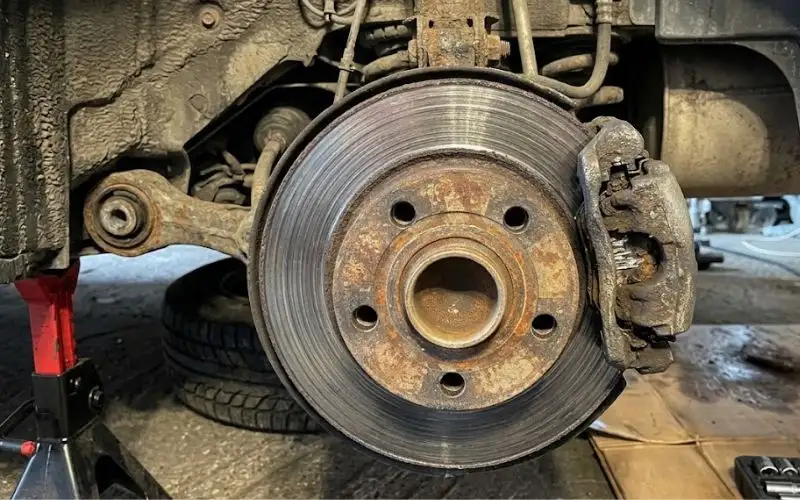
Our brake repair service includes complete caliper inspection and testing to identify stuck pistons and seized slide pins. Addressing a dragging caliper quickly prevents rotor and pad damage that significantly increases the total repair cost.
Reason 5: Uneven Brake Pad Wear
Brake pads that have worn to different thicknesses on the left and right sides create uneven braking force. During brake application, the side with thicker pads generates more stopping force and pulls the vehicle toward it.
This pulling, specifically during braking rather than constant straight-line driving, is the distinguishing characteristic. If your car only pulls when you are applying the brakes, uneven pads or a caliper issue is the most likely cause.
Uneven pad wear itself is usually caused by a sticking caliper on one side. Replacing pads without addressing the caliper that caused the uneven wear will simply produce the same unequal wear on your new pads.
Reason 6: Worn Ball Joints or Tie Rod Ends
Ball joints and tie rod ends connect your steering and suspension components and allow precise wheel movement during driving. When these joints wear out, they develop looseness that allows wheels to shift position during driving.
This looseness creates pulling because the worn joint cannot maintain consistent wheel angle against road forces. The pull from worn steering and suspension joints often feels wobbly or inconsistent rather than steady in one direction.
You may also notice a clunking sound over bumps or a vague steering feel alongside the pulling symptom. Our suspension repair service inspects all steering joints to identify worn components creating these combined symptoms in your vehicle.
Worn ball joints and tie rod ends are also a safety concern beyond the pulling, since a failed joint can cause complete wheel separation. Addressing these promptly through our suspension inspection protects you from a dangerous and sudden failure while driving.
Reason 7: Wheel Bearing Failure on One Side
A worn wheel bearing creates additional rolling resistance on the affected wheel that pulls the vehicle toward that side. The pull from a bad wheel bearing often becomes more noticeable at specific speed ranges and changes with vehicle speed.
A growling or humming noise that changes during gentle lane changes or gentle weaving is the clearest additional symptom. The noise gets louder when weight shifts toward the bad bearing and quieter when weight shifts away from it.
Wheel bearing failure on a specific corner of the vehicle creates car pulling to the right or car pulling to the left depending on which bearing has failed. Our technicians physically test each bearing by checking for play and noise during every suspension inspection.
Reason 8: Damaged or Bent Wheel or Rim
A wheel that was bent by a pothole impact or curb strike no longer rolls in a perfectly true circular path. The bent wheel creates vibration and a pulling force toward its side that cannot be corrected through alignment or balancing.
Bent wheels sometimes show obvious damage visible to the naked eye as a visible flat spot or crack on the rim. Other times the bend is minor enough that only a professional inspection while spinning the wheel reveals the problem.
Always have your wheels and suspension inspected after any significant impact with a pothole, curb, or road debris. Impact damage often creates multiple problems simultaneously across tires, wheels, and suspension components on the affected corner.
Reason 9: Torque Steer in Front Wheel Drive Vehicles
Torque steer is a pulling sensation felt specifically during hard acceleration in Front Wheel Drive vehicles. The engine’s torque is transmitted to both front wheels simultaneously, but small differences in driveshaft angles create unequal forces.
This pulling occurs only during acceleration and disappears at steady speeds or during coasting on flat, straight roads. It is most noticeable during aggressive acceleration from a stop or during hard merging maneuvers onto highways.
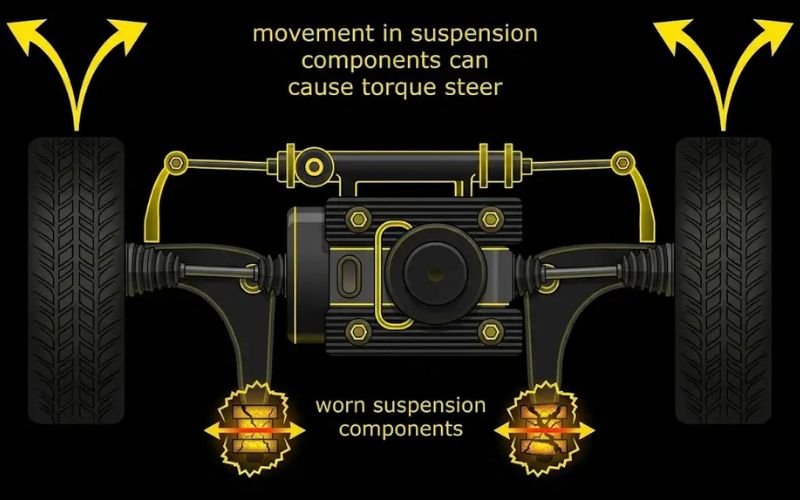
Some degree of torque steer is normal in Front Wheel Drive vehicles, particularly those with higher-powered engines. Sudden worsening of torque steer can indicate worn CV axles or engine mount failure that allows the drivetrain to shift position.
Reason 10: Worn or Broken Engine or Transmission Mounts
Engine and transmission mounts hold the powertrain in a fixed position relative to the vehicle frame during operation. When these mounts wear out or break, the powertrain shifts position under load and during acceleration.
This shifting creates asymmetric forces that produce a pulling sensation that changes with acceleration and engine load. The pull from failed mounts feels different from alignment pulling because it specifically worsens under engine load.
You may also notice clunking during gear changes or a subtle vibration through the steering wheel and floor. Engine mount failure accelerates wear on nearby components and should be addressed promptly for multiple reasons.
Reason 11: Road Crown Effect on Certain Roads
This one is not a mechanical problem but rather a normal characteristic of how roads are built and designed. Most roads are engineered with a slight crown in the center to allow rainwater to drain toward the shoulders.
This crown creates a very gentle slope that causes nearly all vehicles to drift slightly toward the lower shoulder. On crowned roads, a mild drift toward the right is completely normal on most standard American roads.
The distinction between normal road crown response and a real mechanical problem lies in the strength and consistency of the pull. Normal crown drift is very mild and easy to counteract. A mechanical problem creates strong and persistent pulling that requires constant correction.
Reason 12: Memory Steer From Steering Components
Memory steer is a condition where the steering does not return naturally to center after completing a turn. The steering wheel stays slightly turned after a corner, causing the vehicle to drift toward the direction of the last turn made.
This symptom points toward worn upper strut bearings, a tight steering rack, or binding in the steering column components. The pulling changes direction depending on which way you last turned before driving straight.
Memory steer is more common on higher mileage vehicles where steering components have accumulated significant wear over time. Our suspension repair specialists diagnose memory steer during a comprehensive test drive and steering system inspection.
When to Seek Immediate Professional Help
Some pulling symptoms require same-day inspection rather than waiting until your next convenient appointment time. These specific situations indicate an urgent safety concern that should not be deferred.
Seek immediate help if you experience any of these alongside the pulling symptom: