

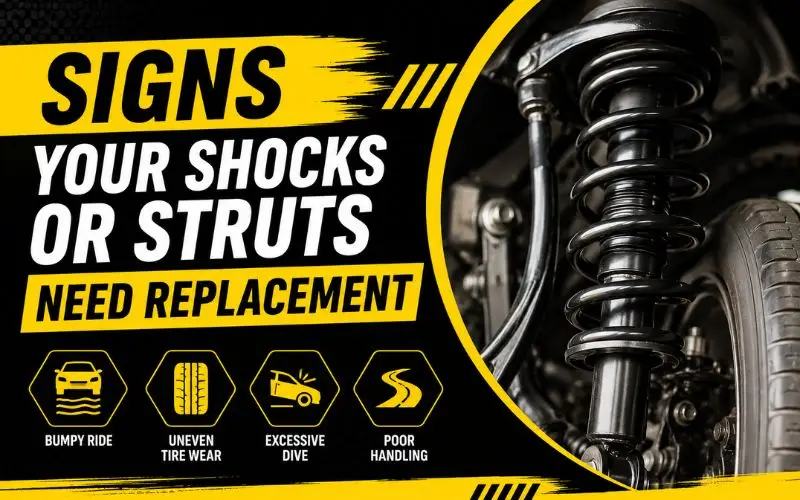
What Shocks and Struts Actually Do for Your Vehicle
Before diving into the warning signs, it helps to understand what these components actually do. Shocks and struts control how your suspension moves in response to road inputs and forces. Every bump, pothole, and rough patch sends energy into your suspension system from below. Without shocks and struts, that energy would cause your vehicle to bounce uncontrollably after every impact.
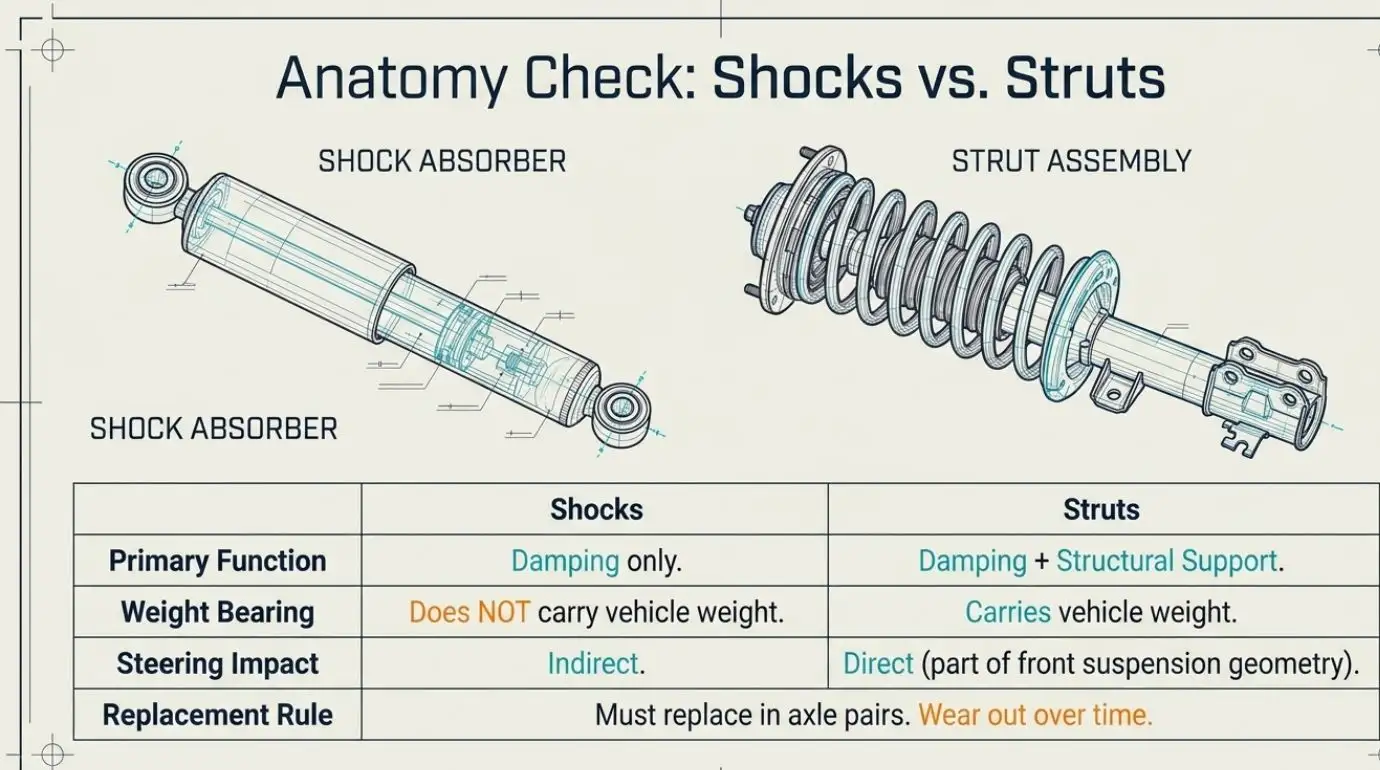
These components use hydraulic fluid to dampen and control spring movement during every road event. They keep your tires planted firmly on the road surface where they can actually grip and steer. If you want to understand exactly how these two parts differ from each other, read our guide on the difference between a strut and a shock. Knowing which your vehicle uses helps you understand the repair process when replacement becomes necessary.
Struts are structural components that also support the weight of your vehicle in addition to damping. Shocks only dampen movement and do not carry vehicle weight as a strut assembly does. Both perform the same fundamental job of controlling suspension movement, but they do it differently. Both also wear out over time and need replacement to keep your vehicle safe and comfortable.
How Long Do Shocks and Struts Last in Houston
Most manufacturers suggest inspecting shocks and struts every 50,000 miles and considering replacement at 75,000 to 100,000 miles. However, Houston’s unique conditions often shorten this lifespan significantly for local drivers. Houston’s roads are genuinely rough in many areas due to heat damage, heavy truck traffic, and construction. Every pothole and rough patch accelerates wear on shock and strut components beyond average rates.
Our extreme summer heat also affects the hydraulic fluid inside shocks and struts over time. Heat thins the fluid and degrades the internal seals that keep it where it belongs inside. Coastal humidity promotes rust on external metal components of shock and strut assemblies over the years. This corrosion weakens the bodies and mounting hardware that hold these critical components in place.
Heavy Houston traffic means more braking events and more suspension compression cycles per mile driven. This higher demand wears shocks and struts down faster than lower traffic environments elsewhere in Texas. For all these reasons, Houston drivers should have their shocks and struts inspected more frequently than the average recommendation suggests. Being proactive with this inspection saves you from unexpected handling problems on busy local roads.
Top Warning Signs Your Shocks or Struts Need Replacement
1. Your Car Bounces Excessively After Hitting Bumps
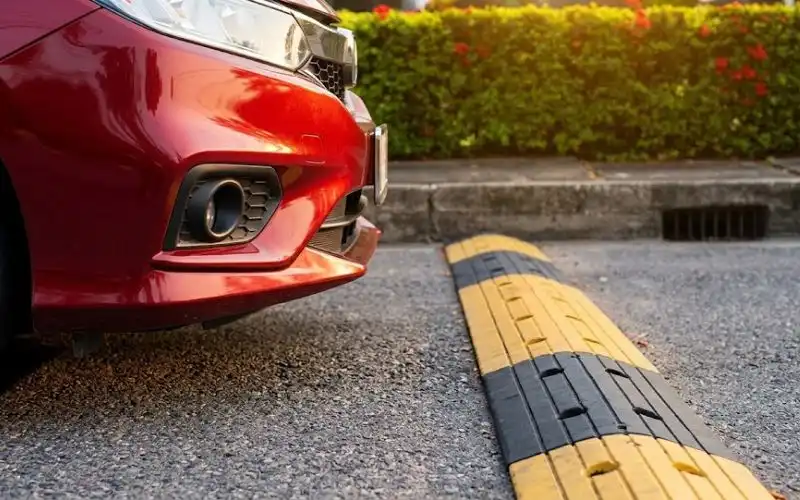
This is the most classic and well-known sign that your shocks or struts have worn out. You drive over a speed bump or pothole, and the car keeps bouncing long after you have passed it. A healthy suspension settles immediately after absorbing an impact without any continued bouncing. Your car should feel planted and controlled right away without any residual up and down movement.
When shocks or struts lose their damping ability, they can no longer control spring rebound properly. The spring compresses and releases repeatedly without anything stopping it from continuing the cycle. You can perform a simple bounce test yourself in a parking lot to check for this problem. Push down firmly on each corner of your car and release it quickly to observe the response.
A car in good shape will settle back to normal height in one smooth, controlled motion. If it bounces two or more times before settling, your shocks or struts need professional attention. This excessive bouncing also significantly increases your stopping distance during emergency braking situations. Tires that bounce off the road surface cannot provide full braking force when you need it most.
2. You Notice Fluid Leaking from the Shock or Strut Body
Healthy shocks and struts are sealed units that contain hydraulic fluid inside their bodies. This fluid is what creates the damping force that controls your suspension movement effectively. When the seals inside wear out or crack, hydraulic fluid begins leaking from the shock body. You can sometimes see oily residue or wet spots on the outer body of the shock or strut.
A leaking shock or strut has lost some of the fluid it needs to damp suspension movement. This fluid loss reduces its damping ability and allows more uncontrolled bouncing and movement. A slight amount of oily film on a shock body is considered normal and not necessarily a failure. However, heavy oily streaking or visible dripping indicates a seal has failed, and replacement is needed.
Our suspension repair service includes visual inspection of all shock and strut bodies for leakage. Catching fluid leaks early prevents complete damping failure before it creates a handling emergency on the road.
3. Your Steering Feels Loose or Vague at Highway Speeds
Worn struts directly affect your steering precision since they are structural parts of the front suspension. When struts lose their damping ability, your front wheels can move more freely than they should. This extra movement makes your steering feel imprecise and disconnected from what the wheels are actually doing. You may notice the car feels like it is floating or wandering at highway speeds on the freeway.
If you are also experiencing shaking through the steering wheel, read our guide on why your steering wheel shakes for related information. Worn struts and shocks can contribute to vibration alongside other steering and wheel-related causes. Power steering also becomes less effective when struts are worn since the front suspension geometry changes. Understanding what power steering does in a car helps you recognize how suspension health affects overall steering performance.
4. Your Vehicle Nose Dives When Braking Hard
Watch how the front of your car behaves when you brake firmly at a traffic light or stop sign. The front of a healthy vehicle will dip slightly under braking but recover quickly and smoothly. When front shocks or struts are worn, the front end dips dramatically and takes longer to recover. This excessive nose dive is called brake dive, and it signals worn front suspension dampers.
Severe nose dive during braking is more than just uncomfortable to experience while driving. It increases your stopping distance and makes your vehicle harder to control during emergency braking events. Weight shifting dramatically to the front also reduces rear tire contact with the road simultaneously. Less rear tire contact means less overall grip during the braking event when you need maximum stability.
5. Your Car Leans Excessively During Turns and Corners
Every vehicle leans outward during cornering due to the physics of turning and weight transfer. The suspension system and anti-roll bars control how much this leaning actually occurs during turns. Worn shocks and struts allow excessive body lean during cornering since they cannot control spring movement. You may notice your car feels like it is rolling significantly during normal highway on-ramp speeds.
This excessive body lean is called body roll, and it is both uncomfortable and genuinely dangerous. Severe body roll in sharp turns or emergency swerving situations can compromise your vehicle’s stability. Rear shock wear often contributes to a feeling of the rear end swaying or feeling loose. You may notice this particularly when making quick lane changes on Houston freeways at higher speeds.
Our full guide on signs of bad suspension covers body roll and related symptoms in complete detail. Understanding the full range of suspension problems helps you recognize when multiple issues are developing together.
6. You Hear Clunking, or Knocking Sounds Over Road Bumps
Unusual sounds from your suspension are always worth investigating with a professional inspection. Clunking, knocking, or banging sounds over bumps often accompany worn shocks or struts needing replacement. Strut mounts at the top of each strut assembly contain rubber and bearing components that wear out. When these mounts deteriorate, they allow the strut to knock around inside the mount housing.
This knocking produces a distinct sound that often feels like something is hitting the wheel well area. The noise typically matches the rhythm of bumps and road imperfections that compress the suspension. Loose shock absorber mounting bolts can also create clunking sounds as the shock moves under its mount. These bolts should be torqued correctly and inspected during any suspension service visit.
For a comprehensive look at why your suspension makes noise, read our guide on suspension squeaking over bumps and related causes. Sometimes squeaking and clunking happen together from the same worn component needing replacement.
7. Uneven or Accelerated Tire Wear Patterns Appearing
Your shocks and struts play a direct role in keeping your tires in full contact with the road. When they cannot control wheel movement properly, tires bounce and lose contact with the pavement repeatedly. This bouncing contact creates a distinctive tire wear pattern called cupping or scalloping on the tread. Cupped tires develop wavy high and low spots around the circumference of the tread surface.
Run your hand around the tire tread surface and feel for any raised or cupped patches. These patches feel like shallow scooped-out areas alternating around the full circumference of the tire.
Cupped tires also create a distinctive humming or roaring noise at certain highway speeds. This noise often gets mistaken for wheel bearing problems, but the tire wear pattern reveals the true cause. Continuing to drive on severely cupped tires creates its own handling and safety problems. The uneven tread reduces wet weather traction and braking performance significantly compared to evenly worn tires.
Replacing shocks and struts alongside new tires prevents the new tires from developing the same cupping pattern immediately. New tires on worn shocks will develop cupping quickly and waste your tire investment.
8. Your Vehicle Sits Lower Than Normal on One Corner
Check the ride height at each corner of your vehicle by measuring from the wheel center to the fender arch. All four corners should be at approximately the same height when the car sits on level pavement. If one corner sits noticeably lower than the others, the spring at that corner may have failed. However, severely worn struts can also contribute to reduced ride height at specific corners of the vehicle.
This uneven stance affects your headlight aim, your aerodynamics, and your overall vehicle handling. Headlights pointed incorrectly from uneven ride height reduce your nighttime visibility significantly. Uneven ride height also places unequal loads on your tires, causing accelerated and uneven tread wear. The lower corner carries more weight, and its tire wears faster than the higher corners do.
A corner that sits low also affects your wheel alignment angles since alignment is calculated at proper ride height. Poor alignment from this cause leads to additional tire wear and handling problems, compounding the original issue.
9. You Feel Every Small Bump More Than You Used To
Worn shocks and struts lose their ability to cushion small road imperfections that healthy dampers easily absorb. Drivers describe this as the road feeling harsher, rougher, or more jarring than it used to. This change happens so gradually that many drivers simply accept it as their new normal over time. They forget what a properly dampened ride actually feels like since the decline was so incremental.
A good comparison is riding in a friend’s well-maintained vehicle and noticing how much smoother it feels. That difference in harshness between vehicles is often explained by different shock and strut conditions. If small road irregularities, expansion joints, or painted road markings send jarring vibrations through your seat, pay attention. These sensations suggest your dampers are no longer controlling the small movements they should easily absorb.
10. Increased Stopping Distance When Braking Firmly
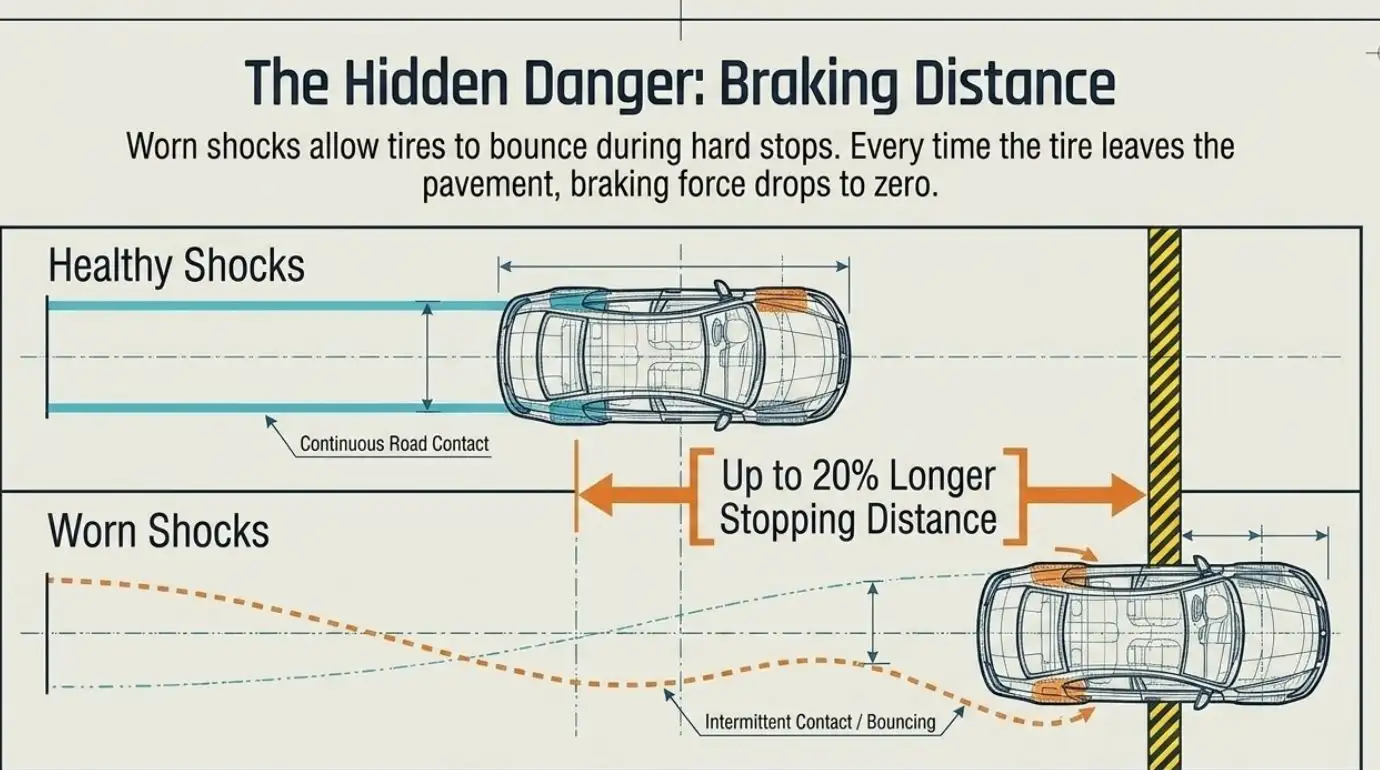
Few drivers realize that worn shocks and struts actually increase their stopping distance measurably. This connection between dampers and braking performance is one of the most important safety facts about these components. Effective braking requires your tires to maintain consistent contact with the road surface during the stop. Worn shocks allow your wheels to bounce during braking, interrupting that critical contact repeatedly.
Each time a tire momentarily loses contact with the road surface, your braking force drops to zero. Multiple brief interruptions throughout a single braking event add measurable distance to your total stop.
Testing by shock manufacturers has shown that worn shocks can increase stopping distance by up to 20%. At highway speeds on Houston freeways, this extra distance represents a significant accident risk.
The Bounce Test: A Simple Check You Can Do at Home
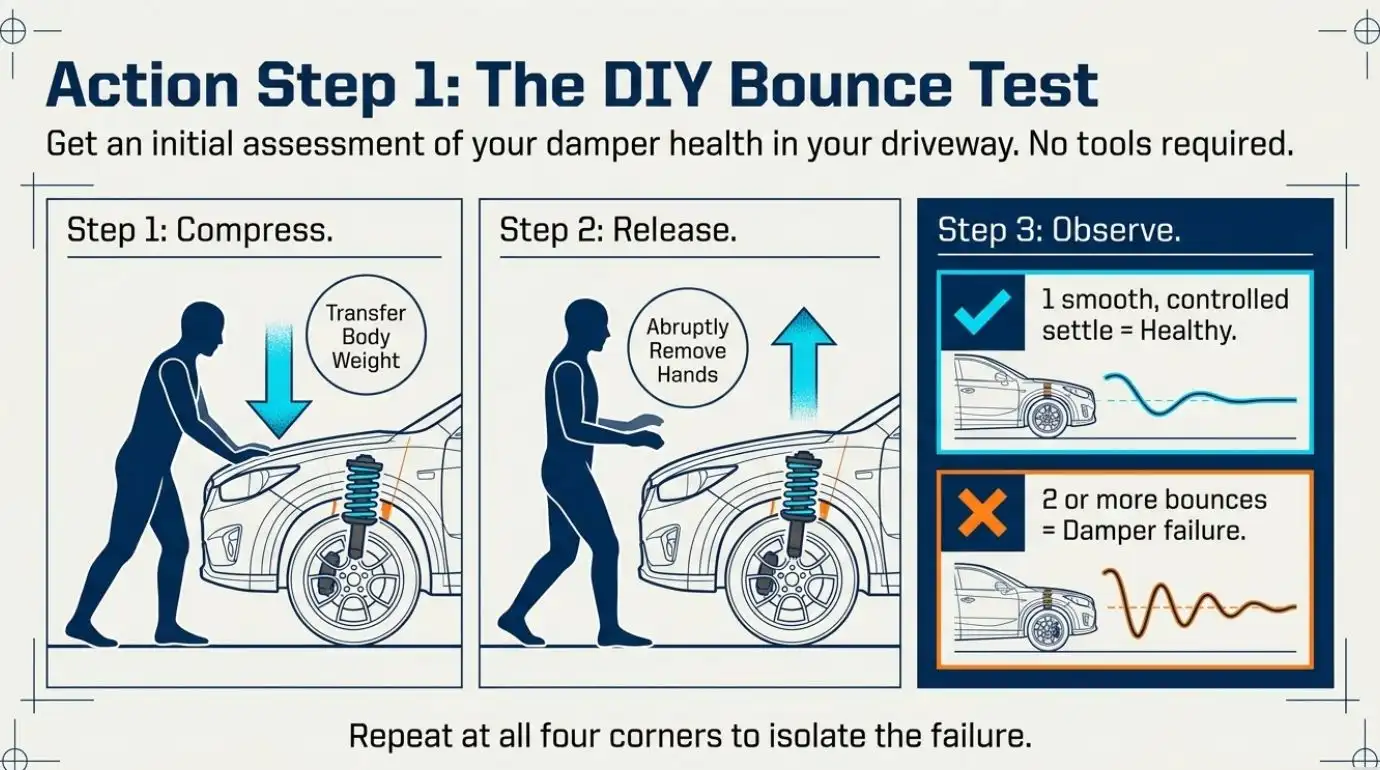
The bounce test is a quick and simple way to get an initial assessment of your shock health. You do not need any tools or mechanical knowledge to perform this easy check in your driveway. Walk to one corner of your vehicle and push down firmly on the bumper or body with both hands. Use your full body weight to compress the suspension as far down as you comfortably can.
Release your weight suddenly and watch carefully how the car responds to this sudden release of force. Count how many times the corner bounces before it comes to a complete stop and settles. One smooth, controlled settle back to normal height indicates the shock or strut is still functioning adequately. Two or more bounces before settling indicates the damper has lost significant effectiveness and needs replacement.
Repeat this test at all four corners of the vehicle to get a picture of overall suspension health. Sometimes only one or two corners show excessive bounce, which helps focus the repair to specific corners.
Remember that this test gives you a general indication but does not replace professional measurement and inspection. Bring your findings to our technicians, and we will confirm with a thorough hands-on evaluation.
What Happens If You Ignore Worn Shocks and Struts Too Long
Delaying shock and strut replacement might seem like saving money in the short term but it is not. The secondary damage caused by worn dampers creates far more expensive problems over time. Severely worn struts allow front suspension components like ball joints and tie rod ends to move excessively. This excessive movement accelerates wear on these expensive components that would otherwise last much longer.
Cupped tires from worn shocks need replacement much sooner than properly dampened tires should. A set of tires that might last 50,000 miles can develop cupping damage in as little as 20,000 miles.
Wheel alignment cannot be properly maintained when suspension components are allowed to move too freely. Your alignment will drift out of specification faster than normal, causing additional tire wear and fuel economy loss.
The cumulative cost of extra tire wear, accelerated suspension part wear, and alignment issues greatly exceeds the cost of timely shock and strut replacement. Early replacement is always the smarter financial decision.
What to Expect During Professional Shock and Strut Inspection
Our technicians begin by test driving your vehicle to experience the ride quality and handling firsthand. This real-world assessment confirms what the symptoms suggest before we lift the vehicle. We then raise the car on a professional lift to visually inspect each shock and strut assembly. We look for fluid leaks, physical damage, rust, and signs of wear on the mounting hardware.
Each shock and strut is physically tested by pushing and pulling on the wheel to feel for excessive movement. Proper dampers resist movement firmly while worn ones allow too much free play in all directions. Strut mounts are checked for play and noise since failed mounts cause clunking sounds and handling issues. We also check the rubber bump stops and dust boots that protect the strut shaft from contamination.
We provide you with a clear written report showing the condition of every shock and strut on your vehicle. You will know exactly which components need replacement and why before any repair work begins.
Trust Wise Car Care for Shock and Strut Service in Houston

Our ASE-certified technicians have replaced shocks and struts on thousands of Houston vehicles over fifteen years. We understand exactly how local roads and climate accelerate wear on these important safety components. We use quality replacement parts that meet or exceed manufacturer specifications for your specific vehicle. Proper components combined with professional installation restore the ride quality and handling your car had when new.
Every shock and strut replacement includes a comprehensive inspection of related suspension components. We check control arm bushings, ball joints, tie rod ends, and sway bar links at the same time. Wheel alignment is always performed after strut replacement to restore proper geometry and tire wear. This complete approach ensures your entire front end works correctly together after service is finished.
All suspension repairs are backed by our 36-month or 36,000-mile parts and labor warranty. This warranty gives you full confidence that your repair will hold up on Houston’s demanding roads.
Frequently Asked Questions
How Do I Know If My Shocks or Struts Are Bad?
The most common signs include excessive bouncing after bumps, nose diving when braking, and body lean during turns. Fluid leaking from the shock body, clunking sounds over bumps, and cupped tire wear also indicate worn dampers. The bounce test is a helpful starting point you can perform yourself at home without any tools. Push down on each corner firmly and release to see if the car bounces more than once before settling.
Can I Drive With Bad Shocks or Struts for a While?
You can technically drive on worn shocks or struts, but doing so creates real and increasing safety risks. Stopping distances increase, handling becomes less predictable, and tire wear accelerates significantly over time. Schedule an inspection soon if you suspect your shocks or struts are worn past their effective range. Continuing to drive without addressing the problem always costs more in the long run.
Should I Replace Shocks and Struts in Pairs or All Four at Once?
Always replace shocks and struts in axle pairs at minimum to ensure balanced handling and ride quality. Replacing just one side creates imbalanced damping that makes the car handle unpredictably during cornering and braking. Replacing all four at once makes the most sense when all four corners show significant wear together. This approach restores consistent handling across the entire vehicle and is often more cost-effective.
How Long Does Shock and Strut Replacement Take?
Front strut replacement typically takes 2 to 3 hours per axle depending on your specific vehicle design. Rear shock replacement is often faster, usually taking 1 to 2 hours for both rear units together.
Do I Need a Wheel Alignment After Replacing Struts?
Yes, a wheel alignment is always necessary after replacing front struts on any vehicle without exception. Struts are part of the suspension geometry, and removing them affects the alignment angles of your front wheels. Driving without alignment after strut replacement causes immediate uneven tire wear from the first mile. The small additional cost of alignment service protects your new struts and your tires from day one.