
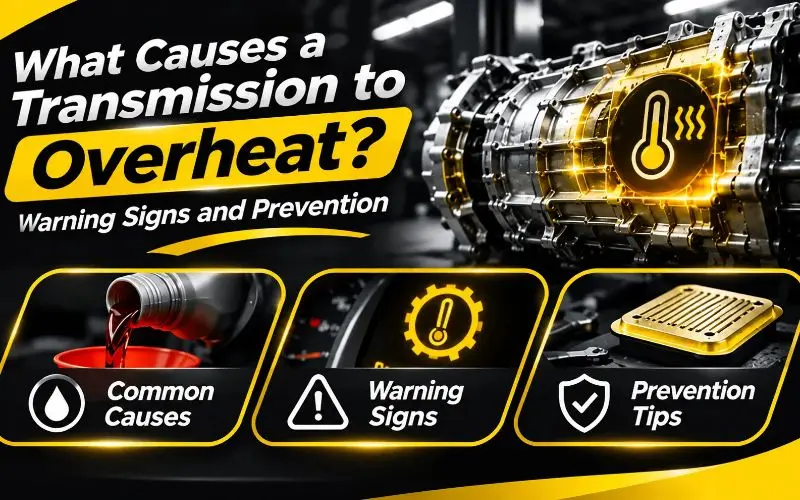
A transmission overheats mostly because of low or old transmission fluid, heavy towing, a failing transmission cooler, or internal slipping that creates friction. Blocked cooling lines, a clogged filter, or a weak torque converter can add more heat. Stop driving if the temperature warning light comes on. Let the car cool, then book an inspection.
This guide explains each cause in plain words. You will learn the warning signs, quick checks, and smart prevention steps.
Why Does Heat Hurt Transmission?
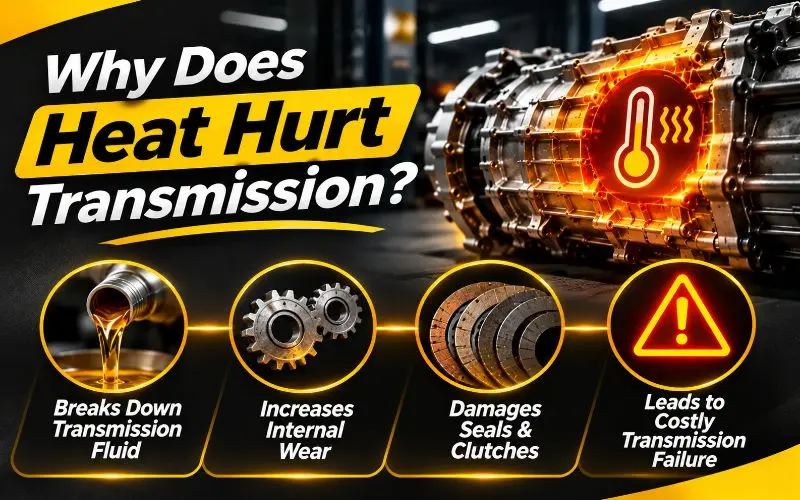
Your transmission makes heat every time it works. Fluid, gears, and clutches all create friction. The transmission fluid carries that heat away to a cooler.
Most automatic transmissions run best between 175 and 200 degrees Fahrenheit. Above 220 degrees, fluid starts to break down fast. Above 250 degrees, seals harden and clutch plates burn.
Heat damage builds in a loop. Hot fluid loses its grip and cooling power. The clutches then slip, which creates even more heat. That is why a small cooling issue can become a major repair.
How the Transmission Cooling System Works
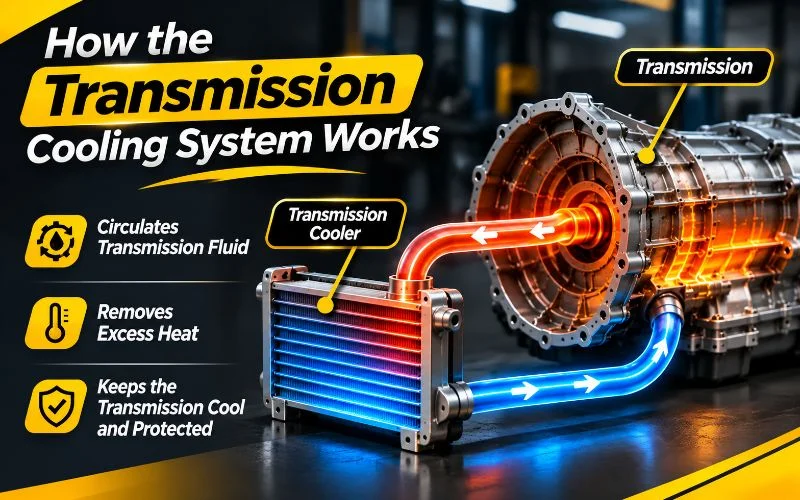
Your transmission cooling system has a few key parts. Each one helps move heat away from the gearbox.
- Transmission fluid: Lubricates parts and carries heat.
- Transmission pump: Pushes fluid through the system.
- Transmission filter: Traps dirt and metal debris.
- Transmission cooler: Releases heat from the fluid into the air.
- Transmission cooling lines: Carry fluid to and from the cooler.
- Radiator: Often holds a built-in transmission cooler.
- Thermostat: Controls engine coolant flow and temperature.
- Transmission temperature sensor: Reports fluid heat to the computer.
- Torque converter: Links the engine to the transmission and makes heat.
- Clutch packs: Lock each gear and create friction when they slip.
You can read more about automatic transmission fluid and how it handles heat. When any one of these parts fails, the whole system suffers.
What Causes a Transmission to Overheat?
Several faults can cause automatic transmission overheating. Here are the most common ones.
Low Transmission Fluid
Low transmission fluid is the top cause we see. Less fluid means less cooling and less pressure. The clutches then slip and heat up fast.
Transmissions do not burn fluid like engines do. So low fluid usually means a leak. Our guide to the signs of low transmission fluid shows what to watch for.
Transmission Fluid Leak
A transmission fluid leak drains the system a little at a time. Common leak points include the pan gasket, cooling lines, seals, and the cooler. Look for red or brown spots under the car.
Do not just top off the fluid and move on. The leak will keep draining it. Find and fix the source.
Old or Burnt Transmission Fluid
Fluid wears out with time and heat. Burnt transmission fluid turns dark brown or black. It smells sharp and unpleasant. Burnt fluid cannot cool or protect well.
It also carries clutch material and metal bits. These clog passages and speed up wear. Learn how often you should change transmission fluid to avoid this.
Heavy Towing and Transmission Heat
Heavy towing is a big cause of transmission overheating while driving. Pulling a trailer adds load to every part. The torque converter and clutches work harder and run hotter.
Hills, hot weather, and stop-and-go traffic make it worse. Always check your owner’s manual for the towing limit. Add an extra transmission cooler for regular towing.
Transmission Cooler Problems
The transmission cooler is a small heat exchanger. Dirt, bent fins, or internal clogs can block it. A blocked cooler cannot shed heat. Fluid then stays hot.
Cooler problems also include leaks and cracks. In some cars, a radiator failure mixes coolant with transmission fluid. This looks like a milky pink fluid and is very serious.
Blocked or Damaged Transmission Cooling Lines
The transmission cooling lines carry hot fluid to the cooler and back. Kinks, rust, and loose fittings can restrict flow or leak. Even a small blockage can cut cooling sharply.
Check the lines for wet spots, rust, or damage. Road debris can hit them from below.
Clogged Transmission Filter
The filter keeps dirt out of the pump and valves. A clogged filter starves the pump of fluid. Pressure drops, and the clutches slip. Slipping adds heat quickly.
Most fluid services include a new filter. It is a low cost part that protects costly ones.
Transmission Slipping and Worn Clutch Packs
Transmission slipping is both a cause and a result of overheating. Worn clutch packs cannot hold power. They slide, which creates friction and heat.
Signs include revving without speed, delayed shifts, and a burnt smell. Slipping gets worse fast, so book an inspection soon.
Failing Torque Converter
The torque converter makes a lot of heat in normal use. A worn lockup clutch or damaged internals make more. A failing converter can overheat the fluid in minutes. You may feel a shudder at 30 to 50 mph.
You can learn how it works in this overview of the torque converter.
Engine Cooling System Problems
Many transmissions use the radiator to cool the fluid. A weak radiator, bad water pump, or stuck thermostat raises engine coolant temperature. That heat passes into the transmission cooler.
Read our guide to bad car thermostat symptoms to spot a problem early. Houston heat makes these issues more common. See our post on car overheating in Houston traffic for related signs.
Wrong Fluid or Wrong Fluid Level
The wrong fluid type can hurt friction and cooling. Too little fluid causes slipping. Too much fluid can foam and trap heat. Always use the type listed in your owner’s manual.
Warning Signs of Transmission Overheating
Your car gives clues before serious damage hits. Watch for these signs:
- A transmission temperature warning light on the dash
- A burning smell from under the car
- Slipping or delayed shifting
- Harsh or erratic gear changes
- Whining, buzzing, or grinding noises
- Dark, burnt, or low fluid
- Red fluid under the car
- Smoke or steam from under the hood
- Reduced power or limp mode
- A check engine light
Some cars switch to limp mode to protect the transmission. This limits speed and gears. It is a warning, not a fix. Our post on what it means when the engine light blinks explains urgent dash lights.
Quick Guide to Causes and Symptoms
Use this table to narrow down the problem. It is a guide, not a final diagnosis.
What You Notice | Likely Cause | Urgency |
Red puddle under the car | Fluid leak from pan, seal, or line | High |
Burnt smell, dark fluid | Old or overheated fluid | High |
Warning light after towing | Heavy load, weak cooler | High |
Revs rise, speed stays low | Slipping clutch packs | Urgent |
Shudder at 30 to 50 mph | Torque converter fault | High |
Milky pink fluid | Radiator cooler leak | Urgent |
What to Do If Your Transmission Overheats While Driving
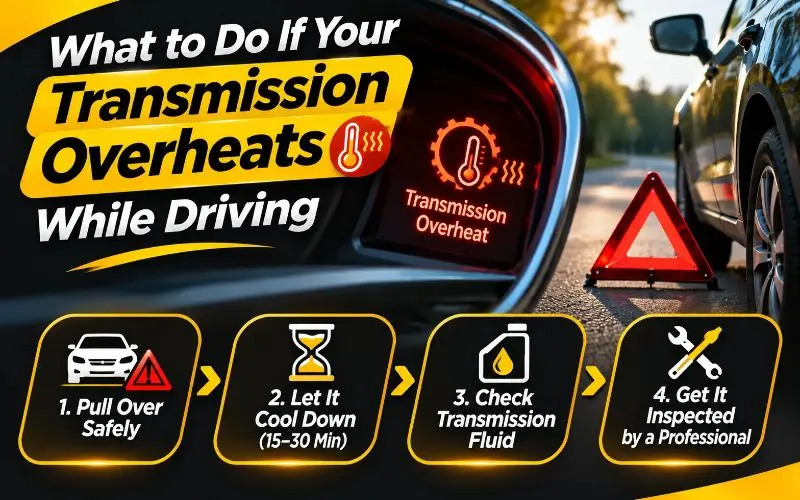
Quick action can save your transmission. Follow these steps:
- Pull over in a safe spot as soon as you can.
- Shift to park and leave the engine running for a minute.
- Turn off the engine after a short idle if the car allows.
- Let it cool for at least 30 minutes.
- Check for leaks, smoke, or burning smells.
- Check the fluid if your car has a dipstick.
- Call a tow truck if the warning light stays on or the car slips.
Do not keep driving with a warning light on. A short drive can ruin the clutches. Never pour cold water on a hot transmission.
Is It Safe to Drive With an Overheated Transmission?
It is not safe. Overheating can cause sudden power loss. It also destroys fluid, seals, and clutches within minutes. Repair costs rise sharply with every mile.
The National Highway Traffic Safety Administration treats loss of drive power as a safety risk. You can check open recalls on theNHTSA website. Some recalls involve transmission or cooling parts.
How to Fix an Overheating Transmission
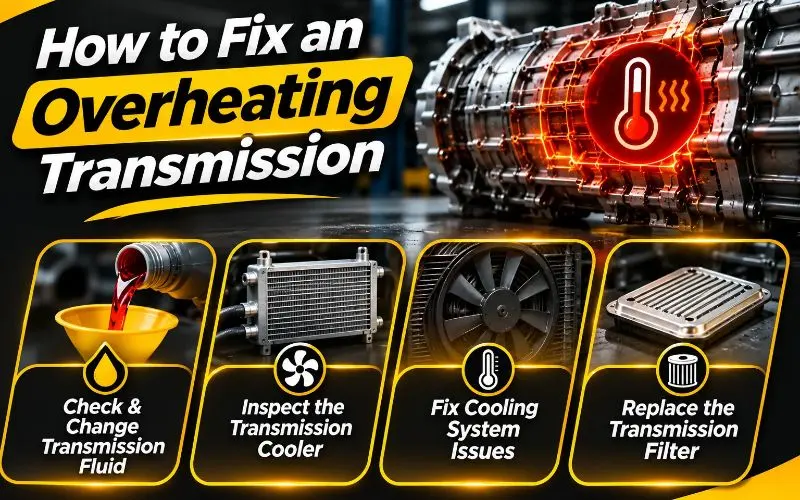
The fix depends on the cause. A skilled technician follows a clear process.
Step 1: Inspect Fluid Level and Condition
The technician checks the level, color, and smell. They also look for metal particles. This shows the health of the clutches and gears.
Step 2: Scan for Codes
A scan tool reads codes from the transmission computer and the temperature sensor. These point to sensor faults, slipping, or pressure problems. Our engine diagnostics service helps find the cause.
Step 3: Pressure Test the Cooling System
The technician tests flow through the cooler and lines. They also check the radiator and thermostat. This finds blocked or leaking parts.
Step 4: Fluid and Filter Service
Old fluid gets replaced with the exact type your car needs. A new filter goes in. This fixes many mild heat problems.
Step 5: Repair or Replace Failed Parts
Coolers, lines, filters, and sensors can be replaced without a rebuild. A bad torque converter or worn clutch packs needs deeper work. A fresh start with clean fluid helps new parts last.
Our transmission repair service covers diagnosis, fluid service, and full repairs. Some brands have known weak points. See common Audi transmission problems for one example. European cars can also run hot. Read why a BMW overheats in Houston for local tips.
How to Prevent Transmission Overheating
Good habits protect your transmission. Try these:
- Change fluid and filter on your manufacturer’s schedule
- Use only the fluid type your owner’s manual lists
- Fix leaks as soon as you see them
- Stay within your towing limit
- Add an auxiliary transmission cooler for towing
- Keep the radiator and cooling system in good shape
- Avoid hard acceleration in heavy heat
- Do not shift into drive or reverse while rolling
- Fix warning lights early
Use our Houston summer car maintenance checklist to stay ahead of heat damage. Before a long drive or tow, book a pre-road-trip inspection in Houston.
When Should You See a Mechanic?
Book a visit if you see a warning light, smell burning, or notice slipping. Go sooner if fluid is leaking or the car loses power. Early diagnosis often means a smaller repair bill.
A good shop will check fluid, scan codes, and test cooling. They should explain the findings in plain words. Our list of car repair questions to ask before repairs can help you compare estimates.
If your transmission runs hot, the team at Wise Car Care can help. Visit our transmission repair page to schedule an inspection. You can also browse more tips on our car care blog.
Frequently Asked Questions
What causes a transmission to overheat?
The most common causes are low or old fluid, heavy towing, a clogged cooler, and slipping clutches. Blocked lines, a dirty filter, and a failing torque converter also add heat. A fluid check and scan find the cause.
What are the first signs of an overheating transmission?
Early signs include a burning smell, a temperature warning light, and delayed or harsh shifts. You may also notice slipping or whining noises. Dark, burnt fluid is another clue. Do not ignore these signs.
Can low transmission fluid cause overheating?
Yes, low fluid is one of the most common causes. It reduces cooling and hydraulic pressure. The clutches then slip and make heat. Topping up helps only if you also fix the leak.
Is it safe to drive with an overheated transmission?
No, it is not safe. Heat can destroy fluid, seals, and clutches in minutes. The car can also lose power without warning. Pull over, let it cool, and call a tow if needed.
How long should a transmission cool down after overheating?
Let it cool for at least 30 minutes before you check it or restart the trip. If the warning light returns, stop driving. A shop should inspect the cooling system and fluid before you continue.
Does towing cause transmission overheating?
Yes, heavy towing adds load and heat to the transmission. Hills, hot weather, and slow traffic make it worse. Stay within your towing limit. An extra transmission cooler is a smart upgrade.
How much does it cost to fix an overheating transmission?
Cost depends on the cause. A fluid and filter service costs the least. A cooler, lines, or sensor repair costs more. A torque converter rebuild or replacement costs the most. A proper diagnosis gives an accurate quote.