

What the Brake Warning Light on Your Dashboard Actually Means
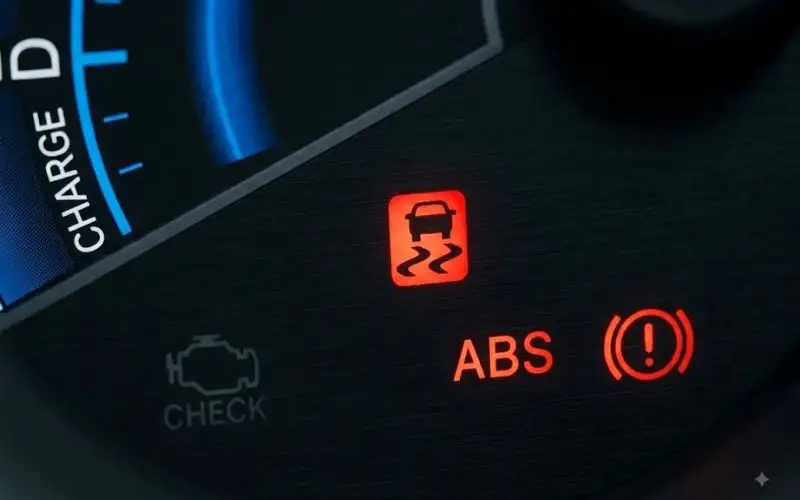
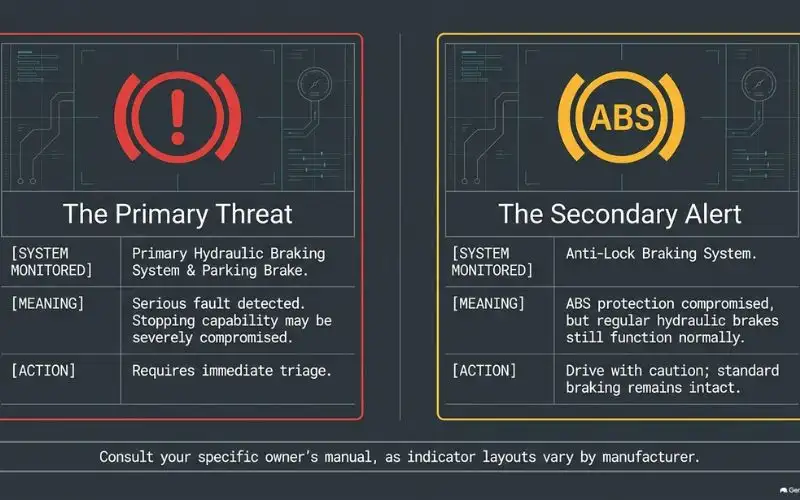
The brake light on your dashboard is not a single warning for one specific problem. It is actually a shared indicator for several different brake system conditions happening simultaneously or separately. Most vehicles have two separate brake-related warning lights that drivers often confuse with each other. Understanding which light you are looking at helps you determine how serious the situation actually is.
The red brake warning light typically indicates a serious brake system problem requiring immediate attention. This is the light most people mean when they say the brake warning light is on. The amber or yellow ABS light is a separate indicator for your anti-lock braking system specifically. This light means your ABS protection is compromised, but your regular brakes still function normally.
Check your owner’s manual to confirm which lights your specific vehicle uses and what each means. This knowledge helps you communicate accurately with technicians and understand how urgently to act.
Common Causes of the Red Brake Light on Your Dash
Parking Brake Is Still Engaged While Driving
This is the simplest and most common cause of the brake light on dashboard illuminating unexpectedly. Many drivers pull away from a parking spot without fully releasing the parking brake first. The parking brake switch triggers the same warning light as other serious brake system faults on most vehicles. This design ensures you never accidentally drive with the parking brake engaged without knowing it.
Before assuming something serious is wrong, check your parking brake handle or pedal completely. Make sure the handle is fully lowered or the pedal is fully released before looking further. If the light turns off immediately after releasing the parking brake, no brake problem exists. You can continue driving normally ,knowing your brake system is functioning as it should right now. However, if the light stays on after fully releasing the parking brake, a real problem exists. Continue reading to identify which other cause is triggering your brake warning light.
Low Brake Fluid Level in the Reservoir
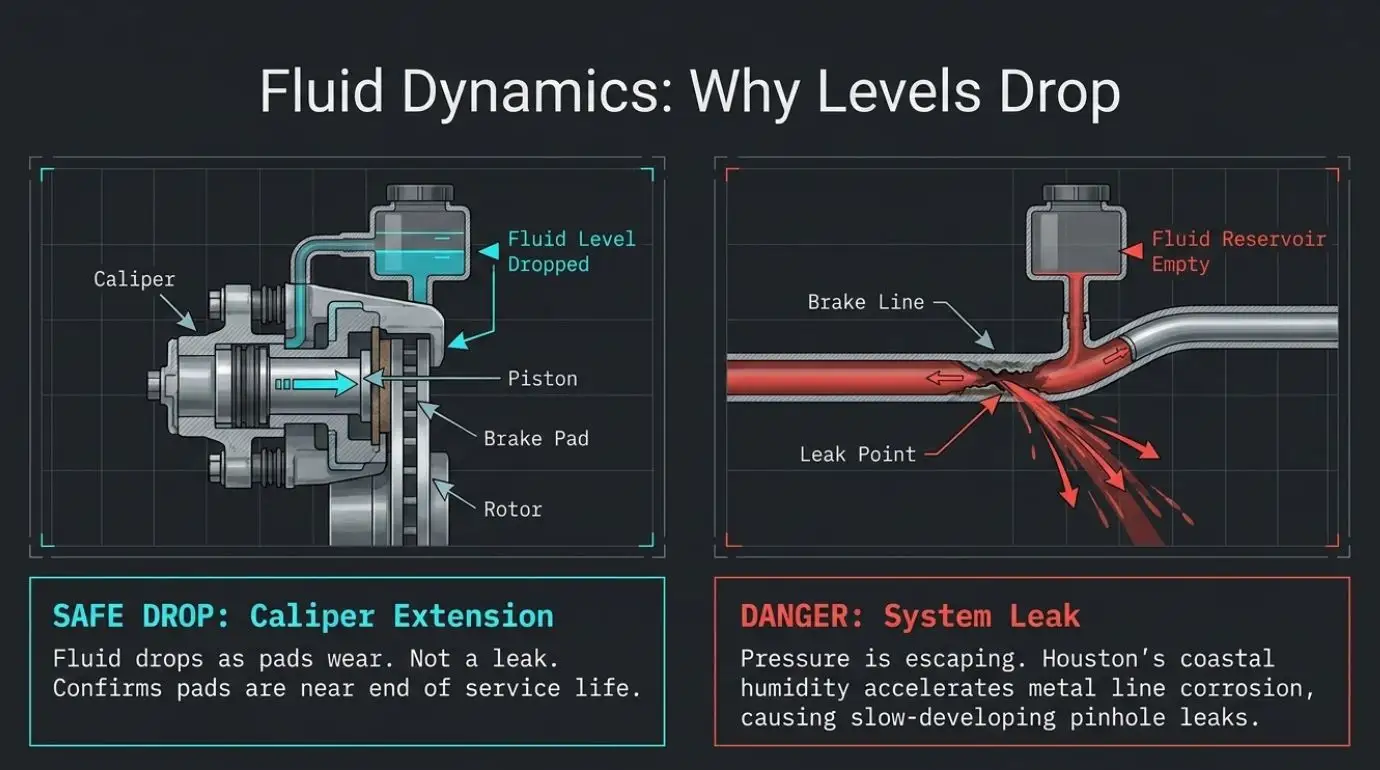
Low brake fluid is one of the most frequent causes of a brake warning light that is not related to the parking brake. The master cylinder reservoir has a sensor that triggers the warning when fluid drops below the minimum level. Brake fluid level drops for two specific reasons that have very different implications for your safety. Understanding which reason applies to your situation determines how urgently you need to act.
The first reason is severely worn brake pads causing the caliper pistons to extend further than normal. As pads wear thin, the pistons push outward more, and the fluid level in the reservoir naturally drops. This fluid level drop from worn pads is expected and not a sign of a leak anywhere. However, it does confirm that your brake pads are reaching the end of their useful service life.
The second and more serious reason is an actual brake fluid leak somewhere in the hydraulic system. A leak means fluid is escaping, and your hydraulic brake pressure will continue decreasing until the leak is repaired. Carefully open your hood and check the brake fluid reservoir level with the engine cold. The reservoir is usually a small translucent plastic tank near the back of the engine compartment.
If fluid is significantly low, add the correct type for your vehicle and watch whether the light turns off. If the light turns off and fluid does not continue dropping, worn pads are likely the cause. Check our complete guide on how often to change brake fluid for Houston’s specific climate conditions. Proper fluid maintenance prevents the contamination and moisture problems that degrade your braking system over time.
Worn Brake Pads Triggering the Warning System
Many modern vehicles have electronic brake pad wear sensors built directly into the brake pad assembly. These sensors complete an electrical circuit that breaks when the pad wears to the minimum acceptable thickness. When the circuit breaks from worn pad material, it sends a signal directly to your vehicle’s computer. The computer then illuminates the brake warning light on your dashboard to alert you immediately.
This sensor-based warning system is more sophisticated than the older mechanical squealer tabs that simply make noise. You may not hear any sound at all before this electronic warning light turns on. This light means your brake pads are at or very near their minimum safe thickness right now. You have a limited number of safe stops remaining before metal contacts the rotor and causes serious damage.
Read our detailed guide on brake pads wearing out to understand how this process develops over time. Knowing what causes accelerated pad wear helps you prevent this situation from happening again so soon.
Schedule brake pad replacement immediately when this sensor triggers the warning light on your dash. Continuing to drive risks metal-to-metal contact that damages your rotors and increases total repair cost. Our brake repair service diagnoses worn pad sensors and replaces pads before rotor damage occurs. We measure all four pads and provide accurate thickness readings at every brake service visit.
Brake Fluid Leak in the Hydraulic System
A brake fluid leak is one of the more serious causes of a brake warning light that demands immediate attention. Hydraulic brake systems need a completely sealed circuit to build and maintain proper stopping pressure. When fluid leaks from any point in the system, pressure builds more slowly and stops less effectively. A significant leak can cause complete brake failure if the fluid level drops low enough to affect all four wheels.
Leaks commonly occur at brake line connections, caliper seals, wheel cylinder seals, and the master cylinder. Each of these locations can develop leaks from age, corrosion, physical damage, or normal wear. You may also notice a spongy or soft-feeling brake pedal alongside the brake light on the dashboard. This soft pedal indicates that air has entered the system through the same leak point, causing fluid.
Houston’s coastal humidity accelerates corrosion on metal brake lines, creating pinhole leaks over many years. Older vehicles in our area are particularly susceptible to this specific type of slow-developing leak.
Malfunctioning Brake Pressure Differential Switch
Your brake system is divided into two separate hydraulic circuits for safety redundancy purposes. Most vehicles use a diagonal split with one front and one rear brake on each independent circuit. A pressure differential switch monitors both circuits to ensure pressure is equal on each side. If pressure drops significantly in one circuit due to a leak or failure, this switch activates the warning light.
This warning specifically indicates that one half of your brake system has lost pressure or is losing it. You may still have braking ability from the intact circuit ,but your stopping power is significantly reduced. This is a serious safety warning that should not be ignored under any circumstances while driving. Pull over safely and call for professional assistance rather than continuing to drive with this light active.
The pressure differential switch itself can also fail mechanically and trigger the warning incorrectly. A technician can quickly test whether the switch has failed or whether a real pressure imbalance exists.
Brake Booster Failure Affecting System Warning
The brake booster uses engine vacuum to assist your pedal effort during every braking event. When it fails, your brake pedal becomes extremely hard and requires much greater foot force to stop. Some vehicles trigger the brake warning light when the brake booster develops problems or loses vacuum. This warning connection varies between vehicle manufacturers and models throughout the industry.
If you notice the red brake light on your dash alongside a very hard brake pedal, the booster may be at fault. The hissing noise when braking is another sign that the brake booster has developed a vacuum leak. Brake booster failure is a genuine safety concern since stopping requires more force than normal. Have this inspected immediately since emergency braking becomes significantly more difficult with a failed booster.
ABS System Faults Triggering Warning Lights
The ABS warning light and the main brake warning light sometimes illuminate together when serious faults occur. Certain ABS system failures are severe enough to trigger both warning indicators simultaneously on your dashboard. When both lights illuminate together, it often indicates a fault that affects both the ABS system and regular brake function. This combination requires immediate professional diagnosis since your complete braking capability may be compromised.
A faulty ABS module can also trigger the main brake warning light on some vehicle platforms. The two systems share communication pathways that can cause one system’s fault to trigger the other’s warning. Houston’s rough roads and humidity damage ABS wheel speed sensors more frequently than in cleaner environments. A damaged sensor triggers ABS warnings that sometimes bleed over into the main brake warning circuit.
What the Emergency Brake Light Means When It Stays On
The emergency brake light is designed specifically to warn you when the parking brake is applied. On most vehicles, this is the same red warning indicator that other brake problems also illuminate. When this light stays on after you have fully released the parking brake, your brake system needs attention. The persistence of this light despite brake release confirms that another brake problem is present.
Some vehicles have separate warning indicators specifically for the parking brake versus other brake faults. Understanding your specific vehicle’s warning light layout helps you interpret the message more accurately. An emergency brake light that comes on while driving sometimes indicates a sticking parking brake cable. The cable may feel released but partial engagement from a seized cable still triggers the warning sensor.
Why Does Your Brake Light on Dashboard Goes On and Off Intermittently?
An intermittent brake warning light that goes on and off randomly is actually more concerning than a steady light in some ways. Intermittent warnings suggest a developing problem that has not yet become constant or completely failed. Common causes of a brake light on the dashboard that goes on and off include low fluid levels at the borderline minimum threshold. As you brake and fluid moves around inside the reservoir, the sensor intermittently detects a low-level condition.
A failing brake fluid level sensor itself can also cause intermittent triggering of the warning light. The sensor may work correctly in some positions but lose contact intermittently as temperatures or fluid movement changes. A developing electrical fault in the brake system wiring harness can cause random warning light behavior. Loose connections, corroded terminals, or partially broken wires create intermittent circuit faults that trigger warnings randomly.
Do not ignore an intermittent brake warning light, hoping it will resolve itself without any repair. Intermittent problems always develop into constant problems over time, often at the worst possible moment. Document when the light appears, how long it stays on, and what you are doing when it triggers. This information helps our technicians narrow down the intermittent cause much faster during diagnosis.
Signs You Should Pull Over Immediately When This Light Comes On
Certain combinations of symptoms alongside the brake warning light require you to stop driving immediately. These combinations indicate your brake system is compromised to a dangerous level right now. Pull over safely right away if the brake warning light comes on alongside any of these conditions. Your pedal feels soft, spongy, or sinks toward the floor when you press it down.
Stop immediately if the light appears and your car pulls strongly to one side during braking. This combination suggests a brake circuit failure or severe caliper problem on one specific side. Stopping is critical if the brake warning light comes on alongside a burning smell from your wheels. This smell combined with the warning light strongly suggests a severely stuck caliper creating dangerous heat buildup.
Any brake warning light combined with smoke from a wheel is a genuine roadside emergency situation. Stop safely, turn off the engine, and call for professional assistance before attempting to drive further.
When Brake Lights Appear Together Mean Something More Serious?
Multiple warning lights illuminating simultaneously on your dashboard always indicate a more serious situation. Pay attention to which lights appear together, since specific combinations point to specific system failures. Brake and ABS lights together often indicate a shared component failure affecting both systems at once. The wheel speed sensor is the most common single component that triggers both indicators simultaneously.
Brake warning and traction control lights together suggest a more widespread stability system issue. Your vehicle’s computer may be detecting problems that compromise multiple safety systems that work together.
All stability- and brake-related lights on at once is the clearest signal to stop driving and call for help. This combination means multiple safety systems that normally work together have detected critical faults.
How to Check Your Brake System When the Warning Light Appears
Start by checking whether your parking brake is fully released before investigating any other potential cause. This takes 10 seconds and rules out the simplest possible explanation for the warning light. Check your brake fluid reservoir level carefully with the engine off and the car on level ground. Compare the level to the MIN and MAX markings printed on the side of the translucent reservoir.
Look under your car for any signs of fluid spots or drips that would indicate a hydraulic leak. Fresh brake fluid leaves a clear to light amber oily mark on concrete that distinguishes it from other automotive fluids. Press your brake pedal firmly and notice whether it feels normal, hard, or soft compared to usual. A changed pedal feel alongside the warning light always indicates a real mechanical problem needing professional diagnosis.
Inspect your wheels visually for any signs of smoke, extreme heat, or a burning smell from specific corners. These signs, alongside the warning light, help identify which specific component is causing the problem.
What Never to Do When Your Brake Warning Light Comes On
Never assume the light is just a sensor glitch and continue driving without investigating the cause. Brake warning lights on modern vehicles are reliable indicators of real brake system conditions that need attention.
Never top off brake fluid and ignore the warning if the level keeps dropping after being filled. Repeated low fluid indicates either a leak or worn pads that are depleting it through normal caliper extension.
Never continue driving if the pedal feel changes alongside the warning light under any circumstances. A changed pedal means your brake system is already compromised and is becoming progressively less effective.
Never ignore a brake warning light for weeks hoping it will resolve itself without any repair. Every brake system problem identified by the warning light will worsen with time and continued driving.
Never assume that because you can still stop normally, the warning light is not serious. Some brake problems allow normal braking until a critical threshold is crossed and then cause sudden catastrophic failure.
Understanding whether to replace all brake pads at once or just some is important when pads trigger the warning. Our guide explains exactly when replacing all four together makes the most sense for your safety and budget.
How to Reset Your Brake Warning Light After Repairs
The brake warning light should turn off automatically once the underlying problem is properly repaired. If the light remains on after repair, the sensor or switch related to that repair may need resetting. Some vehicles require a scan tool to clear brake warning light codes after repairs are completed. This is especially true for vehicles with electronic brake pad wear sensors or sophisticated brake control modules.
Brake fluid level sensors sometimes stick in the triggered position even after the fluid level is corrected. Gently tapping the reservoir cap area or cycling the ignition sometimes resolves a stuck sensor temporarily. If the light remains on after you have verified all brake components are in proper condition, have it scanned. A diagnostic scan identifies stored fault codes that tell technicians exactly which sensor or component triggered the warning.
Never simply disconnect the battery to clear the brake warning light without addressing the underlying problem. The light will return after the vehicle’s computer completes its self-checks following battery reconnection. Our technicians clear brake warning codes using professional scan tools as part of every brake service we perform. We confirm the underlying problem is resolved before clearing codes, so the light does not immediately return.
Brake Warning Light Repair Costs and What to Expect
The cost to fix a brake warning light depends entirely on what is actually triggering it in your vehicle. Addressing a low fluid level from worn pads typically costs the price of the pad replacement service. Brake pad replacement ranges from $150 to $300 per axle for most standard vehicles in Houston. The warning light sensor replacement is often included in the standard brake service cost at our shop.
A brake fluid leak repair varies from $100 to $400 depending on which component is leaking and its location. Brake line replacement costs more than hose or fitting repairs due to the complexity of routing new lines.
Brake booster replacement typically costs between $300 and $600 for most standard passenger vehicles here. ABS wheel speed sensor replacement ranges from $150 to $350 depending on sensor location and vehicle type.
We provide a complete written estimate after diagnosing the exact cause before beginning any repair work. You will never receive a surprise bill for work that was not explained and approved beforehand.
What causes brakes to lock up while driving often relates to the same underlying problems that trigger warning lights. Addressing warning lights promptly prevents the more dangerous lockup situations from developing over time.
Frequently Asked Questions About Brake Warning Lights
Is It Safe to Drive With the Brake Warning Light On?
It depends entirely on which cause is triggering the light and whether your pedal feels normal. If only the parking brake was accidentally left on and the light goes off after release, you are fine. If the light stays on and your pedal feels different in any way, stop driving immediately and call for help. A changed pedal feel means your braking effectiveness is already compromised to a dangerous level.
Why Does My Brake Light Go On and Off While Driving?
An intermittent brake warning light usually indicates a borderline low fluid level or a developing electrical fault. As you brake and fluid shifts inside the reservoir, the sensor may intermittently detect a low condition. A failing brake fluid level sensor can also cause random triggering as it loses consistent electrical contact. Loose wiring connections in the brake warning circuit create the same intermittent illumination pattern.
Can I Reset My Brake Warning Light by Disconnecting the Car Battery?
You can temporarily clear the light by disconnecting the battery, but this does not fix the underlying problem. The light will return after the vehicle completes its system self-checks following battery reconnection. Clearing the light without addressing the cause is dangerous since you lose your warning of an ongoing problem. This false sense of security could lead you to drive on a brake system that needs immediate repair.
How Long Can I Drive After My Brake Warning Light Comes On?
There is no safe, specific mileage number to give for driving after a brake warning light illuminates. The urgency depends entirely on which specific problem is causing the warning to appear on your dash. Worn pad sensors allow limited safe driving to a repair shop without extreme danger in most cases. A fluid leak or hydraulic pressure loss requires stopping immediately and calling for professional assistance.