

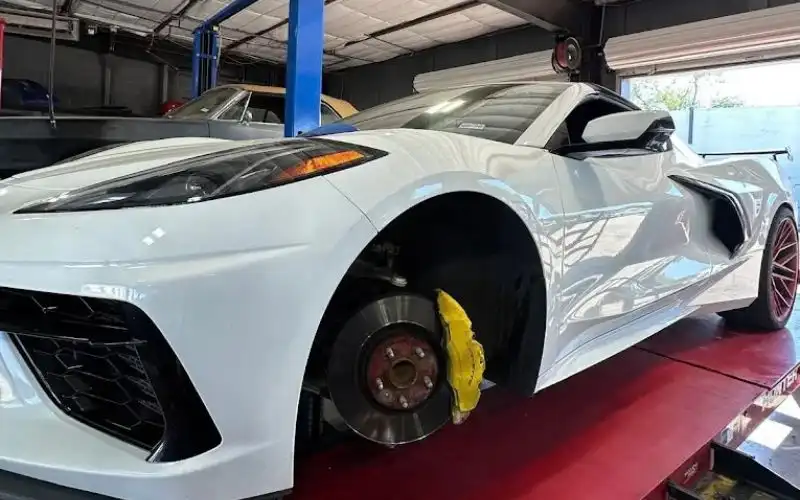
What Is Brake Lag?
Brake lag is a noticeable delay between pressing the brake pedal and your vehicle actually beginning to slow down. It means your braking system is not responding as quickly as it was designed to respond.
Normal brake response should feel immediate and predictable every time you touch the pedal. You press down, and the vehicle begins decelerating without any hesitation or lag between input and response.
Brake lag is different from your vehicle’s normal stopping time or braking distance at highway speeds. Stopping time refers to how long it takes to come to a complete stop from a given speed.
Brake lag specifically describes the delay before braking even begins happening after pedal contact. Even a half-second delay at 60 miles per hour adds 44 feet of uncontrolled distance before slowing starts.
What Does Brake Lag Feel Like?
Brake lag feels different to each driver depending on which component is causing the delayed response. Knowing how to describe your specific symptom helps technicians pinpoint the problem faster and more accurately.
The most common sensation is a brake pedal that feels slow to respond to your foot pressure. You push down expecting immediate deceleration, but nothing happens for a noticeable moment during braking.
The pedal may also feel soft or spongy under your foot instead of firm and responsive. This sponginess means hydraulic pressure is not building properly somewhere in your brake system currently.
Some drivers notice the pedal travels much further than normal before the brakes actually engage. You press down significantly more than usual before feeling any meaningful resistance or deceleration beginning.
Uneven braking where the vehicle pulls left or right during stops also qualifies as a form of brake lag. One side engages faster than the other, creating a directional pull that feels unstable during every stop.
Needing to pump the brake pedal multiple times to build stopping pressure is another clear symptom. A healthy brake system builds full pressure on the very first pedal application without pumping.
Grinding, squealing, or unusual sounds alongside delayed braking indicate multiple brake problems occurring simultaneously. If you are hearing brake noises alongside delayed response, professional inspection is urgently needed.
Common Causes of Brake Lag
1. Low or Contaminated Brake Fluid
Brake fluid is the hydraulic medium that transmits your pedal force to every wheel brake simultaneously. When fluid is low or contaminated, it cannot maintain the pressure needed for immediate brake engagement.
Low brake fluid usually means either a leak somewhere in the system or severely worn brake pads. Both situations reduce hydraulic pressure and create the delayed response characteristic of brake lag.
Contaminated brake fluid absorbs moisture over time, lowering its boiling point and reducing its viscosity. Degraded fluid cannot transmit hydraulic pressure as efficiently as fresh, clean fluid throughout the system.
2. Air in the Brake Lines
Air is compressible while brake fluid is not, making air in brake lines a direct cause of brake lag. When you press the pedal, trapped air compresses instead of transmitting pressure immediately to the brakes.
The result is a spongy pedal that travels further than normal before building any meaningful hydraulic pressure. The brakes eventually engage but only after the air has compressed fully under your foot pressure.
Air enters the brake system when hydraulic components are opened during service or when fluid leaks badly. Professional brake bleeding removes all air from every line and restores immediate firm pedal response.
3. Worn Brake Pads
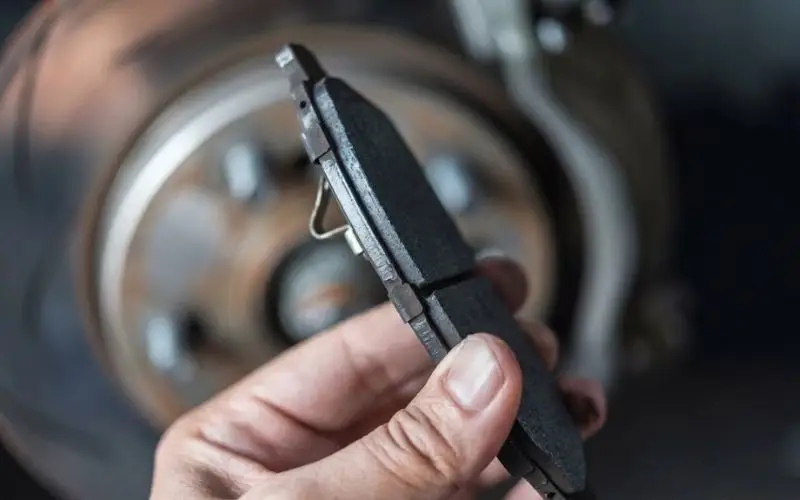
Severely worn brake pads cause brake lag because the caliper pistons must travel further before the pad contacts the rotor. This extra travel distance translates directly into a delay before braking friction begins.
Worn brake pads also reduce the total friction surface available for effective stopping power during every braking event. Less friction means longer stopping distances even after the brakes finally engage under foot pressure.
Catching pad wear early through regular inspections prevents brake lag from developing in the first place. Our team measures pad thickness at every service visit and alerts you before wear reaches the lag stage.
4. Sticking or Failing Brake Caliper
A sticking brake caliper cannot release or engage properly when hydraulic pressure is applied to it. When a caliper sticks in the released position, that wheel’s brake does not contribute to stopping effectively.
This creates brake lag on one specific side since the stuck caliper delays braking contribution from that wheel. The vehicle may also pull toward the properly functioning side during every braking event.
Brake caliper sticking is a common cause of uneven braking that feels like lag on one specific side. Addressing it promptly prevents rotor damage and dangerous directional instability during emergency stops.
5. Brake Master Cylinder Problems
The brake master cylinder converts your pedal force into hydraulic pressure sent to all four wheels. When internal seals wear out, the master cylinder cannot build or maintain proper pressure during braking.
Internal bypass in the master cylinder creates a pedal that slowly sinks under sustained pressure at stops. You press the pedal and hold it at a red light only to feel it gradually creeping toward the floor.
This slow sink combined with delayed initial engagement confirms master cylinder seal failure is occurring. Our full guide on brake master cylinder symptoms explains every warning sign to watch for in detail.
6. Brake Booster Problems
The brake booster amplifies your pedal force using engine vacuum to make braking effortless and immediate. When the booster fails, you need significantly more foot pressure to achieve normal braking force.
A failing booster creates the sensation that brakes are delayed because they require much more effort to engage. The actual hydraulic system may be fine, but the missing assist makes response feel slower and harder.
A hissing noise when braking alongside a hard pedal confirms brake booster failure is contributing to your brake lag. Both symptoms together mean the booster needs immediate inspection and likely replacement.
7. Damaged Brake Lines or Hoses
Brake hoses and lines carry hydraulic fluid between the master cylinder and each wheel caliper. Damaged, kinked, or deteriorated hoses restrict fluid flow and prevent proper hydraulic pressure from reaching the brakes.
A collapsed brake hose creates a one-way valve effect that traps pressure and prevents caliper release. Corroded steel brake lines develop pinhole leaks that reduce system pressure and create delayed brake engagement.
8. ABS or Electronic Brake System Problems
A faulty ABS can interfere with normal braking behavior in ways that feel like brake lag. Wheel speed sensors that fail send incorrect data, causing the ABS module to mismanage brake pressure distribution.
Dashboard warning lights, including the ABS light and brake warning light, illuminate when these electronic faults occur. Never ignore these lights since they confirm an active brake system problem affecting your stopping capability.
Brake Lag vs. Brake Fade: What Is the Difference?
These two terms describe different brake problems that are often confused with each other by drivers. Understanding the distinction helps you communicate your specific symptom accurately when seeking professional diagnosis. Brake lag is a constant problem present during every braking event regardless of conditions or prior use. Brake fade typically occurs after prolonged heavy use like towing downhill or repeated emergency stops.
| Feature | Brake Lag | Brake Fade |
| What it feels like | Delay before brakes respond at all | Braking power weakens during use |
| Primary cause | Hydraulic or mechanical failure | Excessive heat buildup in components |
| When it happens | During normal everyday driving | After repeated hard or sustained braking |
| Pedal feel | Soft, spongy, or slow to respond | Pedal may feel normal but stopping weakens |
| Risk level | Dangerous in any braking situation | Dangerous after extended heavy braking |
Both conditions require professional inspection, but they point to different components needing attention. Getting the right diagnosis ensures the correct repair rather than replacing parts that are not actually at fault.
Is Brake Lag Dangerous?
Yes, brake lag is genuinely dangerous and should never be treated as a minor or acceptable inconvenience. Every fraction of a second of delayed response adds significant uncontrolled distance before stopping begins.
At 45 miles per hour, a one-second brake lag adds 66 feet of distance before deceleration even starts. In Houston’s dense stop-and-go traffic, 66 feet is the difference between a safe stop and a serious collision.
Brake lag also tends to worsen progressively rather than staying consistent over time while driving. The underlying cause deteriorates with every mile, which means your stopping ability gets worse each drive.
Do not drive your vehicle if the brake pedal suddenly feels dramatically different than it felt before. A dramatic change in pedal feel indicates an acute brake system failure that makes driving unsafe immediately.
According to the National Highway Traffic Safety Administration, brake-related failures contribute to thousands of serious accidents nationwide every single year. Addressing brake lag promptly is one of the most important safety decisions any driver can make.
How to Fix Brake Lag?
The correct fix for brake lag depends entirely on which specific component is causing the delayed response. Replacing parts based on symptoms alone, without a proper diagnosis, wastes money and may not solve the actual problem.