

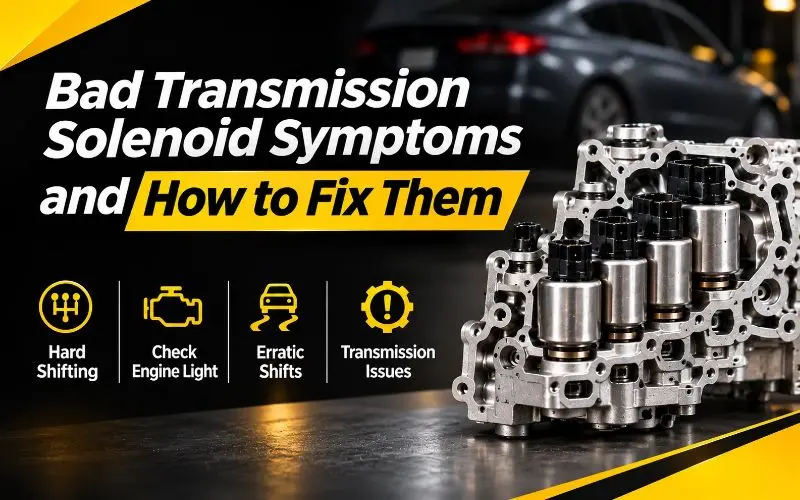
Bad transmission solenoid symptoms include delayed gear shifting, hard or rough shifts, slipping, a gear stuck in one gear, and a transmission warning light. A solenoid is a small electric valve that controls fluid flow to each gear. When it sticks or fails, shifts go wrong. Scan for codes first. Then test the solenoids and check the fluid.
This guide explains each symptom in plain words. You will also learn the causes, the diagnostic steps, and the repair options.
What Is a Transmission Solenoid and What Does It Do?
A transmission solenoid is an electric valve inside your automatic transmission. It opens and closes when it gets a signal from the computer. That action sends transmission fluid to the right clutch or gear circuit.
Here is how the parts work together:
- Transmission Control Module (TCM): The computer that decides when to shift.
- Engine Control Module (ECM): Shares engine data, like load and throttle, with the TCM.
- Transmission speed sensor: Tells the TCM how fast the shafts spin.
- Shift solenoid: Opens or closes to change gears.
- Transmission pressure control solenoid: Sets the fluid pressure for each shift.
- Solenoid pack: A group of solenoids bolted together in one block.
- Transmission valve body: The maze of channels that directs fluid.
You can read more about how an automatic transmission works. The solenoids are the link between the computer and the fluid system. If they fail, the whole shift process breaks down.
Bad Transmission Solenoid Symptoms
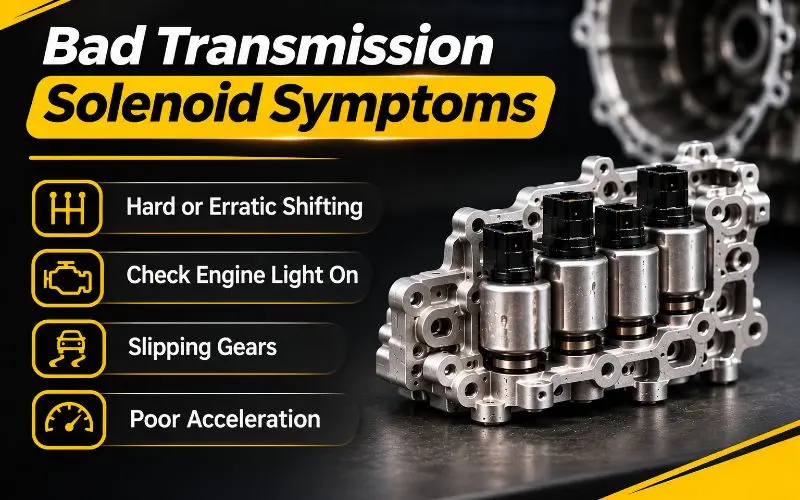
Solenoid faults show up as transmission shifting problems. Some signs are mild at first. Others feel serious right away.
Delayed Gear Shifting
The car hesitates before it shifts or moves. You press the gas, and the engine revs. Then the gear engages late. A weak solenoid opens slowly, so fluid reaches the clutch too late.
Hard Shifting Transmission
A hard shifting transmission slams into gear with a jolt. A pressure control solenoid may send too much pressure. The clutches then grab too fast. You feel a bump or clunk.
Rough Gear Changes
Rough gear changes feel jerky or uneven. The shifts may flare, shudder, or bang. Our guide on why a car jerks when shifting gears offers more background on this feeling.
Automatic Transmission Slipping
A bad solenoid can cause low fluid pressure on one circuit. The clutch then slips. The engine revs, but the car does not speed up. Slipping creates heat, so act quickly.
Gear Stuck in One Gear
A solenoid that sticks closed or open can lock the transmission in one gear. Many cars stay in second or third. The car may drive, but it will not shift up or down. This often triggers limp mode.
Transmission Warning Light or Check Engine Light
The TCM watches each solenoid circuit. If a circuit fails a test, it stores a code. It may also turn on the transmission warning light or the check engine light. See what it means when the engine light blinks for urgent dash warnings.
Other Signs to Watch For
- The car will not downshift when you press the gas
- Shifts at the wrong speed or RPM
- Skipped gears
- Poor fuel economy from the engine running at high RPM
- Limp mode with limited speed
- Whining or buzzing noises
One sign alone may not mean a bad solenoid. Low fluid or a sensor fault can cause the same trouble. A proper diagnosis is key.
Types of Transmission Solenoids
Not all solenoids do the same job. Knowing the type helps you understand the symptoms.
Solenoid Type | What It Does | Common Symptom When It Fails |
Shift solenoid | Opens or closes to change gears | Delayed shifts, stuck gear |
Pressure control solenoid | Sets fluid pressure for each shift | Hard shifts, slipping |
Lockup solenoid | Controls the torque converter clutch | Shudder, poor fuel economy |
Solenoid pack | Holds several solenoids in one unit | Several shift faults at once |
Many modern cars use a solenoid pack. If one solenoid fails, others may fail soon after. That is why shops often replace the whole pack.
What Causes Transmission Solenoids to Fail?
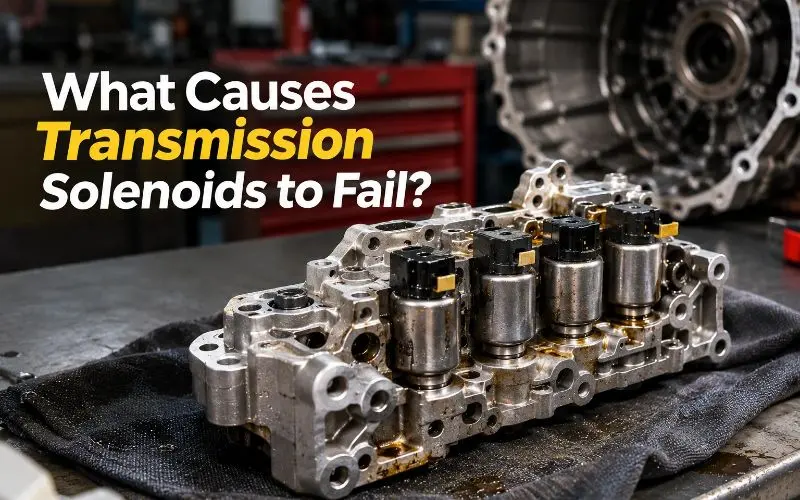
Solenoids are small parts with tight tolerances. A few problems cause most failures.
Dirty or Old Transmission Fluid
Dirty fluid is the top cause of solenoid failure. Debris and clutch material clog the tiny valves. The solenoid then sticks. Our guide to how often you should change transmission fluid helps you avoid this.
Low Transmission Fluid and Pressure
Low fluid reduces transmission fluid pressure. Air can also enter the system. The solenoids then work with weak or uneven flow. Read the signs of low transmission fluid to catch it early.
Overheating
Heat wears out solenoid coils and seals. It also breaks down fluid. Houston heat and heavy traffic make it worse. See our post on car overheating in Houston traffic for related warning signs.
Electrical Faults
Wiring faults, loose connectors, or corrosion can cut power to a solenoid. A weak battery or bad ground can also confuse the TCM. Water inside the connector causes many electrical faults.
Wear and High Mileage
Solenoids open and close thousands of times each trip. Over time, the coil weakens, and the plunger wears. Many solenoids fail after 100,000 miles or more.
Valve Body Wear
The valve body holds the solenoids. Worn bores can leak pressure around the solenoid. The shift then fails even if the solenoid is good.
Speed Sensor or Control Module Faults
A bad transmission speed sensor sends wrong data. The TCM then shifts at the wrong time. It can look like a solenoid fault. A weak TCM or ECM can also cause the same signs.
Shift Solenoid Troubleshooting at Home
A few safe checks give you useful clues. Do them before you book a visit.
- Check the transmission fluid level and color on level ground.
- Look for leaks under the car.
- Note when the problem happens: cold start, hot, or under load.
- Read any dash warning lights.
- Use an OBD II scanner to read stored codes.
- Write down the codes before you clear anything.
Healthy fluid is bright red or pink. Dark brown fluid with a burnt smell is a red flag. Many newer cars have sealed transmissions with no dipstick. These need a shop to check the level.
Transmission Diagnostic Codes to Know
An OBD II scanner reads trouble codes from the TCM and ECM. You can learn more about on-board diagnostics and how scanners work. Here are some common codes:
- P0750 to P0770: Shift solenoid A through E malfunction
- P0745: Pressure control solenoid fault
- P0740: Torque converter clutch circuit fault
- P0715: Input or turbine speed sensor fault
- P0720: Output speed sensor fault
A code points to a circuit, not always a bad part. A code for a solenoid can come from wiring, fluid pressure, or a valve body fault. A technician tests the circuit before replacing anything.
Our engine diagnostics service reads codes and finds the real cause.
Can You Drive With a Bad Transmission Solenoid?
You can drive for a short time, but it is risky. A stuck gear or slipping clutch can damage the transmission. Heat builds fast when shifts go wrong.
Limp mode protects the transmission by limiting gears and speed. It is not a fix. Get the car checked soon. Stop driving if you smell burning or the car loses power.
The National Highway Traffic Safety Administration treats loss of drive power as a safety risk. You can check open recalls on the NHTSA website. Some recalls involve transmission parts.
How to Fix a Bad Transmission Solenoid
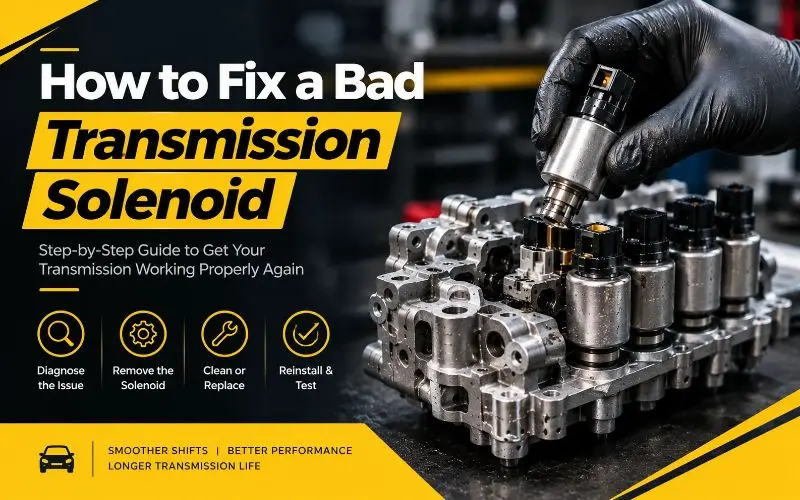
The fix depends on the cause. A skilled technician follows a clear process.
Step 1: Scan for Codes
The technician connects a scan tool and reads stored codes. They also check live data from the speed sensors and solenoids.
Step 2: Check Fluid Level and Condition
The technician inspects the fluid for dirt, metal, or a burnt smell. A dirty fluid result may point to deeper wear.
Step 3: Test the Circuit
Next, the technician tests wiring, connectors, and solenoid resistance. This separates electrical faults from mechanical ones.
Step 4: Service the Fluid and Filter
If the fluid is old or dirty, a fluid and filter service helps. A fresh start often clears sticky solenoids. It also protects new parts.
Step 5: Replace the Solenoid or Solenoid Pack
A failed solenoid needs replacement. Many shops replace the whole pack for a lasting fix. The technician also inspects the valve body for wear.
Step 6: Clear Codes and Road Test
After the repair, the technician clears codes and road tests the car. Shifts should feel smooth and on time. Any adaptive learning may need a few drives to reset.
Our transmission repair service covers diagnosis, fluid service, and solenoid repair. Some brands have known weak points. See common Audi transmission problems for one example. Want to know the difference between gearbox types? Read manual vs. automatic transmission.
How to Prevent Solenoid Problems
Good habits protect your transmission. Try these:
- Change the fluid and filter on your manufacturer’s schedule
- Use only the fluid type your owner’s manual lists
- Fix leaks as soon as you see them
- Avoid heavy towing beyond your limit
- Keep the battery and wiring in good shape
- Do not ignore warning lights
- Get a scan when shifts feel odd
Use our Houston summer car maintenance checklist to stay ahead of heat damage. European cars often use complex transmission electronics. See our European car dashboard warning lights guide for more help.
When Should You See a Mechanic?
Book a visit if shifts feel late, hard, or rough. Go sooner if the car slips, sticks in gear, or enters limp mode. Early diagnosis often means a smaller repair bill.
A good shop will scan codes, check fluid, and test circuits. They should explain the findings in plain words. Our list of car repair questions to ask before repairs can help you compare estimates.
If your car shows solenoid symptoms, the team at Wise Car Care can help. Visit our transmission repair page to schedule an inspection. You can also browse more tips on our car care blog.
Frequently Asked Questions
What are the most common bad transmission solenoid symptoms?
Common signs include delayed shifts, hard or rough shifts, slipping, and a gear stuck in one gear. A transmission warning light or limp mode may also appear. A scan helps confirm the cause.
How do I know if the shift solenoid is bad?
Look for late or missing shifts, a stuck gear, and stored codes like P0750 to P0770. A technician tests the solenoid and its circuit. Low fluid or a sensor fault can cause similar signs.
Can low transmission fluid damage solenoids?
Yes, low or dirty fluid is a top cause of solenoid trouble. It reduces fluid pressure and clogs small valves. Fresh fluid and a new filter protect solenoids and extend transmission life.
Can I drive with a bad transmission solenoid?
You may drive a short distance, but it is risky. A stuck gear or slipping clutch can cause heat damage. Limp mode is a warning, not a fix. Get the car inspected soon.
Can a bad solenoid cause the check engine light?
Yes, the TCM watches each solenoid circuit and stores a code when it detects a fault. The check engine light or a transmission warning light may turn on. An OBD II scanner reads the code.
Should I replace one solenoid or the whole solenoid pack?
It depends on the car and the wear. If one solenoid fails, others may follow soon. Many shops replace the whole pack to avoid a second visit. Your technician can advise based on the test results.
How much does it cost to fix a bad transmission solenoid?
Cost depends on the type of solenoid, the car, and the labor time. A fluid service costs the least. A single solenoid costs more, and a full pack or valve body repair costs the most. A proper diagnosis gives an accurate quote.