

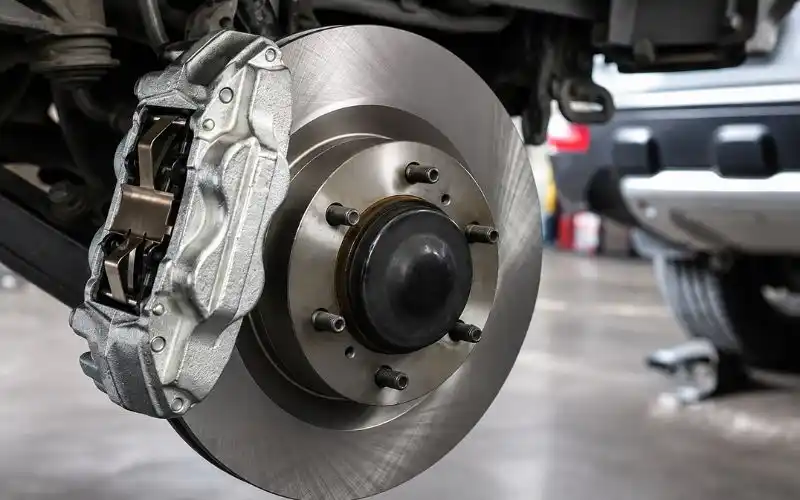
Understanding How Brake Pads and Rotors Work Together
Your brake rotors are the large metal discs that rotate with each wheel during normal driving. When you press the brake pedal, your brake pads clamp against these rotating discs to slow the vehicle.
This friction between pads and rotors is what converts your vehicle’s kinetic energy into heat and stops movement. Both components must be in good condition for your brakes to perform safely and efficiently.
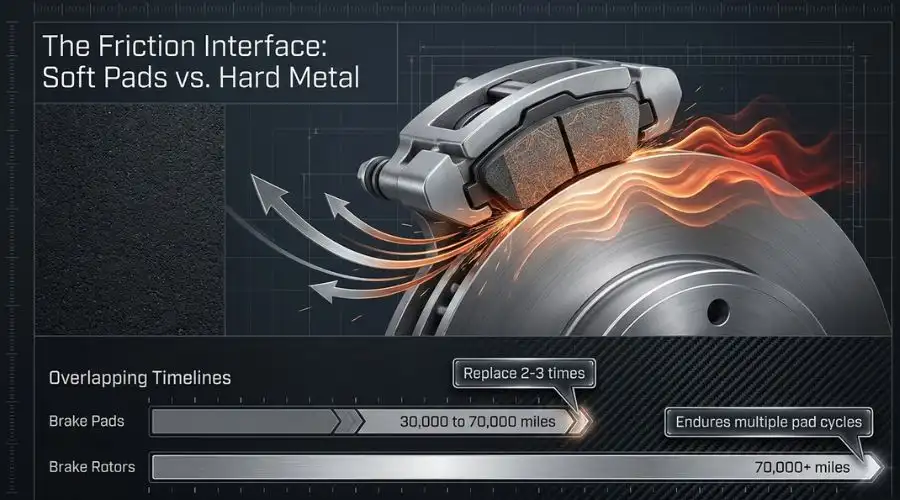
Brake pads wear faster than rotors because they are made from softer friction material designed for this purpose. A typical set of brake pads lasts 30,000 to 70,000 miles while rotors often last 70,000 miles or more.
This difference in wear rates means pads usually need replacing two to three times before rotors reach end of life. Replacing rotors every time you change pads would waste significant money on parts that still have useful life remaining.
However, the relationship between pads and rotors is important since worn pads can damage rotors significantly over time. Metal-to-metal contact from completely worn pads destroys rotor surfaces and forces replacement that could have been avoided.
When You Do NOT Need to Replace Rotors With Brake Pads
You can keep your existing rotors when specific conditions are met during your brake service inspection. Knowing these conditions helps you have an informed conversation with your mechanic before authorizing any work.
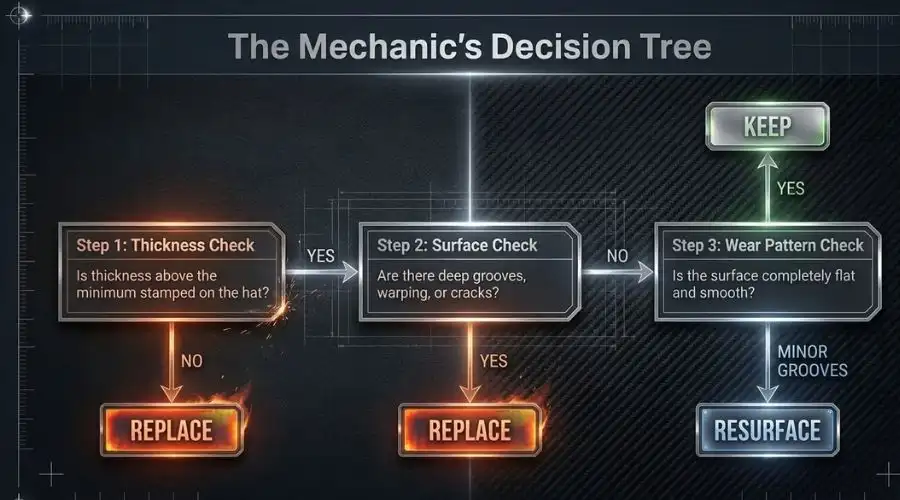
Your rotors do not need replacement if they still have adequate thickness above the minimum specification. Every rotor has a minimum thickness stamped on the hat area that serves as the legal and safety limit.
A technician should measure your rotor thickness with a precision micrometer during every brake pad replacement. If the rotor measures above the minimum thickness after accounting for resurfacing material removal, it can be reused safely.
Rotors also do not need replacement if they are smooth, flat, and free from deep grooves or scoring. Minor surface rust that appears after a rain clears away within a few brake applications and does not indicate damage.
If your rotors pass the thickness measurement and visual inspection, resurfacing them is often the best approach. Resurfacing removes a small amount of material from the surface to create a fresh, smooth area for the new pads.
Our brake repair service always measures rotors before recommending replacement and provides honest assessments of actual condition. We never recommend rotor replacement simply out of habit or to increase your repair bill unnecessarily.
When You MUST Replace Rotors With Brake Pads
Certain rotor conditions make replacement necessary regardless of how recently you last had brake work done. Recognizing these conditions helps you understand why a technician might recommend rotor replacement during pad service.
Replace your rotors when thickness falls at or below the minimum specification stamped on the rotor. Rotors at minimum thickness have no material remaining for safe resurfacing and must be replaced for safety.
Rotors with deep grooves or scoring from prolonged metal-to-metal contact always require replacement. These grooves are caused by brake pads wearing completely through to the metal backing plate and grinding the rotor.
Read our guide on brake pads wearing out to understand how delayed pad replacement leads to rotor damage. Catching pad wear early prevents the metal contact that destroys rotors and forces premature replacement.
Warped rotors that cause vibration or pulsation through the brake pedal need resurfacing or replacement. Warping occurs from excessive heat that distorts the rotor surface so it no longer contacts the pads evenly.
Rotors with visible cracks anywhere on the friction surface must be replaced immediately without exception. Cracked rotors can fail catastrophically during hard braking and create a complete loss of braking ability.
Severely rusted rotors with deep corrosion pitting beyond the surface layer also require replacement. Surface rust is normal and harmless, but deep pitting that penetrates the rotor metal compromises structural integrity.
The Case for Replacing Rotors and Pads Together
While replacement is not always necessary, there are specific situations where replacing both together makes excellent practical sense. Understanding these situations helps you make the most financially sensible decision at each service visit.
If your rotors are within 20,000 miles of their estimated end of life, replacing them with pads now makes sense. You save money on a separate labor charge for future rotor replacement that would happen very soon anyway.
Combining rotor and pad replacement at one visit saves you significant labor costs compared to two separate service appointments. Your car is already on the lift with wheels removed, making the addition of rotors very time-efficient.
If you drive aggressively, haul heavy loads, or tow trailers regularly in Houston, replacing both together makes sense. These demanding driving conditions accelerate rotor wear and make fresh rotors a worthwhile safety investment.
Our guide on whether you should replace all brake pads at once explains smart brake service planning in more detail. Similar logic applies to deciding when combining rotors and pads makes the most financial and practical sense.
What Is Brake Rotor Resurfacing and When Is It the Right Choice
Rotor resurfacing is the process of machining a thin layer of metal from both friction surfaces of the rotor. This process removes minor grooves, light scoring, and surface irregularities to restore a perfectly smooth braking surface.
Resurfacing is the ideal middle ground option when rotors have enough remaining thickness to safely remove material. The rotor must have enough thickness above minimum to absorb the material removal without falling below the safe limit.
A resurfaced rotor provides a fresh, smooth surface that allows new brake pads to bed in properly and evenly. This proper bedding creates better initial braking performance and reduces brake noise after new pad installation.
The cost of resurfacing is typically $15 to $25 per rotor compared to $50 to $150 per rotor for replacement. This significant cost difference makes resurfacing the financially attractive option when rotor condition permits it.
Resurfacing makes the most sense on rotors that have adequate thickness, minor surface grooves, and no structural damage. Rotors that are near minimum thickness or have serious damage require replacement rather than resurfacing.
Our technicians measure each rotor before recommending resurfacing to confirm adequate material remains above minimum specification. This measurement-driven approach ensures we never resurface a rotor that will quickly fall below safe thickness from normal use.
How to Evaluate Your Rotors: What Technicians Look For
Professional rotor evaluation involves several specific measurements and visual inspections that guide the replacement decision. Understanding this process helps you participate in the conversation about your brakes knowledgeably.
Rotor thickness measurement is the most important evaluation step performed with a precision micrometer tool. The measured thickness is compared to the minimum specification stamped on the rotor to determine how much usable life remains.
Rotor runout is measured using a dial indicator to check whether the rotor wobbles during rotation. Excessive runout causes brake pedal pulsation and uneven pad wear that worsens over time without correction.
Lateral runout specifications are usually 0.003 to 0.005 inches maximum for most passenger vehicles. Runout beyond this specification typically requires rotor replacement since it cannot be fully corrected through resurfacing.
Visual inspection checks for deep grooves, cracks, severe corrosion, heat discoloration, and surface damage. These visual findings combined with thickness measurements give a complete picture of each rotor’s true condition.
The friction surface is also examined for hot spots caused by repeated aggressive braking that creates hard, crystallized areas. These hard spots cause inconsistent friction during braking and typically require rotor replacement to fully resolve.
Why Houston Driving Conditions Affect Rotor Life
Houston’s specific driving conditions affect how quickly rotors wear and what condition they reach at pad replacement time. Understanding these local factors helps you set realistic expectations for rotor service intervals in our area.
Stop-and-go traffic on I-10, 290, and the Beltway creates more brake applications per mile than highway driving. Each braking event generates heat that cycles through the rotor repeatedly throughout your daily commute.
Houston’s extreme summer temperatures add to this heat stress on brake components, including rotors and pads. Ambient heat combined with braking heat pushes rotors to higher temperatures than they would experience in cooler climates.
These repeated high-temperature cycles cause rotors to wear faster and develop warping more commonly in Houston. Drivers here sometimes need rotor replacement more frequently than manufacturer estimates designed for moderate climates.
Sudden heavy Houston rain after prolonged dry heat creates rapid temperature changes in hot rotors. These thermal shock events from sudden cooling can accelerate rotor warping in vehicles with already heat-stressed components.
Our Houston summer car maintenance checklist covers brake system maintenance considerations for our specific climate. Following local maintenance advice keeps your rotors healthier and extends their useful service life in Houston’s demanding conditions.
Common Mistakes That Force Unnecessary Rotor Replacement
Certain driver behaviors and maintenance mistakes cause rotor damage that forces premature replacement. Avoiding these mistakes extends your rotor life and saves you from unnecessary repair costs.
Waiting too long after hearing brake squealing causes the most preventable rotor damage we see. Driving on worn pads that reach metal contact destroys rotor surfaces in weeks of continued daily commuting.
Our guide on signs you need brake repair in Houston before it is too late helps you recognize when to act. Responding to early warning signs consistently is the single most effective way to protect your rotors.
Aggressive braking from high speeds generates extreme heat that warps rotors faster than gradual stops do. Maintaining greater following distance in Houston traffic allows gradual stops that protect rotor integrity.
Dragging the brake pedal lightly during long downhill drives creates sustained heat that warps rotors severely. Using engine braking on downhill sections reduces the sustained heat that causes warping in these situations.
Riding the brake pedal with constant light pressure during normal driving creates ongoing heat buildup. This habit is especially damaging in Houston’s summer heat, where brake temperatures start higher than in cooler climates.
How to Get the Most Life From Your Rotors
Extending rotor life between replacement intervals saves significant money over the lifetime of your vehicle. These specific habits and maintenance practices protect rotors from premature wear and damage.
Drive smoothly using gradual braking from a greater following distance rather than aggressive late braking. Smooth braking generates less heat and distributes wear more evenly across the entire rotor surface.
Check your brake fluid condition and change it every two years to prevent caliper problems that cause uneven rotor wear. Seized calipers from old fluid create hot spots on rotors that lead to premature warping and damage.
Allow brakes to cool completely after extended heavy braking before parking the vehicle for extended periods. Leaving your foot on the brake pedal while hot keeps pad contact on the rotor and creates flat spots.
Have your wheel alignment checked annually since misalignment causes uneven pad and rotor wear on each side. Proper alignment ensures even contact across the full rotor friction surface during every braking event.
What Happens If You Put New Pads on Bad Rotors
Installing new brake pads on damaged rotors is a common mistake that compromises your repair investment immediately. Understanding the consequences helps you see why rotor condition matters so much during pad replacement.
New pads installed on deeply grooved rotors wear unevenly since they only contact the high points. This uneven wear pattern means your expensive new pads wear out faster than they should from day one.
Vibration and brake pedal pulsation from warped rotors transmit directly through new pads immediately after installation. You will feel the same pulsation after your brake service that you felt before if rotors were not addressed.
New pads on scored rotors also produce significant brake noise that owners find unacceptable. The deep grooves in the rotor create ridges on the pad surface that generate squealing or grinding sounds during normal use.
The noise and vibration from new pads on bad rotors is not a pad quality problem but a rotor problem. Replacing the rotors after discovering these symptoms means paying for rotor labor twice on the same service visit.
According to the National Highway Traffic Safety Administration, maintaining brake components in proper working condition directly reduces brake-related crash risk. Using good judgment about rotor condition protects both your safety and your wallet simultaneously.
Trust Wise Car Care for Honest Brake Rotor Assessments in Houston
Our technicians measure every rotor with precision tools and show you the actual readings before making recommendations. We never recommend rotor replacement based on appearance alone or as an automatic add-on to pad service.
We explain exactly what the measurement means and why replacement or resurfacing is or is not necessary. You will fully understand the condition of your rotors before making any decisions about your brake service.
We use quality OEM or premium aftermarket rotors when replacement is genuinely necessary for your vehicle. Cheap rotors that warp quickly in Houston heat cost you more in the long run than quality options installed once.
Every brake service, including pad and rotor work, is backed by our 36-month or 36,000-mile warranty. This warranty covers both parts and labor, giving you complete confidence in every brake repair we perform.
We are located at 6259 N Eldridge Parkway, serving all Houston-area drivers throughout the entire week. We are open Monday through Friday from 8:00 AM to 6:00 PM for all brake services. Saturday appointments are available from 8:00 AM to 4:00 PM for your weekend scheduling convenience.
Frequently Asked Questions About Rotors and Brake Pads
Do Rotors Always Need Replacing When Brake Pads Are Changed?
No, rotors do not always need replacement when brake pads are changed on your vehicle. The decision depends on rotor thickness measurement, surface condition, and whether resurfacing is viable at the current thickness.
Many vehicles have rotors in perfectly serviceable condition when pads reach replacement thickness. These rotors can be resurfaced or left as is depending on their specific condition and remaining thickness.
How Long Do Brake Rotors Last on a Typical Vehicle?
Most brake rotors last between 50,000 and 80,000 miles on standard vehicles under normal driving conditions. Houston’s demanding traffic and heat conditions sometimes reduce this to 40,000 to 65,000 miles for local drivers.
Aggressive driving habits, heavy vehicle weight, and frequent towing all shorten rotor life below these averages. Smooth driving combined with regular brake maintenance helps rotors reach or exceed the higher end of their lifespan.
Can I Just Replace One Rotor Instead of Both on the Same Axle?
No, you should always replace rotors in pairs on the same axle for balanced brake performance. A new rotor on one side and a worn rotor on the other creates significant braking imbalance during stops.
This imbalance causes the car to pull toward the side with the new rotor during every braking event. In emergency stops at highway speeds, this directional pull creates a serious accident risk for Houston drivers.
What Does a Warped Rotor Feel Like When Driving?
A warped rotor creates a distinct pulsating or vibrating sensation that you feel through the brake pedal when stopping. This pulsation often feels like the brakes are rapidly engaging and releasing during a single stop.
You may also feel the vibration through the steering wheel during braking if the warped rotor is on the front axle. The pulsation typically becomes more noticeable at higher speeds and during firmer brake applications.
Is It Safe to Drive With Grooved Rotors While Waiting for Service?
Mildly grooved rotors are generally safe to drive on carefully while scheduling a service appointment. Drive conservatively, avoid highway speeds when possible, and keep a greater following distance to allow gentler stops.
Deeply grooved rotors that cause significant noise or vibration should be serviced more urgently for safety reasons. Deep grooves reduce the contact area between pads and rotors, which compromises stopping effectiveness in emergencies.
Never delay service if your brake pedal vibrates significantly or your car pulls during braking on grooved rotors. These symptoms indicate brake system problems that create genuine safety risks in Houston’s demanding traffic conditions.
Why Did My Rotors Warp So Quickly After Being Replaced?
Premature rotor warping after replacement usually points to a specific problem rather than poor quality parts. Aggressive braking before new rotors are fully bedded in is one of the most common causes of early warping.
A sticking brake caliper that constantly applies partial pressure to the rotor causes rapid heat buildup and warping. Always have calipers inspected during rotor replacement to ensure they fully release after each braking event.