

A car brake pedal feels hard mostly because the brake booster has lost vacuum assist. The usual causes are a failed brake booster, a leaking vacuum hose, a stuck check valve, or a weak vacuum pump. Contaminated brake fluid and seized calipers can also stiffen the pedal. Your brakes may still work, but stopping takes much more effort. Get a brake system inspection soon.
This guide explains each cause in plain words. You will learn the warning signs, a safe home test, and the repair options.
How Power Brake Assist Works
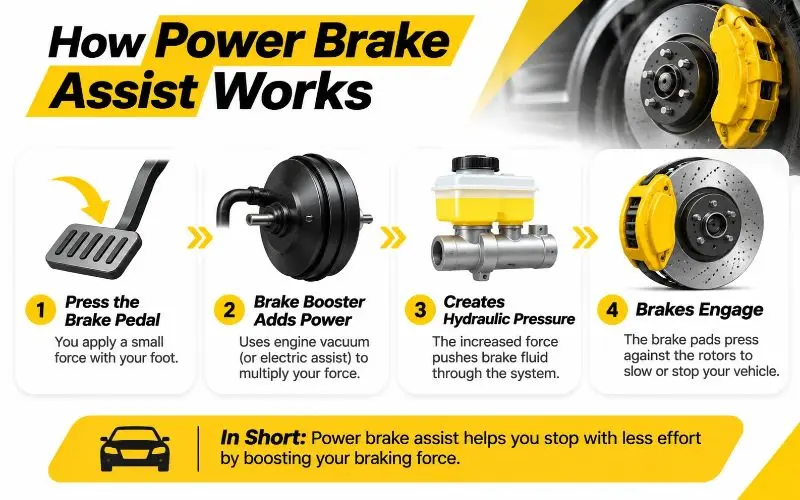
Most cars use power brake assist to cut the effort you need at the pedal. The brake booster sits between the brake pedal and the master cylinder. It multiplies the force from your foot.
The booster uses engine vacuum to do this job. A vacuum hose links the booster to the engine intake. A one way check valve keeps that vacuum from leaking back out.
Some cars cannot make enough engine vacuum. Diesel engines, turbo engines, and many hybrids use a vacuum pump instead. Electric cars use an electric pump or an electric booster.
Here is how the main parts work together:
- Brake pedal: Takes your foot force and starts the process.
- Brake booster: Adds force using a vacuum assisted diaphragm.
- Vacuum hose: Carries vacuum from the engine or pump to the booster.
- Check valve: Holds the vacuum inside the booster.
- Vacuum pump: Makes vacuum when the engine cannot.
- Master cylinder: Turns pedal force into hydraulic pressure.
- Brake fluid: Carries that pressure to each wheel.
- Anti-lock braking system (ABS): Controls wheel lock during hard stops.
You can read how the booster works in this guide from Brake & Frontend on vacuum brake booster diagnostics. When any link in this chain fails, the pedal can feel stiff.
Signs of a Hard Brake Pedal
A hard brake pedal rarely appears without clues. Watch for these signs:
- The car brakes feel hard to press, even at low speed
- The brake pedal feels stiff, but the car still stops
- You need to push much harder than before
- The car takes longer to slow down
- A hissing sound comes from under the dash when you press the pedal
- The engine idles rough or stalls when you brake
- The pedal feels hard right after you start the car
- A brake warning light comes on
A hard pedal is different from a soft pedal. A soft or sinking pedal points to a hydraulic problem. Our guide on why your brake pedal goes to the floor explains that case.
What Causes a Hard Brake Pedal?
Several faults can cause brake pedal pressure problems. Here are the most common ones, starting with the top cause.
Failed Brake Booster
Brake booster failure is the number one cause of a stiff brake pedal. Inside the booster, a rubber diaphragm separates two chambers. A tear in that diaphragm lets vacuum leak away. The booster then stops helping.
Bad brake booster symptoms include a very hard pedal and a hissing noise. You may also feel the engine stumble as you press. With no boost, you must push far harder to stop.
Vacuum Leak in the Brake Booster Hose
A vacuum leak in the brake booster system also steals the assist. The vacuum hose can crack, split, or pop off its fitting. Heat and age harden rubber over time.
A leak lowers engine vacuum pressure at the booster. The pedal gets stiff, and the engine may idle rough. Replacing a hose is often a simple fix. A leak can also hurt engine performance. See our post on the symptoms of a bad PCV valve for another common source of vacuum trouble.
Stuck or Failed Check Valve
The check valve sits where the hose meets the booster. It lets air out but not back in. A failed check valve lets vacuum drain away. The booster then has no stored assist.
This often causes a hard pedal after the engine sits off for a while. The first press feels fine, and the next ones feel stiff. The check valve is a low-cost part that many people overlook.
Weak Vacuum Pump
Some cars use a vacuum pump to power the booster. A worn pump cannot build enough vacuum. The most common sign is a stiff pedal. You may also hear a whine or a clicking sound.
Low Engine Vacuum
The booster needs steady engine vacuum to work. Engine faults can lower that vacuum. Examples include a clogged exhaust, a bad intake gasket, or a timing problem. The pedal feels hard, and the engine runs poorly.
Contaminated or Old Brake Fluid
Brake fluid absorbs moisture from the air over time. Wet fluid can corrode parts and form sludge. Sludge can clog small passages and make the pedal feel stiff.
Houston’s humid Gulf Coast air speeds up moisture build up. Check our guide on how often to change brake fluid to stay on schedule.
Seized Brake Caliper or Collapsed Brake Hose
A stuck caliper piston can trap pressure. A collapsed brake hose can block fluid flow. Either one can make the pedal hard. You may also notice the car pulling to one side or a burning smell.
Learn more in our guide to brake caliper sticking causes, symptoms, and fixes.
Master Cylinder Fault
A bad master cylinder usually causes a soft or sinking pedal. But a jammed piston or a failed seal can sometimes stiffen the pedal. Fluid may also leak into the booster. Read the symptoms of a bad brake master cylinder to tell the difference.
ABS Hydraulic Unit Problems
The ABS pump and valve block sit between the master cylinder and the wheels. A fault in this unit can change pedal feel. You may also see an ABS warning light. You can learn the basics of the anti lock braking system.
Quick Guide to Symptoms and Likely Causes
Use this table to narrow down the problem. It is a guide, not a final diagnosis.
| What You Notice | Likely Cause | Urgency |
| Very hard pedal with a hiss | Torn booster diaphragm | High |
| Hard pedal with rough idle | Vacuum hose leak | High |
| Hard pedal after the engine sits | Failed check valve | Moderate to high |
| Stiff pedal with a whining noise | Weak vacuum pump | High |
| Stiff pedal with a pull to one side | Stuck caliper or bad hose | High |
| Stiff pedal with a warning light | ABS or sensor fault | Moderate to high |
Brake Pedal Hard After Starting the Car
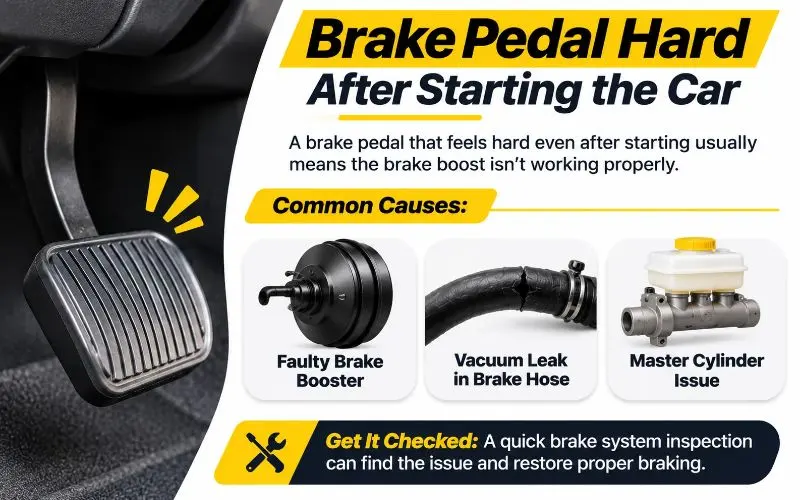
Many drivers notice a stiff pedal first thing in the morning. The cause is often low stored vacuum. A weak check valve or a small leak lets vacuum drain overnight.
The pedal may feel normal after a few seconds of running. That is still a warning. The fault will likely get worse. Do not ignore it.
Some vehicles also have known brake pedal feel issues at start up. You can search for open recalls and bulletins on the NHTSA website. Enter your VIN to check your car.
How to Test Your Brake Booster at Home
You can run a simple test in a safe, parked spot. Do not test while the car is moving.
- Turn the engine off.
- Press the brake pedal five or six times to use up the stored vacuum.
- Hold your foot firmly on the pedal.
- Start the engine while you keep the pressure on.
- Feel what the pedal does.
A good booster lets the pedal sink slightly once the engine starts. If the pedal stays rock hard, the booster is not getting or holding vacuum. This is a common check shops use. You can see more in this Advance Auto Parts guide to a hard brake pedal.
A second check helps too. Press and hold the pedal with the engine on, then turn the engine off. Keep your foot steady for 30 seconds. If the pedal rises, the booster is losing vacuum.
Is It Safe to Drive With a Hard Brake Pedal?
It is not safe for long. Your brakes may still work. But you lose the extra help from the booster. Stopping needs more force and more distance.
In heavy traffic, that delay can cause a crash. Houston’s fast freeways and sudden stops make this risk worse. A hard pedal on I 45 or the 610 Loop is not a place to test your luck.
Pull over safely if the pedal gets very stiff. Call for a tow if you cannot stop with normal effort. For a deeper look at urgent warning signs, read the signs you need brake repair in Houston. A lit dash light adds urgency. See why your brake warning light is on.
How to Fix a Hard Brake Pedal
The fix depends on the cause. A skilled technician follows a clear process.
Step 1: Brake System Inspection
The technician checks the pedal feel, fluid level, hoses, and booster. They also look for leaks and listen for hissing. This finds many causes fast.
Step 2: Check Vacuum Supply
A vacuum gauge shows how much vacuum reaches the booster. Low readings point to a leak, a pump fault, or an engine issue. This test separates booster faults from engine faults.
Step 3: Test the Check Valve and Hoses
The technician tests the check valve and inspects the vacuum hose. A cracked hose or a stuck valve gets replaced. This is often a quick repair.
Step 4: Inspect Fluid and Hydraulics
The technician checks the brake fluid for moisture and dirt. They also inspect the calipers, brake hoses, and master cylinder. Old fluid needs a flush.
Step 5: Replace the Failed Part
A torn booster needs replacement. A weak vacuum pump also needs replacement. The master cylinder is often checked at the same time. After the repair, a road test confirms normal pedal feel.
Our brake repair service covers each of these steps. Wondering about timing? See how long brake service takes.
How to Prevent a Hard Brake Pedal
Small habits protect your brakes. Try these:
- Change brake fluid on your manufacturer schedule
- Inspect vacuum hoses during routine service
- Fix rough idle and engine faults early
- Replace worn pads and rotors on time
- Do not ignore hissing sounds near the pedal
- Fix warning lights quickly
- Get a brake inspection at least once a year
Houston heat and stop and go traffic stress brake parts. Follow our brake maintenance tips for Houston drivers to stay ahead. Catching problems early also helps you avoid emergency brake repair costs.
When Should You See a Mechanic?
Book a visit as soon as the pedal feels stiffer than normal. Go right away if you hear hissing, see a warning light, or struggle to stop. Early repair protects your safety and your wallet.
A good shop will test vacuum, inspect the booster, and check the fluid. They should explain the findings in plain words. For a quick overview of this part, see this YourMechanic guide to power brake booster symptoms.
If your brake pedal feels hard, the team at Wise Car Care can help. Visit our brake repair page to schedule a brake system inspection in Houston. You can also browse more tips on our car care blog.
Frequently Asked Questions
What causes a car brake pedal to feel hard?
A failed brake booster is the most common cause. A vacuum leak, a bad check valve, or a weak vacuum pump can also remove the assist. Old brake fluid and stuck calipers can stiffen the pedal too.
Why is my brake pedal hard to press when I start the car?
The booster may be losing stored vacuum overnight. A weak check valve or a small vacuum leak is the usual cause. The pedal may soften after a few seconds. Get it checked soon.
Can a vacuum leak cause a hard brake pedal?
Yes, a vacuum leak in the brake booster hose cuts the assist. The pedal gets stiff because the booster cannot help. You may also notice a rough idle or a hissing sound.
Is it safe to drive with a stiff brake pedal?
It is not safe for long. The brakes may still work, but you need more force and distance to stop. Limit driving to a short trip to the shop, or call a tow.
How do I know if my brake booster is bad?
Look for a very hard pedal, a hissing sound, and a longer stopping distance. Try the engine off pump test. If the pedal stays hard when the engine starts, the booster may be failing.
Can old brake fluid make the brake pedal hard?
Yes, old fluid can absorb moisture and form sludge. That can restrict flow and stiffen the pedal. Regular brake fluid changes help prevent this problem, especially in humid areas like Houston.
How much does it cost to fix a hard brake pedal?
Cost depends on the cause. A vacuum hose or check valve costs the least. A brake booster or vacuum pump costs more. A proper brake system inspection gives an accurate quote.
uote.